





 Portuguese
  English
  Spanish
  5 min of reading
  0 comments


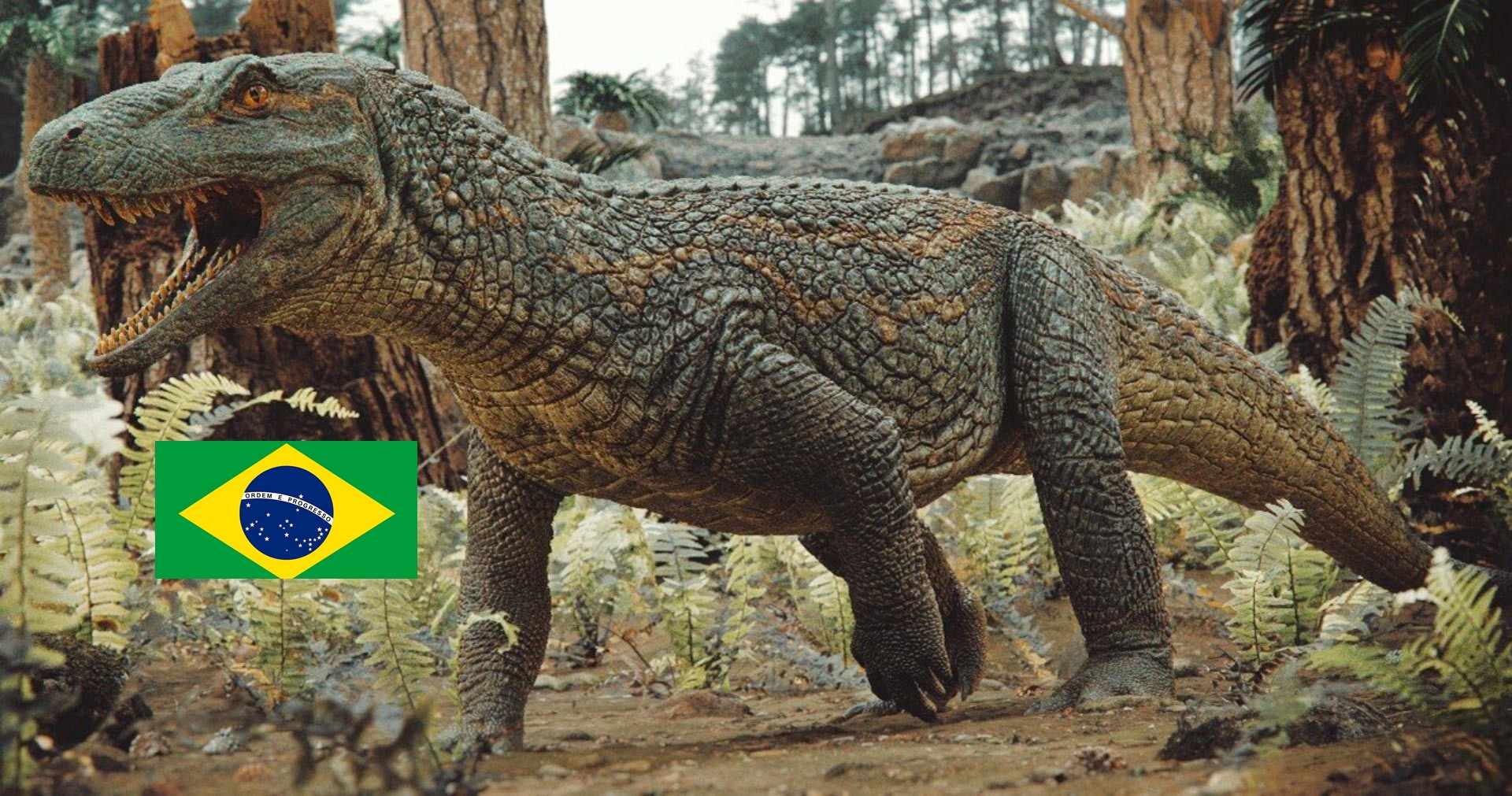
Discovery In The Center Of Rio Grande Do Sul Describes A New Predator From The Triassic Period, With 240 Million Years, 2.5 Meters In Length And Relationship With African Reptiles, Expanding Knowledge About The Diversity Of Pseudosuchians Before The Ascent Of Dinosaurs
Fossilized bones of a predatory reptile that lived about 240 million years ago have been identified by researchers from the Federal University of Santa Maria in the Center Of Rio Grande Do Sul, expanding knowledge about the diversity of Triassic pseudosuchians and reinforcing evolutionary connections between faunas from South America and Africa.
Discovery And Geological Context Of The Finding
The new species was identified from a partial skeleton found in May 2025 in the municipality of Dona Francisca, central Rio Grande do Sul, an area known for fossil-bearing outcrops associated with the Triassic Period, dated to approximately 240 million years ago.
At that time, all continents were united in the supercontinent Pangaea, forming a vast landmass marked by a large central desert, which concentrated animal life mainly in the peripheral regions, where the current south of Brazil is located.
-
Motorola launched the Signature with a gold seal from DxOMark, tying with the iPhone 17 Pro in camera performance, Snapdragon 8 Gen 5 that surpassed 3 million in benchmarks, and a zoom that impresses even at night.

-
Satellites reveal beneath the Sahara a giant river buried for thousands of kilometers: study shows that the largest hot desert on the planet was once traversed by a river system comparable to the largest on Earth.

-
Scientists have captured something never seen in space: newly born stars are creating gigantic rings of light a thousand times larger than the distance between the Earth and the Sun, and this changes everything we knew about stellar birth.

-
Geologists find traces of a continent that disappeared 155 million years ago after separating from Australia and reveal that it did not sink, but broke into fragments scattered across Southeast Asia.

Although the first dinosaurs were already emerging in this scenario, terrestrial ecosystems were dominated by reptiles known as pseudosuchians, a group that includes the distant ancestors of modern alligators and crocodiles, which were then much more diverse and abundant.
These animals occupied different ecological roles, including herbivores, omnivores, and large carnivores, many acting as apex predators, although the fossil record of various lineages remains scarce and fragmented to this day.
It was in this context that the team led by UFSM paleontologist Rodrigo Temp Müller located the new specimen, preserving parts of the jaw, vertebrae, and pelvic girdle, sufficient to allow its identification as an unprecedented species.
After collection in the field, the fossils underwent a detailed preparation process in the laboratory, with careful removal of the rock surrounding the bones, allowing for the observation of previously unknown diagnostic anatomical features.

Scientific Description And Naming Of The New Species
Based on the analysis of the prepared fossils, researchers confirmed that the material did not correspond to any previously described species, resulting in the definition of a new taxon for science, named Tainrakuasuchus bellator.
The formal description was published in the scientific journal Journal of Systematic Palaeontology, consolidating international recognition of the discovery and its significance for studies on the evolution of archosaurs.
The name of the genus combines words from Guarani and Greek, uniting tain, which means tooth, rakua, pointed, and suchus, crocodile, in direct reference to the sharp dentition observed in the fossilized animal.
The specific epithet bellator, of Latin origin, refers to warrior or fighter and was chosen in homage to the people of Rio Grande do Sul, symbolizing strength and resilience, especially after the recent floods that affected the state.
Anatomical Characteristics And Body Estimates
Based on the preserved bones, it is estimated that Tainrakuasuchus bellator reached about 2.5 meters in total length and an approximate weight of 60 kg, dimensions compatible with a medium-sized predator from the Triassic.
The long, pointed teeth indicate a strictly carnivorous diet, while the relatively slender jaw suggests an agile animal, capable of making quick movements to capture and immobilize prey in its environment.
Another striking feature is the proportionally long neck in relation to the body, a characteristic that possibly extended the reach of the head during attacks, increasing predatory efficiency compared to species with more compact morphology.
The animal’s back was protected by osteoderms, bony plates embedded in the skin, similar to those found in modern alligators and crocodiles, serving as natural armor against attacks and aggression from other predators.
Although the locomotor limbs were not preserved, comparative analysis with close relatives indicates that Tainrakuasuchus bellator moved quadrupedally, supporting itself on four limbs during locomotion.
Evolutionary Relationship With African Species
Despite its overall appearance superficially resembling that of a dinosaur, Tainrakuasuchus bellator does not belong to that group, being classified among the pseudosuchians, a distinct lineage within the archosaurs.
One of the main differences lies in the structure of the pelvis, as in dinosaurs the femur socket has a specific opening, while in the new species that region is closed off by a robust bony wall.
The phylogenetic analyses conducted by the team indicate that the closest known relative of Tainrakuasuchus bellator is Mandasuchus tanyauchen, a species described from fossils found in Tanzania, on the African continent.
This relationship between species separated today by an ocean reflects the continental configuration of the Triassic, when the union of continents in Pangaea allowed the free dispersion of terrestrial organisms among currently distant areas.
As a result, the faunas of what is now Brazil and Africa shared various common elements, revealing an interconnected evolutionary history and reinforcing the importance of the South American fossil record to understand this period.
Diversity Of Predators Before Dinosaurs
The fossils indicate that Tainrakuasuchus bellator was an active predator, using recurved and sharp teeth to firmly grasp its prey, preventing its escape during the attack, even in quick encounters.
Despite this, it was not the largest hunter in the ecosystem in which it lived, which included species like Prestosuchus chiniquensis, a predator over 7 meters long and strong enough to dominate large prey.
In contrast, the same environment housed smaller forms, such as Parvosuchus aurelioi, less than 1 meter long, likely specialized in capturing lizards, amphibians, and other small agile animals.
This variation in sizes and hunting strategies demonstrates that the Triassic ecosystems in southern Brazil were highly diversified, with multiple ecological niches occupied by different predators.
The discovery reinforces that, before the definitive rise of the dinosaurs, pseudosuchian reptiles formed complex and well-adapted communities, dominating terrestrial food chains for millions of years, a little-known scenario.
Additionally, the presence of similar faunas in different regions of the ancient Pangaea indicates that this diversity was not isolated but rather part of a global pattern of ecological occupation during the Triassic.
Destination Of The Fossils And Institutional Support
The fossils of Tainrakuasuchus bellator are deposited at the Paleontological Research Support Center of UFSM, known as CAPPA, located in the municipality of São João do Polêsine, in Rio Grande do Sul.
The municipality is part of the Quarta Colônia UNESCO Geopark, an area recognized for its geological and paleontological value, where part of the fossil collection can be visited free of charge by the public.
The study involved the participation of researchers and students from the Animal Biodiversity Graduate Program at UFSM and received support from the National Council for Scientific and Technological Development and INCT Paleovert, consolidating another advance in Brazilian paleontology.
Source: ufsm








-

-

-

-

-

-

151 pessoas reagiram a isso.