





 Português
  Inglês
  Espanhol
  4 min de leitura
  0 comentários


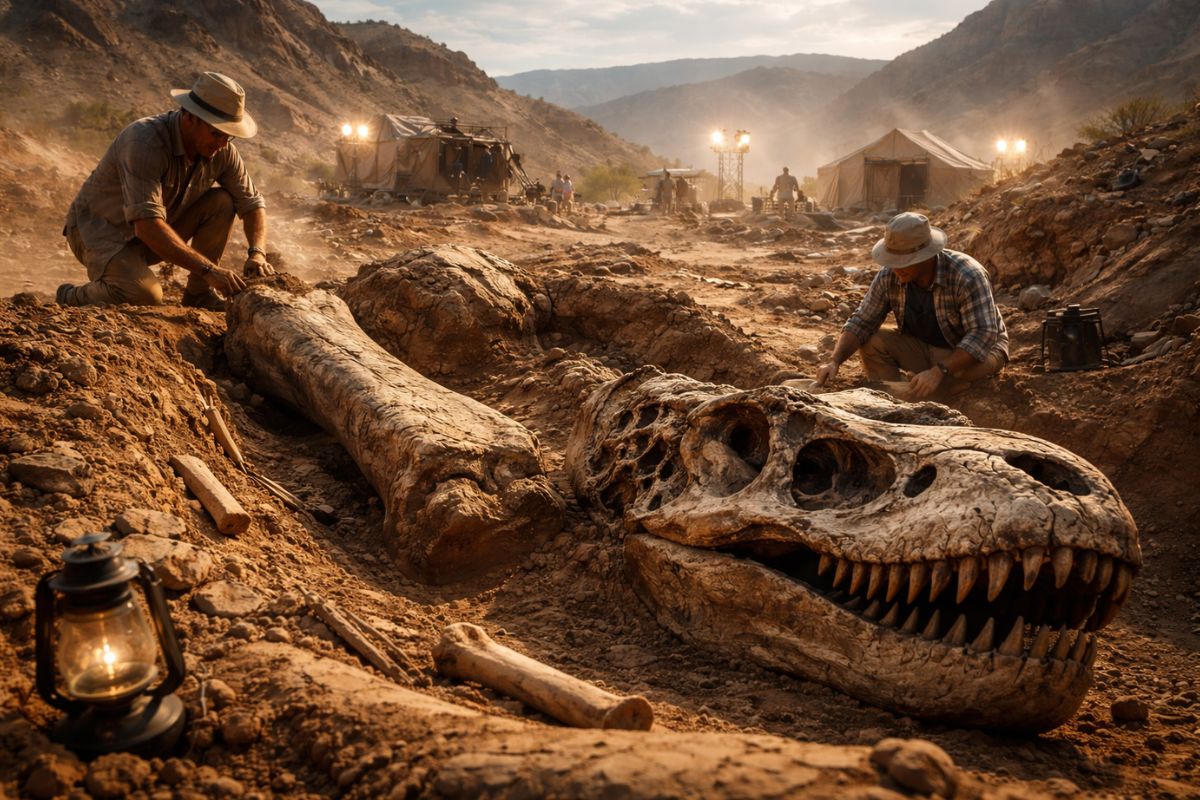
The Discovery Of A Giant Tyrannosaurus Fossil In New Mexico, Identified From A Fossilized Tibia Of Almost A Meter, Suggests The Presence Of A Predator Of About 4.7 Tons That May Represent An Ancient Relative Of The Tyrannosaurus Rex In The Late Cretaceous Period.
A giant tyrannosaurus may have walked through what is now the southern United States about 74 million years ago. The clue arose from the analysis of a single fossilized bone—a large tibia—found in the Kirtland Formation in New Mexico during recent paleontological research.
Even though it is only a fragment of the skeleton, the size and anatomical characteristics of this bone indicate that it belonged to a huge predator of the Cretaceous period. The discovery was described in a study published in the scientific journal “Scientific Reports” this Thursday (12).
A Gigantic Bone That Caught The Scientists’ Attention
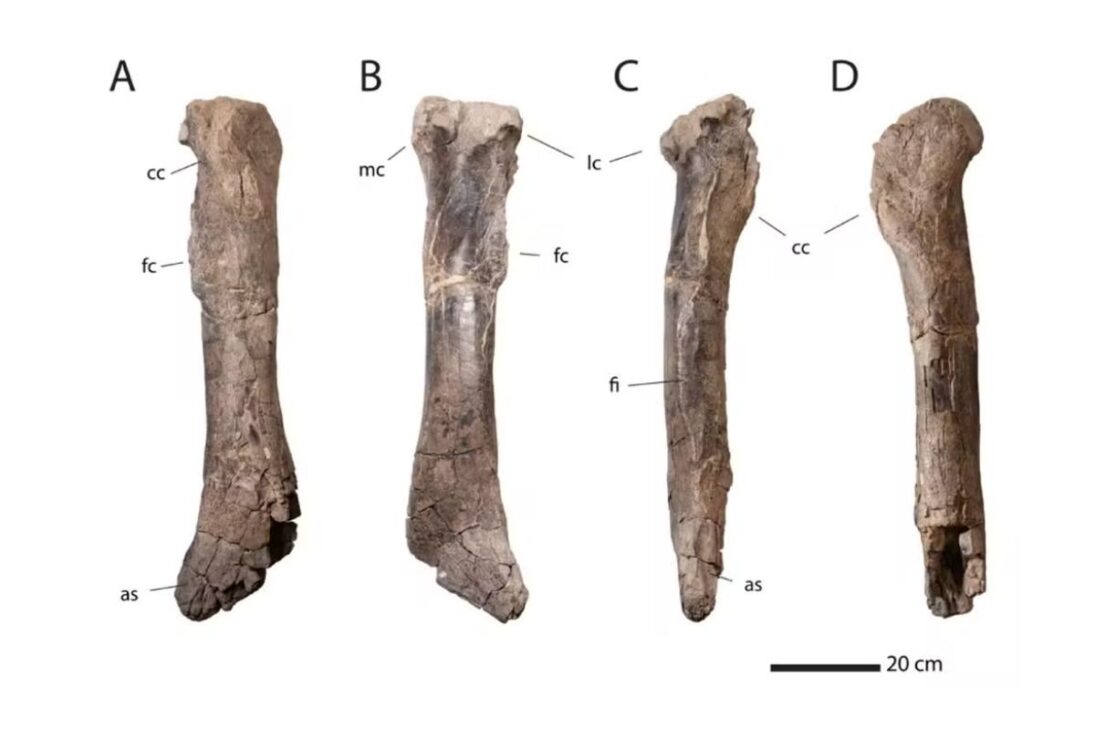
The discovery began with something seemingly simple: a fossilized tibia. The leg bone measures about 960 millimeters long and 128 millimeters in diameter, unusual dimensions even for large carnivorous dinosaurs.
-
A bright yellow mushroom imported from Asia escaped from a cultivation farm in the United States in 2010 and is now aggressively spreading across 25 states, destroying entire communities of native fungi in American forests.

-
Buried under China, a colossal machine weighing 20,000 tons began operating as the largest neutrino detector on the planet and, in just 59 days, surpassed results that science took half a century to achieve.

-
Iran enters the center of a climate alert after the war emitted 5.6 million tons of CO2 in two weeks, surpassing the annual pollution of entire countries.

-
Lunar exploration may change after a Chinese probe finds a “cavity” of radiation that reduces the impact on astronauts by up to 20% at certain times on the Moon.

When researchers compared the material with known fossils, they quickly realized they were dealing with something impressive. The size of the bone was comparable to that of some of the largest tyrannosaurs ever discovered, raising the possibility that the animal it belonged to was extremely robust.
According to the scientists involved in the study, the direct comparison with famous fossils brought a surprise. The tibia is 84% of the length and 78% of the thickness of the tibia of “Sue”, the largest known specimen of Tyrannosaurus rex ever found.
This detail was crucial to estimate the size of the animal. Based on these proportions, the researchers calculated that the predator could weigh about 4.7 tons, which would place it among the largest known tyrannosaurs of its time.
Indications Of An Ancient Relative Of The Tyrannosaurus Rex
Aside from its impressive size, the shape of the bone also revealed important clues about the identity of this giant tyrannosaurus. The anatomical structure has characteristics typical of more evolved tyrannosaurs.
The relatively straight shaft of the tibia and the triangular lower end are traits found in advanced members of the Tyrannosauridae family. These similarities suggest that the animal may have been an early representative of the Tyrannosaurini group.
This group includes some of the most famous predators of prehistory, such as Tyrannosaurus, Tarbosaurus, and Zhuchengtyrannus. If the hypothesis is confirmed, the fossil may represent an important stage in the evolution of these giants.
In other words, the bone may belong to a close ancestor of the most famous tyrannosaurs that dominated the ecosystems at the end of the Cretaceous period.
What New Mexico May Reveal About The Origin Of Tyrannosaurs
The discovery also reinforces a theory discussed for years among paleontologists: the possibility that giant tyrannosaurs originated in the southern part of North America.
The Kirtland Formation, where the fossil was found, preserves rocks that are about 74 million years old. This period coincides with an important phase in the evolution of the large predators that dominated the terrestrial food chain.
In recent years, other relevant fossils found in New Mexico and Texas also point to this same region as a possible birthplace of giant tyrannosaurs. These pieces of evidence suggest that the southern part of the continent may have been a true evolutionary laboratory for these predators.
If this hypothesis is correct, gigantic species like Tyrannosaurus rex may have evolved from ancestors that lived in this area millions of years earlier.
A Scientific Puzzle Still Incomplete
Despite the excitement surrounding the discovery, researchers emphasize that there are still many unanswered questions. A single bone, even though it is huge, is not enough to precisely define what species of dinosaur it represents.
To confirm the identity of this giant tyrannosaurus, additional fossils from the same animal would be necessary, such as parts of the skull, vertebrae, or additional limbs.
These elements would allow for a more accurate reconstruction of the skeleton and determine whether the predator belongs to a known species or an entirely new one.
Each new fossil serves as a piece of a massive puzzle about the evolution of dinosaurs, and discoveries like this help fill in important gaps in the history of life on Earth.
The tibia found in New Mexico shows how even a single bone can transform the understanding of the largest predators that ever lived. The evidence of a possible giant tyrannosaurus weighing around 4.7 tons opens new clues about the origin and evolution of tyrannosaurs in North America.
But the mystery is far from resolved. New fossils still need to be found to confirm whether this predator represents an unknown species or just a little-documented member of a known group.
And you: do you think it is possible that many giant dinosaur species are still waiting to be discovered? What else could be hidden in the ancient layers of the Earth? Share your opinion and join the discussion.







-

Uma pessoa reagiu a isso.