





 Português
  Inglês
  Espanhol
  5 min de leitura
  0 comentários


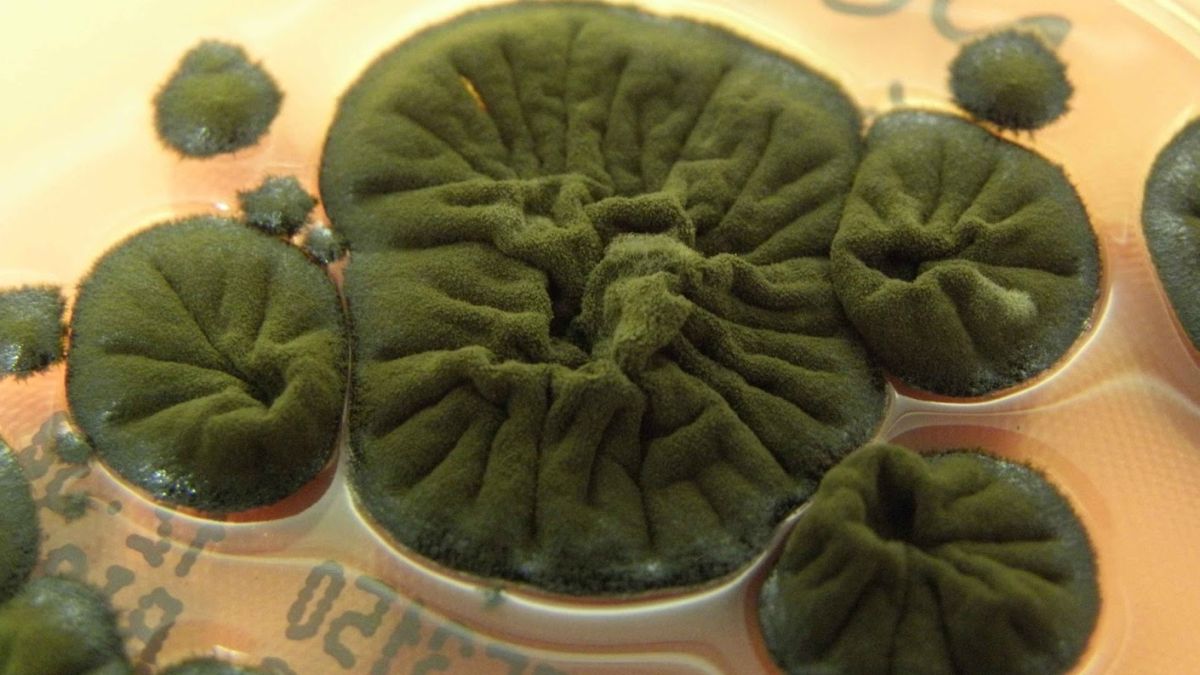
Almost 40 years after the nuclear accident, the Chernobyl fungus continues to intrigue researchers for resisting radiation, growing in one of the most hostile environments on the planet, and raising the hypothesis of a biological mechanism that has not yet been proven by science.
Almost 40 years after the explosion of Reactor Four in 1986, Chernobyl continues to reveal forms of life capable of surviving in extreme conditions. Among them, a black fungus found on the inner walls of one of the most radioactive buildings on Earth intrigues scientists for apparently thriving in the presence of ionizing radiation.
Called Cladosporium sphaerospermum, the organism gained attention for a characteristic that may explain its resistance: the high concentration of melanin, the dark pigment that gives it a black coloration.
Some researchers have raised the hypothesis that this substance allows the fungus to utilize ionizing radiation in a manner similar to how plants use light in photosynthesis, in a proposed mechanism dubbed radiosynthesis.
-
A bright yellow mushroom imported from Asia escaped from a cultivation farm in the United States in 2010 and is now aggressively spreading across 25 states, destroying entire communities of native fungi in American forests.

-
Buried under China, a colossal machine weighing 20,000 tons began operating as the largest neutrino detector on the planet and, in just 59 days, surpassed results that science took half a century to achieve.

-
Iran enters the center of a climate alert after the war emitted 5.6 million tons of CO2 in two weeks, surpassing the annual pollution of entire countries.

-
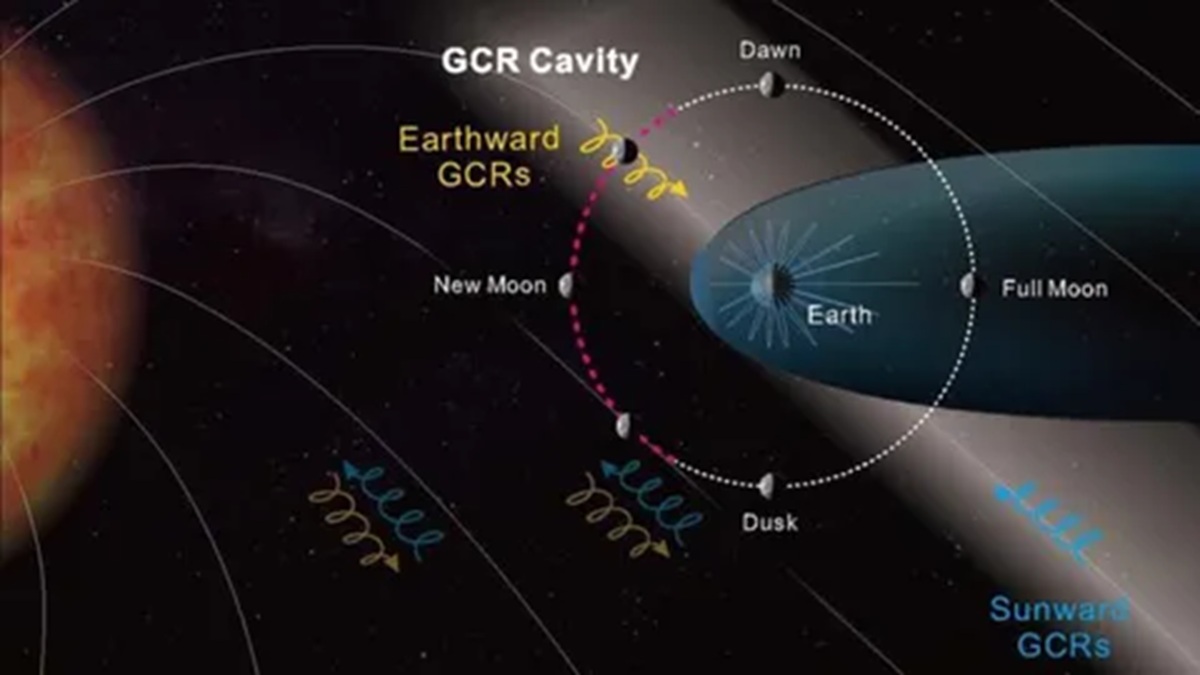
Lunar exploration may change after a Chinese probe finds a “cavity” of radiation that reduces the impact on astronauts by up to 20% at certain times on the Moon.

Despite the interest sparked by the idea, scientists have yet to demonstrate how this process would occur or if it actually exists. What is known so far is that the fungus not only resists the residual radiation in the area but also shows favored growth in its presence, an unusual behavior for most living organisms.
Fungal community was found around the destroyed reactor
The mystery began in the late 1990s when a team led by microbiologist Nelli Zhdanova from the National Academy of Sciences of Ukraine initiated a field study in the Chernobyl Exclusion Zone. The goal was to identify what kind of life could exist in the shelter built around the destroyed reactor.
The researchers found an extensive community of fungi on site and documented 37 different species. One of the most striking points was the predominance of organisms with dark or black coloration, associated with high levels of melanin.
Among the collected samples, Cladosporium sphaerospermum appeared as the predominant species. Additionally, it was one of those that exhibited the highest levels of radioactive contamination, which reinforced scientific interest in its adaptability.
The environment in which this fungus was found helps to underscore the relevance of the discovery. The exclusion zone remains off-limits to humans, but other forms of life have managed to settle, survive, adapt, and in some cases, apparently thrive after the nuclear disaster.
Radiation did not harm the fungus in the expected way
The enigma deepened when radiopharmacologist Ekaterina Dadachova and immunologist Arturo Casadevall, both affiliated with the Albert Einstein College of Medicine in the United States, led a team that studied the effects of ionizing radiation on C. sphaerospermum. The results showed that exposure did not harm the fungus in the same way it would affect other organisms.
Ionizing radiation involves emissions of particles with enough energy to knock electrons off atoms, transforming them into ions. In practice, this process can break molecules, interfere with biochemical reactions, and even destroy DNA, making its effects particularly harmful to humans.
In the case of the black fungus from Chernobyl, however, the response was different. Instead of merely showing resistance, the organism exhibited even better growth when exposed to ionizing radiation, turning the case into one of the most curious episodes ever observed in organisms exposed to such an environment.
Other experiments also indicated that radiation altered the behavior of fungal melanin. This observation reinforced the suspicion that the pigment not only acted as protection but could play a more complex biological role in the fungus’s relationship with radiation.

Rui Tomé/Atlas of Mycology, used with permission )
The hypothesis of radiosynthesis has not yet been proven
It was in a paper published in 2008 that Dadachova and Casadevall first proposed a biological pathway similar to photosynthesis. According to this hypothesis, C. sphaerospermum and other similar fungi could capture ionizing radiation and convert it into energy, with melanin performing a function comparable to chlorophyll in plants.
At the same time, melanin would also act as a shield against the more harmful effects of radiation itself. The combination of protection and possible energy use made the hypothesis particularly attractive, but also difficult to prove directly.
To this day, this point remains open. Scientists have not yet been able to demonstrate that carbon fixation by the fungus depends on ionizing radiation, nor that there is a metabolic gain resulting from it, nor has a defined pathway for energy acquisition through this mechanism been identified.
In a 2022 paper, a team led by engineer Nils Averesch from Stanford University highlighted this limitation. According to the researchers, radiosynthesis itself still needs to be demonstrated, as does the reduction of carbon compounds into forms with higher energy content or the fixation of inorganic carbon driven by ionizing radiation.
Experiment in space reinforced scientific interest
The 2022 study took C. sphaerospermum into space and attached the species to the outside of the International Space Station, exposing the fungus to cosmic radiation. Sensors placed under the Petri dish recorded that less radiation passed through the sample than in a control containing only agar.
The goal of the experiment was not to demonstrate radiosynthesis. The proposal was to evaluate the potential of the fungus as a shield against radiation in future space missions, a possibility considered relevant based on the observed behavior.
Even so, the test expanded interest in the species. Although the data suggest an ability to attenuate the passage of radiation, they do not resolve the main question of what the fungus actually does at a biological level to survive in such hostile environments.
Not all melanized fungi react the same way
Researchers also observed that the behavior of C. sphaerospermum is not universal among melanized fungi. A black yeast called Wangiella dermatitidis showed increased growth under ionizing radiation, while Cladosporium cladosporioides showed increased melanin production but no growth when exposed to gamma or ultraviolet radiation.
This difference indicates that the response to radiation varies among species, even when they share the presence of melanin. Therefore, it is still not possible to assert that all dark fungi develop the same survival strategy in radioactive environments.
The central question about what happens with the Chernobyl fungus also remains unanswered. Scientists still do not know whether it is an adaptation that allows it to harness an extreme form of energy or a stress response that increases survival chances in severe conditions, without representing an ideal growth process.
What is already clear is that this black and velvety fungus performs some biological operation not yet understood in the face of ionizing radiation. In a place too dangerous for humans to circulate safely, it remains active, resists, and perhaps even proliferates, turning Chernobyl into yet another scenario of scientific questions still unanswered.







Seja o primeiro a reagir!