





 Portuguese
  English
  Spanish
  3 min of reading
  1 comment


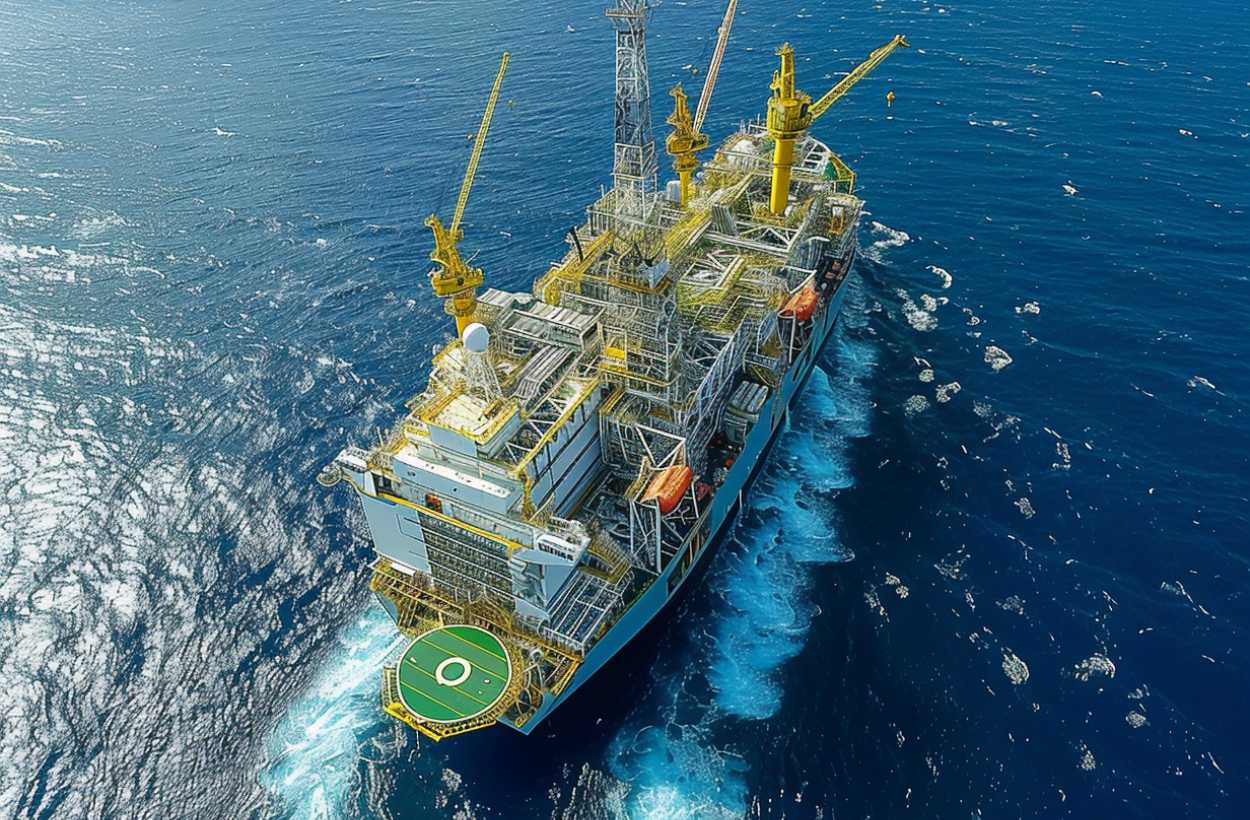

Discover How FPSOs, Floating Production, Storage and Offloading Units, Have Transformed Offshore Oil and Gas Exploration, Providing Economic, Operational and Environmental Advantages in Deep Waters Globally Since 1977.
At the heart of the offshore industry, an innovation has changed the game since 1977: the FPSO (Floating Production Storage and Offloading). Originating from the Shell Castellon field in the Mediterranean, these giants of the seas represent the forefront of oil and gas exploration, with over 300 units operating globally.
FPSO, which stands for Floating Production Storage and Offloading, is a floating unit that combines processing and storage of crude oil and natural gas extracted from the seabed. They can be newly built ships or converted tankers, performing the first phase of refinery onboard.
These ships store processed oil in double-hull tanks, ready for transfer via shuttle ships or subsea pipelines. Firmly anchored, FPSOs withstand adverse conditions, with the option for mooring that allows free rotation, adapting to varied weather conditions.
-
Offshore industrial demand in Macaé skyrockets with the recovery of oil and gas and could grow by up to 396% by 2026 in the Campos Basin.
-
Offshore industrial demand in Macaé surges with the recovery of oil and gas and could grow by up to 396% by 2026 in the Campos Basin.
-
Brazilian giant expands borders in the Southeast: Petrobras confirms new oil discovery in ultra-deep waters in the pre-salt of the Campos Basin.

-
Alert in the global energy market: Severe tropical cyclone hits the coast and disrupts gas production at major plants in Australia, threatening global supply.

Competitive Advantages of FPSOs


FPSOs excel in deep and ultra-deep waters, connecting to multiple subsea wells, optimizing oil extraction. They not only facilitate oil transport in remote locations or where pipeline infrastructure is lacking but also speed up production startup, with significantly shorter implementation times compared to fixed structures. The flexibility for relocation and reduced need for costly subsea infrastructure are crucial aspects, making FPSOs ideal for marginal fields.
Sustainability and Efficiency
In addition to being economically viable, FPSOs have a lower environmental impact compared to fixed platforms. They can be reconfigured for more eco-friendly operations, meeting the growing demand for environmentally responsible solutions in the offshore industry. This adaptability, along with cost savings and operational efficiency, positions FPSOs as the preferred choice for future oil and gas exploration projects in deep waters.
Since their introduction, FPSOs have been essential in the development of offshore oil fields in regions such as the North Sea, Brazil, Asia-Pacific, Mediterranean, and West Africa. The evolution of FPSOs reflects the dynamics and demands of the global oil industry, marking their position as a crucial pillar in the future of offshore exploration.
And in Brazil? FPSO Units Are Growing More and More
In Brazil, the FPSO (Floating Production, Storage and Offloading units) scenario is dominated by the state-owned giant Petrobras, one of the main operators of this type of vessel. The company manages a significant fleet of FPSOs, used in exploration operations in the pre-salt and post-salt oil basins.
With 22 units operating in the pre-salt (10 owned by Petrobras and 12 chartered), and another 25 in the post-salt, Brazil stands out with a total of 48 FPSOs. Of these, 22 are owned by Petrobras, while 26 belong to other companies, of which 19 operate under charter contracts with Petrobras.
Petrobras, Modec, SBM Offshore and More Operate FPSO in Brazil
In addition to Petrobras, companies like MODEC, SBM Offshore, and Total also have a significant presence in the Brazilian FPSO market. MODEC, in particular, has been an active supplier, currently commissioning new units such as the FPSOs Anita Garibaldi MV33 and Bacalhau.
This dynamic reinforces Brazil’s crucial role in the global FPSO market, hosting one of the largest fleets in the world and highlighting a growth trajectory with the prospect of expansion and new projects on the horizon for the next decade. This scenario not only solidifies Brazil’s position as a leader in FPSO operations but also underscores the strategic importance of these floating units for the offshore oil industry in the country.










Vi o artigo e tenho alguns comentários. O FPSO no Brasil, final da década de 70 e início da década de 80 produziu o campo de Garoupa. Atulament não produz campos marginais mas campos principais. FPSO é excelente para campos marginais e também para coleta de informações de campos principais. Os FPSOs são usados no Brasil para valer desde do final do século 20 quando entrou em operação o campo de Barracuda. Desde então a Petrobras iniciou escalada de conhecimento deste tipo de unidade marítima.