





 Portuguese
  English
  Spanish
  5 min of reading
  0 comments


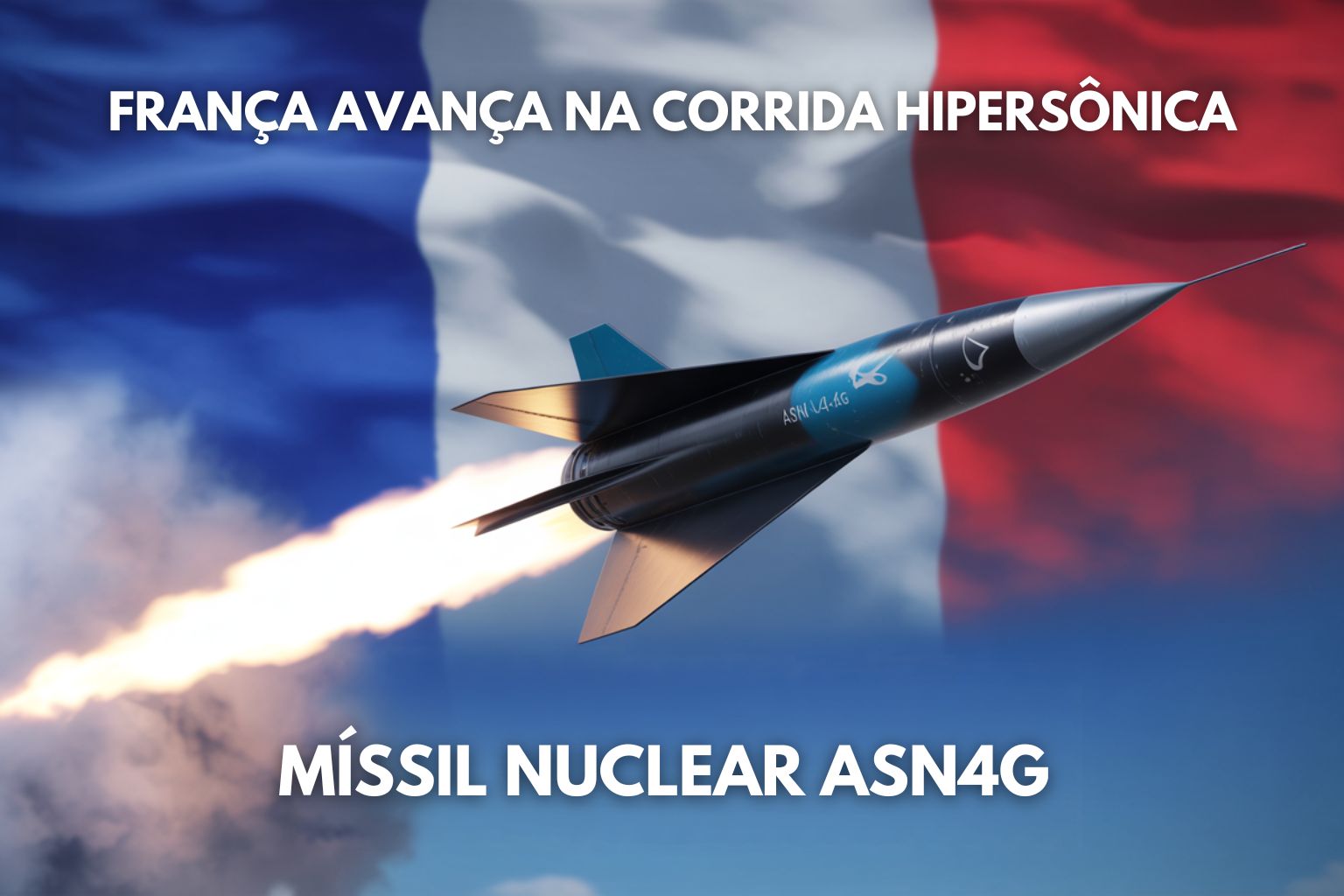
Hypersonic Missile ASN4G Must Fly Above Mach 6, Replace the ASMP-A, and Become the Pillar of France’s Nuclear Aerial Deterrence from 2035.
France has quietly entered a new level in the global arms race by confirming the development of the ASN4G (Air-Sol Nucléaire de 4e Génération), a nuclear hypersonic missile designed to replace the current ASMP-A and maintain the credibility of French strategic deterrence in the coming decades. Unlike experimental or conceptual programs seen in other countries, the ASN4G is being developed fully integrated into French military doctrine with a clear operational application.
The project is coordinated by the Direction Générale de l’Armement (DGA), in partnership with the French defense industry, and is part of the modernization effort for the Strategic Air Nuclear Forces (FAS). The goal is not only to increase speed but to ensure that France remains capable of penetrating ever-more sophisticated missile defense systems in a major power competition scenario.
Why the ASN4G Is Considered a New Generation Hypersonic Missile
The ASN4G is designed to operate in sustained hypersonic mode, with speeds estimated above Mach 6 and potentially reaching Mach 7 or Mach 8. This performance places it in a distinct category from traditional supersonic cruise missiles, which rely on predictable trajectories and lower speeds.
-
With 11,000 tons and sensors capable of hunting submarines at long distances, the Type 055 has become one of the most feared floating arsenals of the Chinese navy.

-
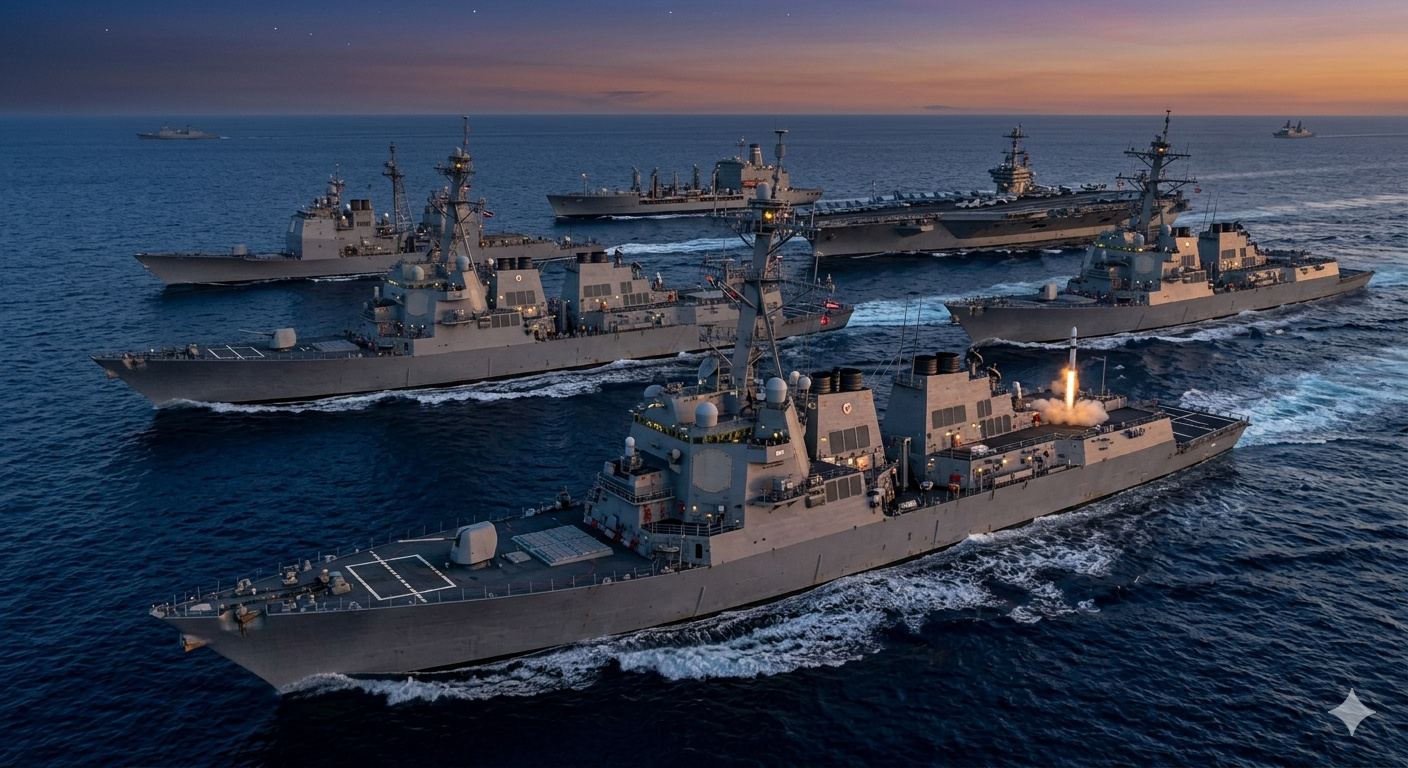
With over 15,000 tons, radars capable of tracking hundreds of targets simultaneously, and more than 120 missiles ready for launch in seconds, modern destroyers cease to be escorts and begin to dominate the naval battlefield.
-
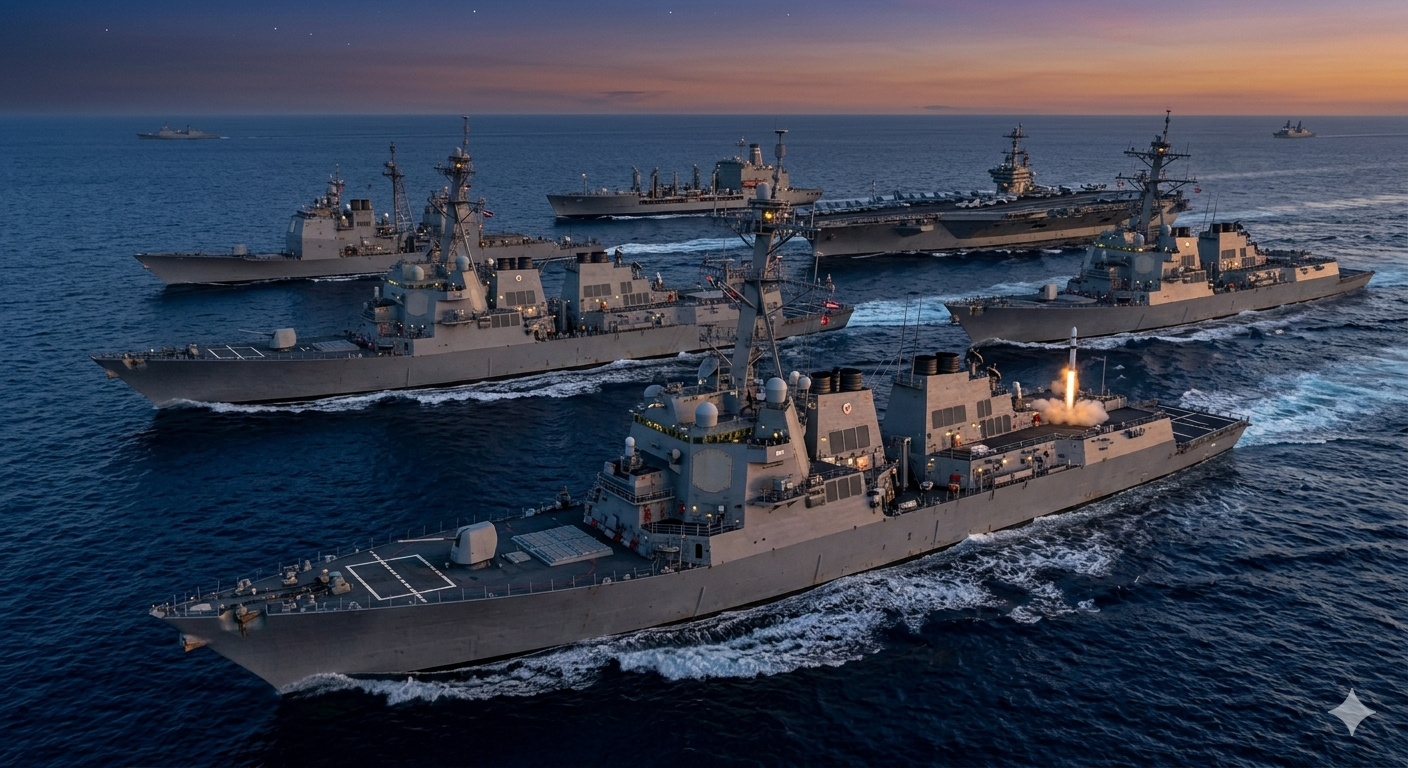
With over 15,000 tons, radars capable of tracking hundreds of targets simultaneously, and more than 120 missiles ready for launch in seconds, modern destroyers cease to be escorts and begin to dominate the naval battlefield.
-
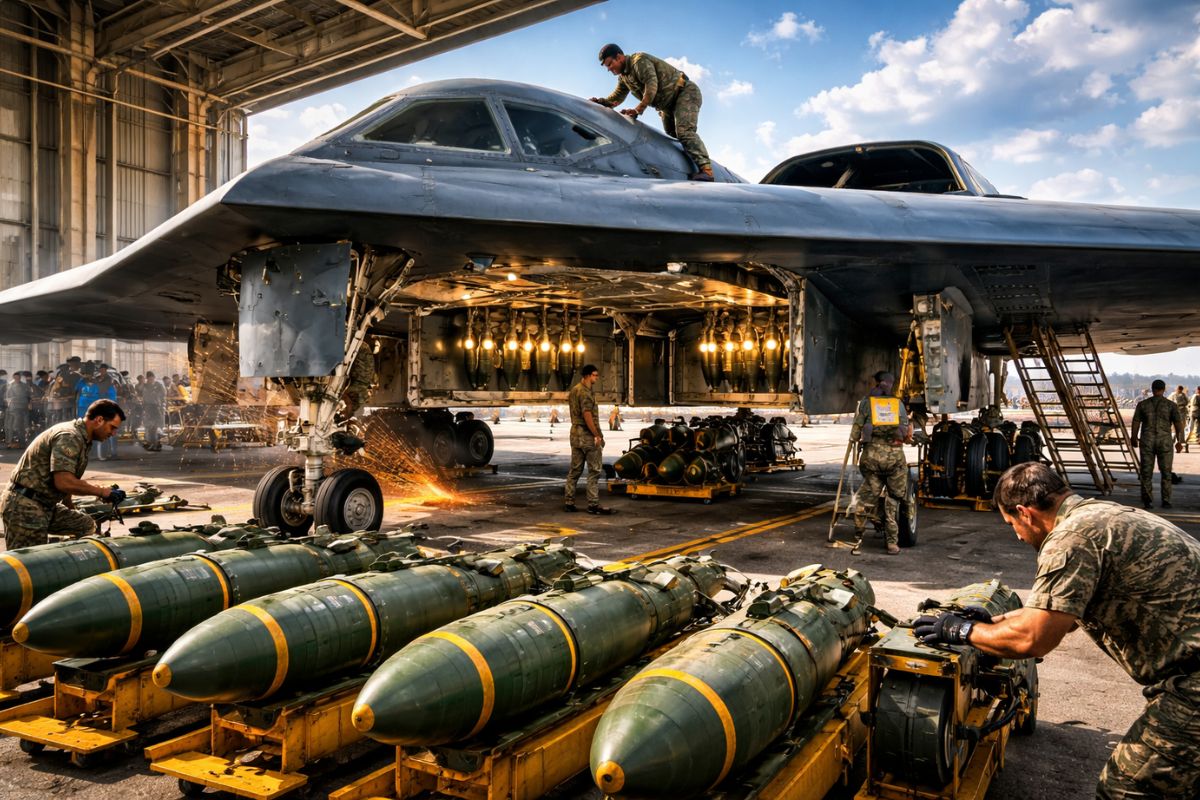
Valued at over $2 billion, the B-2 Spirit bomber requires meticulous inspection, bombs calibrated in a controlled environment, and extreme preparation to disappear from radar and launch attacks with lethal precision.

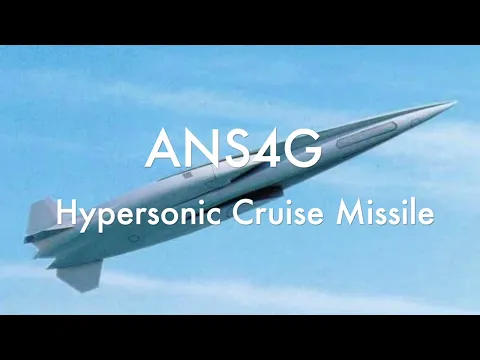

The major differentiator is the flight profile. Instead of following a ballistic trajectory, the ASN4G is expected to fly at high altitudes, with evasive maneuvering capabilities throughout its flight path. This drastically complicates detection, tracking, and interception by modern missile defense systems, which rely on predictability to operate effectively.
Moreover, the hypersonic regime reduces the adversary’s reaction time to just a few minutes, making defensive responses extremely limited.
Advanced Propulsion and Use of Atmospheric Air as Part of the System
Although France does not disclose complete details of the propulsion system, technical sources and strategic documents indicate that the ASN4G will use an advanced ramjet or scramjet engine. This type of propulsion has no moving parts and relies on the missile’s own speed to compress atmospheric air, which is then used for combustion.
The use of atmospheric oxygen provides two decisive advantages. The first is reducing the need to carry oxidizer on board, which decreases mass and increases range. The second is the ability to sustain hypersonic flight for extended periods, essential for deep penetration profiles into enemy territory.
This concept brings the ASN4G closer to the most advanced technologies currently researched by the United States, Russia, and China, but with direct application within an already existing nuclear force.
Estimated Range and Strategic Penetration Capability
The official range of the ASN4G has not been disclosed, following France’s tradition of maintaining strategic ambiguity in nuclear systems. However, independent analyses and comparisons with the ASMP-A suggest that the new missile should reach between 1,000 and 1,500 kilometers, possibly more depending on the flight profile adopted.
This range allows launching aircraft to operate outside the most densely defended areas of enemy air defense, increasing platform survivability and enhancing strategic flexibility. In a high-intensity conflict scenario, this means that France could maintain nuclear response capability even in the face of advanced access denial and area denial (A2/AD) systems.
Nuclear Warhead and Integration into French Deterrence Doctrine
The ASN4G will be equipped with a new generation nuclear warhead, designed specifically to withstand the extreme conditions of hypersonic flight, such as high temperatures, intense vibrations, and abrupt maneuvers. Estimates place its yield in the range of 100 to 300 kilotons, aligned with the French concept of proportional and credible deterrence.
Unlike other nuclear powers, France maintains a clear doctrine: deterrence serves to prevent any aggression against its vital interests, not for tactical use on the battlefield. The ASN4G fits perfectly within this concept by offering a vector that is practically impossible to intercept, reinforcing the credibility of the threat without the need for actual deployment.
Launch Platforms and the Role of the Rafale Fighter
The missile has been designed from the outset for integration with the Rafale fighter in its more advanced versions, especially the F4 and future F5 standards. This ensures operational continuity, as the Rafale is the cornerstone of French combat aviation and will remain in service for several decades.
Aerial launch provides the ASN4G with superior strategic flexibility compared to silo-based or fixed platform missiles. Aircraft can be repositioned, dispersed, and employed unpredictably, increasing the complexity of the adversary’s defensive planning.
The Global Context: Direct Response to the Hypersonic Arms Race
The development of the ASN4G does not occur in isolation. It is a direct response to the advancement of hypersonic weapons by other major powers, such as Russia’s Kinzhal and Zircon, China’s hypersonic glide vehicle programs, and the United States’ efforts with systems like the ARRW and HACM.
By investing in a nuclear hypersonic missile fully integrated into its strategic force, France positions itself as the only European power with autonomous capability in this domain. This reinforces its unique role within NATO and preserves its strategic independence, a historical cornerstone of French defense policy since the Cold War.
Why the ASN4G Is Not Just a Technological Project, but a Tool of Power
More than a technical advance, the ASN4G represents a clear geopolitical message. It signals that France intends to maintain its strategic relevance in a world where speed, unpredictability, and penetration capability have become decisive factors.
By combining hypersonic propulsion, a nuclear warhead, flexible aerial platforms, and a consolidated doctrine, the ASN4G emerges as one of the most sophisticated deterrence systems currently under development. Its entry into service, expected in the 2030s, should guarantee France a permanent place in the core of global military powers in an increasingly unstable landscape.








-

Uma pessoa reagiu a isso.