





 Portuguese
  English
  Spanish
  3 min of reading
  10 comments


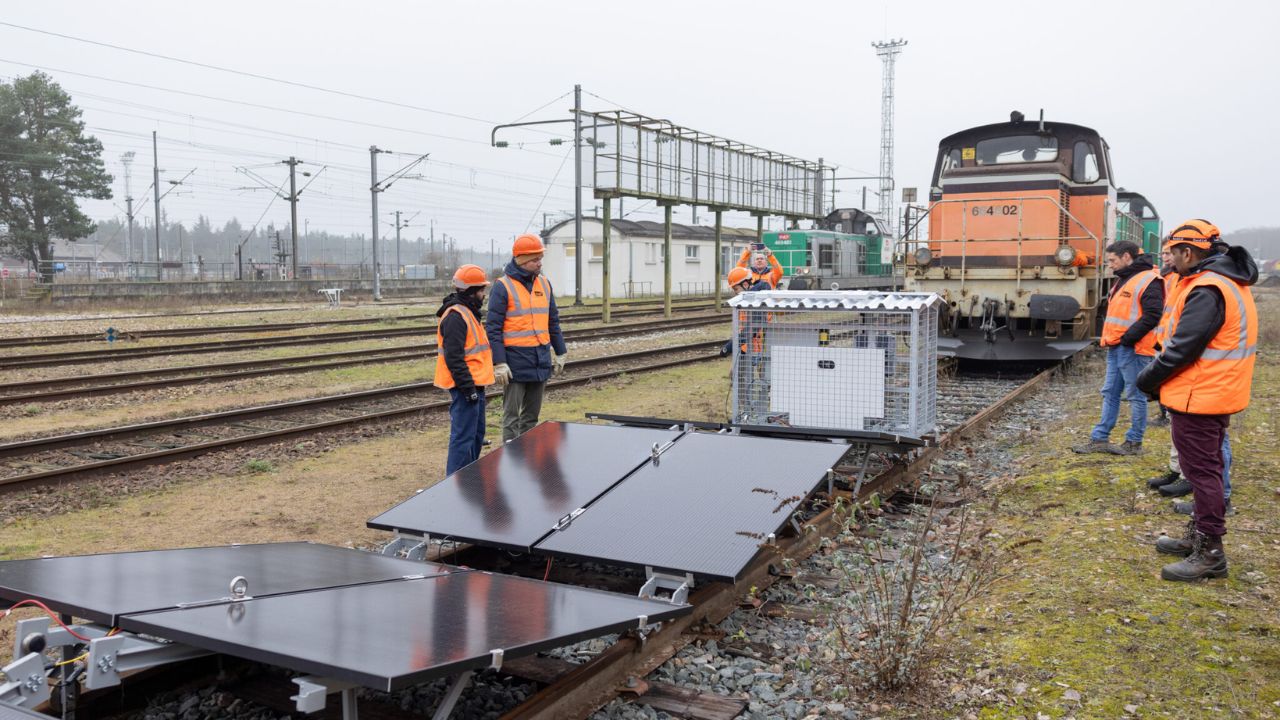


With More Than 32,000 Km of Railroad Tracks, France Bets on the Solveig Project to Install Solar Panels on Abandoned Tracks, Generating Clean Energy and Boosting the Goal of 1,000 MW by 2030!
You know those kilometers and more kilometers of railroad tracks that are no longer useful? Well, France has found a way to make use of them – and the solution makes you think: “Why hasn’t anyone done this before?”
The country is testing an innovative scheme to cover these tracks with solar panels, creating a true carpet of clean energy. The Solveig Project was inspired by an idea that is already underway in Switzerland and could be a game changer in how we utilize unused spaces to generate sustainable electricity.
But does this really work? And, more importantly: will other countries copy this idea from France?
-
Renewable energy advances over protected areas in Brazil, and a survey by the Energy Transition Observatory reveals silent impacts that challenge environmental conservation and pressure sensitive traditional territories.

-
Rio Grande do Sul accelerates energy transition: State invests in renewable technologies and consolidates decarbonization strategies and pathways to attract billions in new industrial investments.

-
With 160,000 m² of collectors, an area larger than 20 football fields, Silkeborg, in Denmark, hosts a solar thermal plant that heats 19,500 homes and could become the largest solar heating plant in the world.

-
A study reveals the expansion of renewable energy procurement in Brazil and shows how companies are taking advantage of opportunities to reduce expenses, ensure energy efficiency, and strengthen strategic environmental commitments.


The Renewable Energy Dilemma: Where to Place Solar Panels?

We always hear about solar and wind energy, but there’s one detail that no one likes to admit: these gigantic projects tend to cause an absurd visual impact. Many people complain that wind turbines spoil the landscape, and solar panels occupy large areas of land that could be used for other purposes.
The French solution was to think outside the box (or rather, off the rooftops). If there are already abandoned railroad tracks, why not use them for something useful? The idea is simple and efficient: instead of leaving these spaces idle, they will be covered with solar panels and will help supply the country’s own railway network.
How the Solveig Project Works in France?
The plan is straightforward: install solar panels on the tracks and store the generated energy in modular containers. This makes everything more practical, as the inverters and batteries can be moved to where they’re needed most.
By the way, the name Solveig was chosen for a reason – it hints at the idea of “solar solution” in France. And things are already moving forward: the first eight solar panels were installed at the Achères technical center, where they will be tested for six months to see if the idea really works.
There’s another interesting detail: the installation doesn’t require foundations or complex works. A mechanical arm places the panels on the tracks, and they are securely fastened to prevent them from flying away in the wind. However, if it ever becomes necessary to remove them, they can be quickly dismantled without leaving a trace.
The Future of Solar Energy on Tracks in France
If the tests are successful, SNCF’s plan is to expand this technology across the country’s entire railway network. And the numbers are impressive: SNCF alone has more than 32,000 kilometers of operational tracks. Additionally, the idea is to cover decommissioned railway lines, helping to generate even more energy.
The company has an ambitious goal of installing 1,000 MW of solar panels by 2030, and this innovative system could be the key to reaching that target.
But France is not alone in this. Switzerland has also started testing this solution and, in addition to the tracks, is installing solar panels even on the walls of highways! In other words, the movement is already happening and could spread rapidly across Europe and the world.









Esta ideia já está a ser praticada em autoestradas na Coreia do Sul. No meio entre as duas faixas de rodagem. Faz coberto e aproveitado para ecovias
Sem alarde, a China já está coberta de painéis solares, não quer depender de carvão e outras….
O que mais tem no Brasil é água e sol, as fontes de energia menos poluentes do mundo.
O Brasil, precisa de mais ferrovias. Um dos principais fatores, que contribuíram para as rodovias ficarem ruins é a falta de trens de passageiros, e de cargas. Com isso, o aumento intenso de caminhões pesados aumentaram, consideravelmente, com consequente depreciação das mesmas. Isso, só vai ser possível, com uma parceria PÚBLICO-PRIVADA, e uma vontade política constante. Não dependendo, tão somente, do compromisso de um só Governo. Todavia, com investimentos públicos, como formas de subsídios. É preciso, dar importância ao trem de passageiros, que também é importante. E, um sistema ferroviário integrado, à nível transcontinental, para mostrar mais interesse, parte dos passageiros, que proporcionará maior lucratividade para as companhias ferroviárias. Com isso, eles vão abandonar seus automóveis de viagens, que estão causando inúmeros acidentes rodoviários, e lotação nas rodovias.