





 Portuguese
  English
  Spanish
 5 min of reading
  0 comments


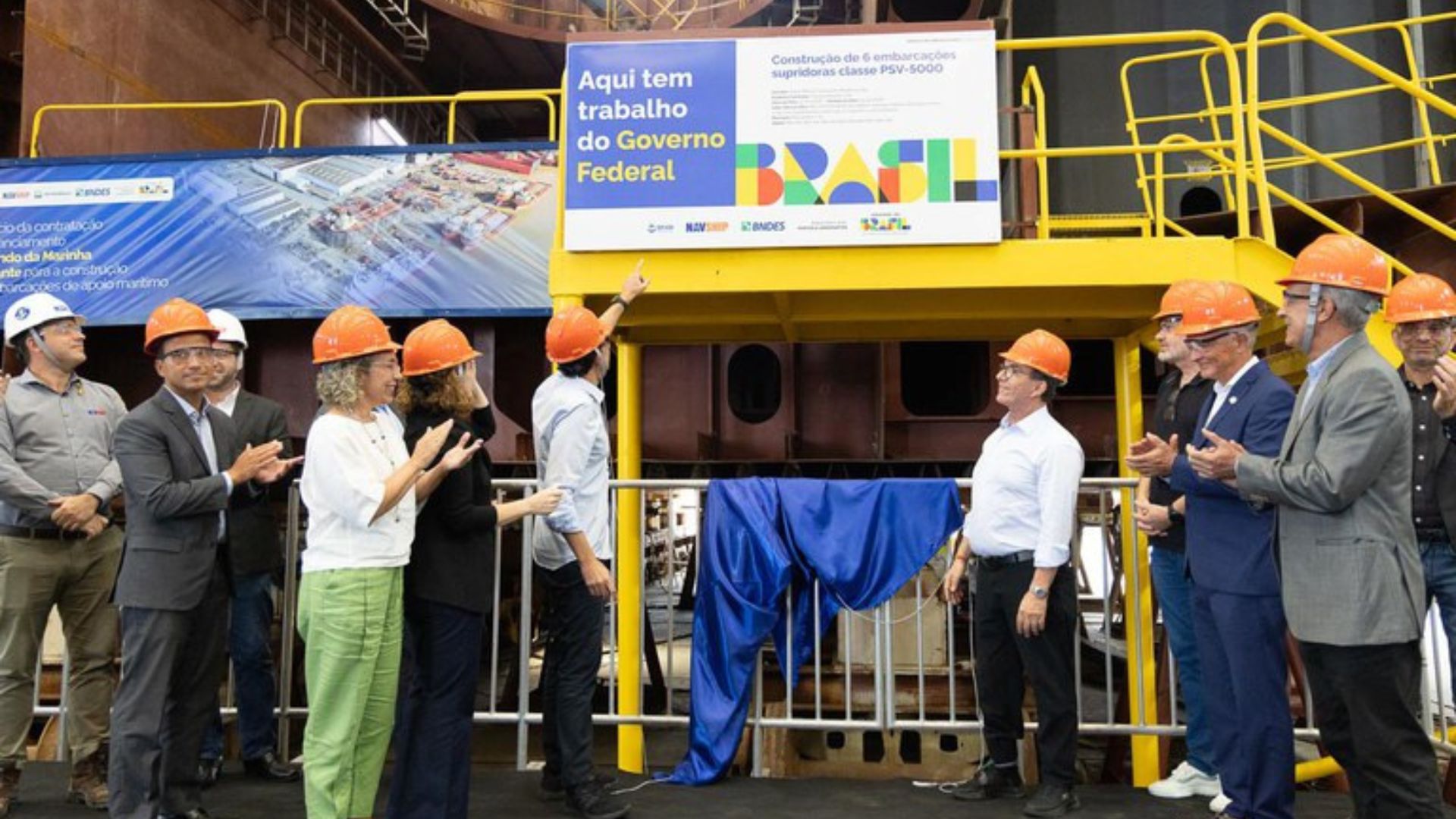
Resources from the Merchant Marine Fund Boost the Construction of Offshore Vessels in Santa Catarina, with Financing from BNDES, Job Creation, and Strategic Advances in the Oil and Gas Sector
On January 21, 2026, the Minister of Ports and Airports, Silvio Costa Filho, announced the approval of R$ 2.3 billion in resources from the Merchant Marine Fund allocated for the construction of six offshore vessels for maritime support operations in the oil and gas industry. The financing, structured by BNDES, strengthens the shipbuilding industry in Santa Catarina and marks a new advance in the recovery of the sector in Brazil.
The project is expected to generate more than 1,200 direct jobs, boosting the regional economy, stimulating the naval production chain, and expanding national technological capacity. The vessels will be built at the Navship shipyard in Navegantes (SC) and will utilize hybrid technology, focusing on energy efficiency and emission reduction, aligning with the sustainability agenda of the maritime sector.
Merchant Marine Fund Expands Investments in the Brazilian Shipbuilding Industry
The funding approved by the Merchant Marine Fund is among the most significant ever allocated for the construction of offshore vessels in the country. Of the total authorized, R$ 134 million has already been disbursed, ensuring the immediate start of works and the mobilization of the responsible shipyard.
-
Brazilian giant expands borders in the Southeast: Petrobras confirms new oil discovery in ultra-deep waters in the pre-salt of the Campos Basin.

-
Alert in the global energy market: Severe tropical cyclone hits the coast and disrupts gas production at major plants in Australia, threatening global supply.

-
Petrobras finds high-quality oil in the pre-salt at 113 km from RJ and reignites expectations about strategic reserves in the Campos Basin.

-
Ocyan opens registrations for startups focused on innovation in the oil and gas sector and will select projects for Innovation Day with the support of Nexio.


The fund is considered the main financing instrument for the Brazilian shipbuilding industry, allowing for large-scale projects with timelines compatible with the complexity of the sector. In Santa Catarina, the impact is direct, as the state concentrates modern shipyards, skilled labor, and a consolidated production chain.
The Merchant Marine Fund is essential to ensure that naval production remains in Brazil, strengthening the local industry and reducing external dependence.
Hybrid Offshore Vessels Focusing on Efficiency and Sustainability
The six offshore vessels financed will feature hybrid propulsion systems, capable of operating with different fuel types and advanced energy storage solutions. These technologies allow for reducing emissions of pollutants, improving energy consumption, and increasing operational efficiency.
This type of vessel meets the growing environmental requirements of the oil and gas industry, which faces global pressure for more sustainable practices without compromising safety and reliability in offshore operations.
The adoption of hybrid technology aligns the Brazilian shipbuilding industry with international standards, potentially enhancing its competitiveness and ability to export technical knowledge.
Santa Catarina Consolidates Strategic Position in Shipbuilding
The choice of Santa Catarina as the project’s base reinforces the state’s prominence in the national shipbuilding industry. The Navship shipyard, located in Navegantes, boasts modern infrastructure, experience in offshore segments, and the capacity to execute highly complex projects.
In addition to direct jobs, the investment invigorates sectors such as metallurgy, engineering, logistics, specialized technical services, and industrial suppliers. This creates a multiplier effect in the local and regional economy.
Santa Catarina establishes itself as a strategic hub for the construction of offshore vessels, enhancing its economic and industrial relevance on the national stage.
Role of BNDES in Financing Offshore Vessels
The financing structured by BNDES is crucial for the project’s viability. The bank acts as the financial agent of the Merchant Marine Fund, offering long-term credit compatible with the production cycles of the shipbuilding industry.
This approach ensures financial predictability, risk reduction, and stimulates the technological modernization of Brazilian shipyards. According to the federal government, the adopted model reinforces the industrial development policy based on productive investment and job creation.
Job Creation and Strengthening of the Production Chain
The venture aims to create over 1,200 direct jobs, encompassing technical professionals, engineers, welders, designers, managers, and skilled workers.
This volume of hiring strengthens local incomes and contributes to the qualification of the workforce. During a visit to the shipyard, Minister Silvio Costa Filho emphasized that the project is part of a historical cycle of revitalization of the shipbuilding industry in Brazil.
According to him, the country ended 2025 with the highest volume of concessions ever recorded, with over R$ 300 billion in contracts projected through 2029. Job and income generation is seen as a central axis of the sector’s development policy, with a direct impact on the regional and national economy.
Oil and Gas Industry Boosts Demand for Offshore Vessels
The financed vessels will be used for operations in the oil and gas industry, a sector that remains strategic for the Brazilian economy. Exploration in deep waters demands a modern, safe, and efficient fleet for maritime support.
By investing in the national construction of these vessels, Brazil strengthens its operational sovereignty, allowing for reduced logistical costs and decreased reliance on foreign ships. The integration between the naval industry and oil and gas is vital to ensure energy security, operational efficiency, and international competitiveness.
Public-Private Partnership and Brazilian Industrial Policy
The National Secretary of Waterways and Navigation, Otto Luiz Burlier, emphasized that the project is a clear example of public-private partnership, involving various agencies of the Federal Government and the private sector.
According to him, the record use of resources from the Merchant Marine Fund reflects a strategy aimed at job creation, industrial strengthening, and increasing national productive capacity.
The industrial policy prioritizes domestic production, technological innovation, and valuing the Brazilian workforce, which are considered essential pillars for facing an increasingly competitive international scenario.
Revival of the Shipbuilding Industry and Perspectives for the Coming Years
Data presented by the Ministry of Ports and Airports indicate that jobs in the naval sector more than doubled in less than three years, demonstrating a consistent recovery of activity in Brazil.
Investments in offshore vessels, supported by BNDES and the Merchant Marine Fund, are part of a long-term strategy to consolidate the shipbuilding industry as a strategic sector of the national economy.
The expectation is for continued investments, with new projects, modernization of shipyards, and expansion of the fleet aimed at the oil and gas sector.
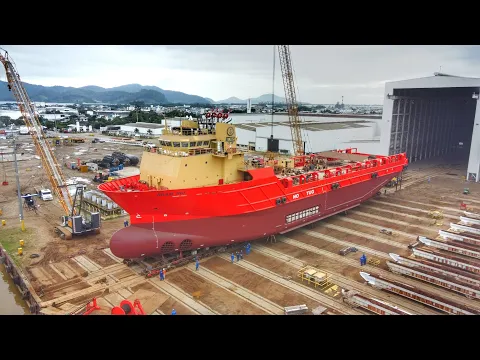

Investment Reinforcing Sovereignty, Technology, and Development
The investment of R$ 2.3 billion from the Merchant Marine Fund in the construction of offshore vessels in Santa Catarina, with financing from BNDES, marks a milestone for the Brazilian shipbuilding industry.
The project generates jobs, strengthens the production chain, incorporates hybrid technology, and enhances the country’s competitiveness in the oil and gas sector. Furthermore, it contributes to regional development and national productive sovereignty.
In a challenging global scenario, the strengthening of the Brazilian shipbuilding industry consolidates itself as a strategic vector for economic growth, innovation, and sustainable income generation.









Seja o primeiro a reagir!