





 English
  Francês
  Alemão
  Italiano
  Japonês
  Norueguês
  Portuguese
  Spanish
 6 min of reading


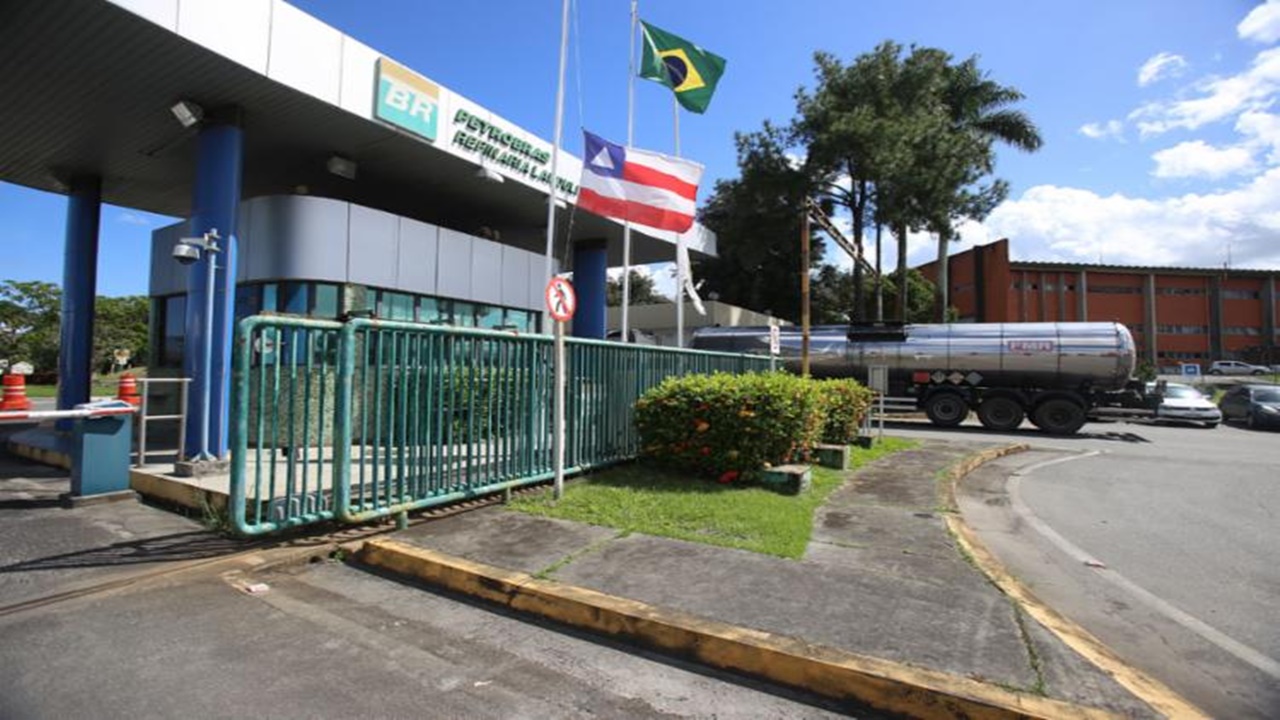
Acelen Is Interested in Keeping All Refinery Employees, Who Have the Option to Be Reallocated to Other Petrobras Units
Petrobras has completed negotiations for the sale of RLAM with the Abu Dhabi prince, who founded Acelen aiming to manage and operate the Landulpho Alves-Mataripe oil refinery (RLAM). The Group that will take over the unit on December 1st of this year is already announcing its plans for increased production, as well as aiming for integration with other industries and boosting the economy of the state of Bahia.
Read Also
- One of the Largest Construction Retail Networks Calls for Job Vacancies in São Paulo, Rio de Janeiro, and Espírito Santo
- Looking for a Job? Ipiranga Calls for Candidates Without Experience, Recent Graduates in All Areas for Trainee Positions; Salary of R$ 7.6 Thousand!
- Camaçari Thermoelectric Plant: One of Petrobras’s Main Investments in Bahia Was Leased Yesterday (11/26) to the Petrochemical Proquigel
- With Investments Exceeding R$ 400 Billion, Petrobras Announces 15 New Oil Platforms to Begin Production in the Next Five Years
Watch the Video Below and Check Out the Full Statement from Petrobras’s Director of Refining and Natural Gas – Rodrigo Costa
The market expects that the new owner will invest in modernizing the unit, aiming to return to maximum production capacity. Currently, the refinery is limited to a maximum of 70% of its full operation.
The privatization of RLAM is part of a block of eight refineries that the oil company intended to divest. So far, in addition to RLAM, Reman, in Amazonas, has been negotiated. In this case, the final contract is expected to be signed in 2022.
-
Government unlocks R$ 554 million for a highway that has been requested for decades and accelerates the duplication of BR.
-
Without bricks, without cement, and without endless construction: the cardboard house that is assembled in modules and can be moved.

-
Billions of barrels on the equatorial margin could lead Amapá to double its oil production in Brazil — the state aims to enter the route of companies in the Campos Basin, attract investments, and boost jobs and businesses in the oil and gas sector.
-
Without bricks, without cement, and without endless construction: the cardboard house that is assembled in modules and can be moved.

Based in São Francisco do Conde, the refinery was acquired from Petrobras in March 2021 for US$ 1.65 billion, and the completion of the acquisition operation is in the final phase, according to the controlling company.
The Conclusion of the Sale Reflects the Importance of Portfolio Management and Strengthens Petrobras’s Strategy
According to Petrobras’s president, Joaquim Silva e Luna, the conclusion of the sale reflects the importance of portfolio management and strengthens the company’s strategy: “This sale operation is a significant milestone for Petrobras and the fuel sector in the country. We believe that, with new companies acting in refining, the market will be more competitive, leading to more investments, which tends to enhance the economy and generate benefits for society. It is also part of the commitment made by Petrobras with CADE for opening up the refining market. From the company’s perspective, it is a step forward in its resource reallocation strategy. In the refining segment, Petrobras will focus on five refineries in the Southeast, with investment plans that will position it among the best refiners in the world in efficiency and operational performance,” said Silva e Luna.
The president of Mubadala Capital in Brazil, Oscar Fahlgren, stated: “Our priority is to ensure excellence in the refinery’s production and operation, as well as a structured, smooth, and non-disruptive transition. It is about creating value with special attention to people and the environment. We always emphasize the long-term commitment we have to the country and the regions where we operate. This is certainly one of Acelen’s goals.”
Acelen Announces Expansion and Modernization Projects, in Addition to Focusing on Supply in Bahia with Oil Derivatives
Acelen’s executives told the Bahia Econômica newspaper that they intend to maximize the use of the refinery’s assets, investing in expansion and modernization projects, in addition to directing efforts toward regional supply of oil derivatives, unlike what is currently happening with the refinery, which has been operating well below its capacity.
According to the newspaper, the Group wants to stimulate the greatest possible integration with the existing industrial park in Bahia, especially the Petrochemical Pole, even evaluating the possibility of extending the production chain to stimulate the verticalization of production.
As an example, they mentioned the possibilities of commercializing by-products, such as Carbon Black in the rubber area, and other segments capable of establishing a strategy of integration with local agents for extending the production chain.
Petrobras will maintain what is called assisted operation in the first year, gradually transferring full control to Acelen.
Acelen Wants to Keep All Employees of the RLAM Refinery in Bahia
Regarding the workforce, the company reports that the sale process ensured stability for all employees, but the company’s interest is to keep everyone, especially those with experience, while aiming to increase work productivity, enhancing the asset’s competitiveness. According to the sales contract, workers who do not wish to remain with the company can be relocated to other Petrobras units.
The company states that it will work to preserve the environment, seeking improvements in energy efficiency, the use of renewable energy, and adopting policies to increase the use of carbon credits. They say that Acelen’s strategy is the gradual transition from high-carbon to low-carbon investments, in accordance with international strategy.
The executives also stated the intention to foster local wealth generation in cooperation with municipal governments and to increase tax collection, such as the ICMS, with increased production, and to cooperate with the government of the State of Bahia in stimulating local production and developing new businesses.
RLAM was the first national refinery built in the country, starting operations in September 1950. It has gone through various operational updates. The refinery produces LPG, gasoline, diesel, and petrochemical naphtha, among other products. In addition to the facilities in Mataripe, RLAM has supply terminals and pipelines in the municipalities of Madre de Deus, Candeias, Jequié, and Itabuna.
Mubadala Capital, which controls Acelen, is the asset management subsidiary of Mubadala Investment Company, a leading global sovereign investor based in Abu Dhabi. In addition to managing its own investment portfolio, the subsidiary manages US$ 9 billion in third-party capital from institutional investors, including a fund in Brazil, three private equity funds, two early-stage venture capital funds, and one public fund.
Mubadala Investment Company is a sovereign fund that operates as the state holding company of the United Arab Emirates. The organization is closely linked to Mohamed bin Zayed, the crown prince of Abu Dhabi.
In Addition to RLAM, Two Other Refineries Have Already Signed Their Sales Contracts
In addition to RLAM, two other refineries have already signed their sales contracts: the Isaac Sabbá Refinery (REMAN) in Amazonas, whose signing took place on 8/25, and the Shale Industrialization Unit (SIX) in Paraná, with a contract signed on 11/11. Once the divestment processes for these two units are also completed, Petrobras will account for about 50% of the fuel supply market in the country. Besides Petrobras and the new operators of these refineries, the market is also supplied by importers and producers of biofuels.
As part of the refining repositioning strategy, Petrobras reinforces its commitment to sell the REGAP, LUBNOR, REPAR, REFAP, and RNEST refineries and is investing in technologies to make the refineries that will remain with the company doubly resilient, both from an environmental and economic perspective. The company will continue as the largest refiner in the country, focusing on the refineries in SP and RJ that are closest to oil production and the largest consumer centers, with 50% of the refining capacity in the country. The projection is to double the supply of low-emission diesel S-10 in these refineries within 5 years, with increasingly competitive costs.









Seja o primeiro a reagir!