





 Portuguese
  English
  Spanish
  3 min of reading
  0 comments


Financial Stability Board Sees Rising Fragility in Markets and Calls for Joint Action to Prevent New Global Crisis
The Financial Stability Board (FSB), an entity linked to the G20, issued a serious warning on October 13, 2025. The body warned that the global financial system faces concrete risks of collapse due to escalating economic uncertainties and geopolitical tensions.
As highlighted by President Andrew Bailey, the situation demands immediate and multilateral cooperation among the world’s largest economies.
The goal is to preserve global stability and prevent new financial shocks.
Markets Under Rising Pressure
According to the FSB, the international financial markets are becoming increasingly vulnerable to sudden shocks.
The warning highlights the increase in sovereign debts and the intensification of trade disputes.
Although several nations have shown recent recovery, asset valuations appear disconnected from real economic prospects.
This disconnection may result in disorderly and abrupt adjustments.
In a letter dated October 8, 2025, sent to G20 nations, Bailey warned that geopolitical instability remains a critical factor. This instability increases market volatility, even after recent advances.
Therefore, the president emphasized that strengthening economic cooperation among countries is essential.
He advocated for joint actions “to prevent crises and support global growth responsibly.”
-
Unemployment rises again to 5.8% at the beginning of 2026, raising alarms about the end of temporary positions and its impact on the Brazilian job market.

-
Document organization can cut invisible costs in small businesses, a simple step that prevents waste, rework, and losses in daily operations.

-
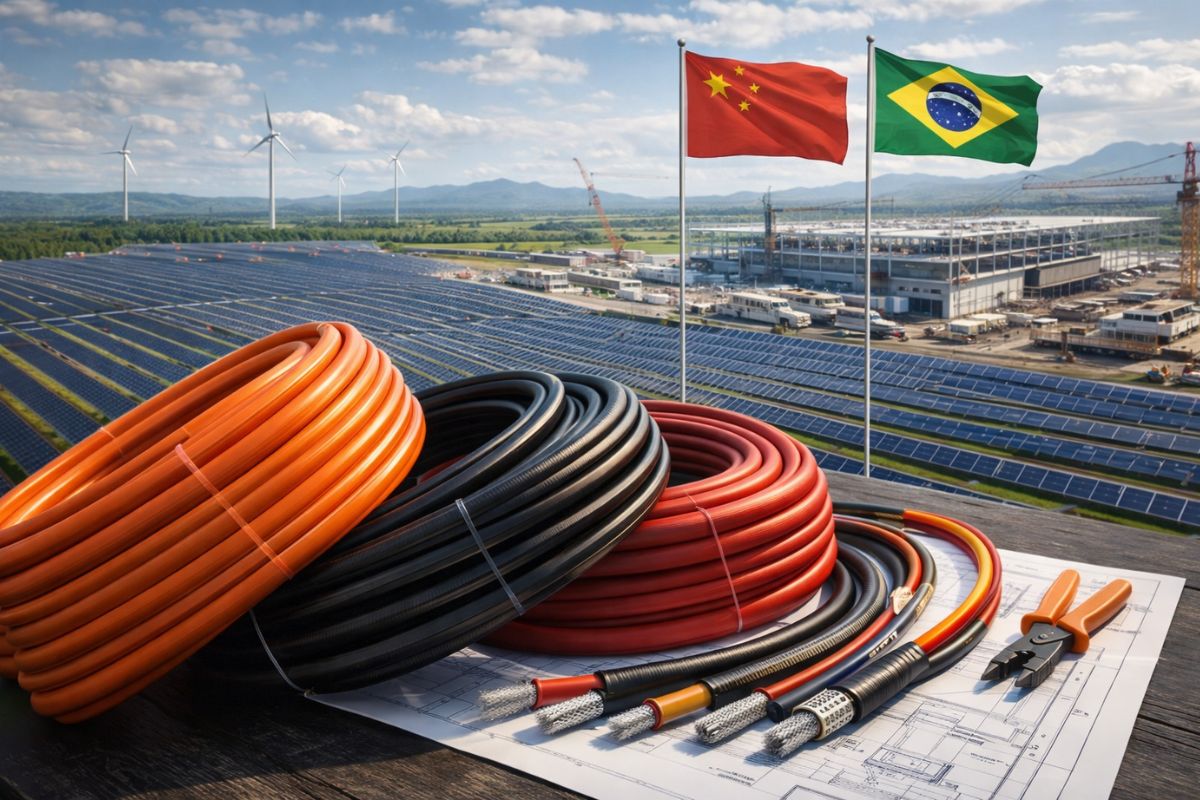
Chinese giant worth nearly R$ 4 billion that manufactures cables for electric cars, solar energy, and robotics wants to open a factory in SC.
-
Many employers do not know, but the law guarantees domestic workers a 25% increase in salary during trips, 50% for overtime, 20% for night shifts, and 17 additional benefits that can lead to labor lawsuits if not paid.


Concern About Global Indebtedness
The FSB also emphasized that the continued rise in public debt is one of the main risks to global financial stability.
The growth of interest rates and the increased cost of credit exacerbate the situation. This is particularly concerning in emerging economies that depend on foreign capital.
Bailey reinforced that establishing international regulatory standards and strengthening multilateral cooperation are indispensable.
These measures aim to reduce the risks of financial collapses. As highlighted by the body, the lack of global fiscal coordination makes the system more vulnerable. This fragility paves the way for speculative movements and capital withdrawals.
Thus, “the need for global rules and collaboration remains clear and urgent,” said the president of the FSB.
Escalation of the Trade War Between the US and China
The G20 warning was issued shortly after the announcement by the President of the United States, Donald Trump.
He imposed additional tariffs of 100% on Chinese products, reigniting the trade war between the two largest powers in the world.
The measure, announced on October 10, 2025, provoked an immediate response from the Chinese Foreign Ministry.
The government of Beijing assured that it would not be intimidated and promised equivalent economic retaliations. However, on October 12, Trump softened his rhetoric and posted a message on social media.
According to him, “he does not wish to harm China but to help stabilize its economy”.
The American president acknowledged that Chinese leader Xi Jinping is facing “a difficult moment.” Nonetheless, he emphasized that both countries must seek dialogue and trade balance. The
objective is to avoid more severe consequences for the global economy.
The Urgency of International Cooperation
In light of such a volatile and unpredictable scenario, the Financial Stability Board reiterated that solidarity among G20 nations is essential.
This unity is seen as key to restoring confidence in the markets and preventing a global systemic crisis.
The body stressed that global economic stability depends on the implementation of joint policies.
Such policies should be prioritized by countries with greater weight in the international financial system.
According to analyses released by Reuters and Bloomberg, the G20 needs to act in a coordinated and transparent manner.
The measures must be effective in preventing economic ruptures that could compromise global sustainable growth. While the world watches the developments of the trade war between the United States and China, expectations grow regarding the G20’s positioning.
The decisions to be made in this week’s meetings in Washington could define the trajectory of global markets.
The FSB’s message is clear: the lack of cooperation could cost dearly to the global economy. Powers need to act quickly to avoid a new global financial collapse.
Will they succeed in time?










-

-

3 pessoas reagiram a isso.