





 Português
  Inglês
  Espanhol
 6 min de leitura
  0 comentários


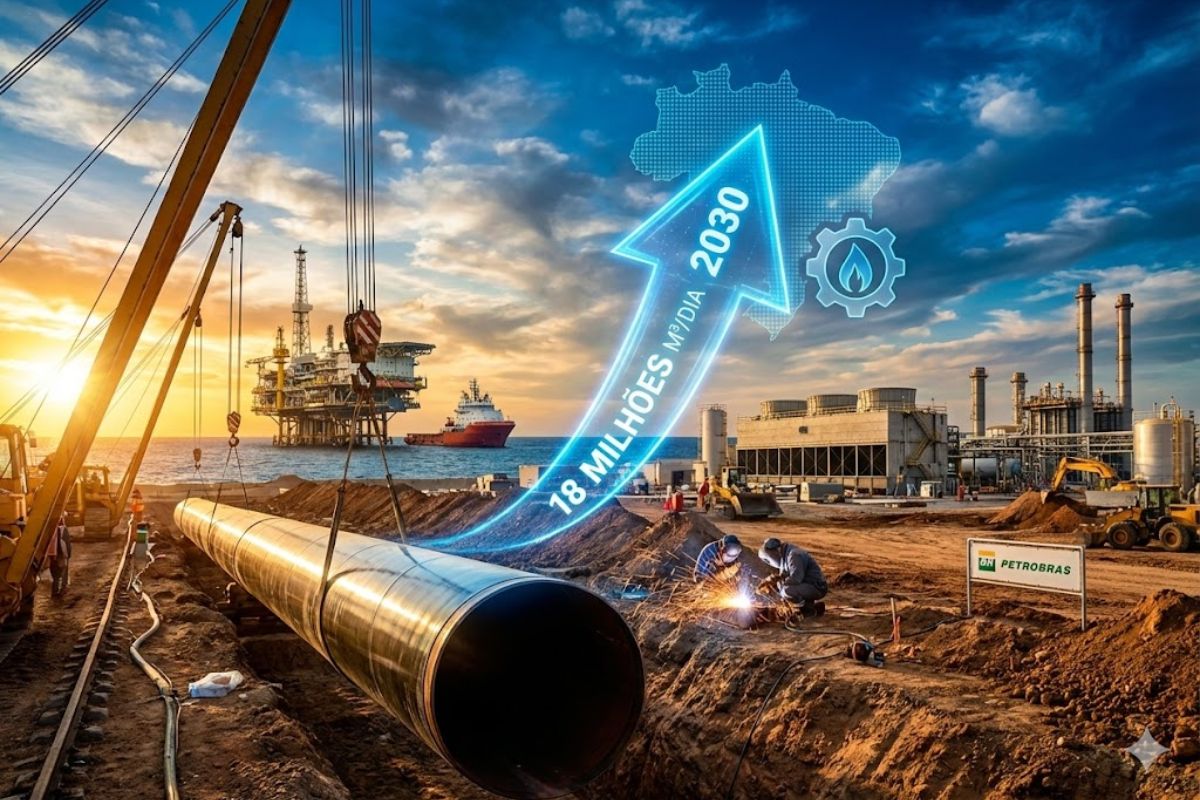
With The Gas Pipeline From Sergipe Designed To Transport 18 Million M³/Day Of Natural Gas From Sergipe Deep Waters, Petrobras Tries To Save The Project, Rebalance The Gas Market, Anchor Thermoelectric Plants, Fertilizers, And Redesign The Energy Supply In The Country To Be More Stable, Cheaper, And Competitive Internally By 2030
Petrobras has turned the Sergipe gas pipeline into a central pillar of its strategy for natural gas as the decade turns. The 18 million m³/day line is treated internally as the only way to bring Sergipe Deep Waters out of the paper, connect the new producing frontier to the rest of the country, and add relevant volume to the national gas market.
In practice, the state-owned company places the weight of its 2026-2030 plan on the same axis: the Sergipe gas pipeline, the Sergipe Deep Waters platforms, and contracts that guarantee firm demand for this natural gas. If this equation doesn’t close, Petrobras itself admits that the project is at risk, which would cast doubt on one of the few major bets for organic growth in the Brazilian gas market.
How The Sergipe Gas Pipeline Supports Sergipe Deep Waters
In the company’s internal documents and public statements, the message is clear. Without the Sergipe gas pipeline, Sergipe Deep Waters does not pay for itself.
-
Offshore industrial demand in Macaé skyrockets with the recovery of oil and gas and could grow by up to 396% by 2026 in the Campos Basin.
-
Offshore industrial demand in Macaé surges with the recovery of oil and gas and could grow by up to 396% by 2026 in the Campos Basin.
-
Brazilian giant expands borders in the Southeast: Petrobras confirms new oil discovery in ultra-deep waters in the pre-salt of the Campos Basin.

-
Alert in the global energy market: Severe tropical cyclone hits the coast and disrupts gas production at major plants in Australia, threatening global supply.


The first platform of the project, called SEAP 2, has been kept as a firm investment in the business plan, with start of operations expected in 2030, but its feasibility is tied to the ability to deliver natural gas transported to a gas market capable of absorbing the volume.
Petrobras works with a scenario in which the Sergipe gas pipeline goes into operation together with SEAP 2.
The pipeline was designed to transport up to 18 million m³/day, connecting the deepwater fields to the existing transportation system.
Without this infrastructure, a significant portion of the natural gas would remain reinjected or underutilized, which would reduce the economic attractiveness of Sergipe Deep Waters.
Petrobras’ own presidency has repeatedly stated that “for Sergipe to survive, the gas pipeline has to happen”, summarizing the strategic weight of the project.
This is important both from a local perspective, concerning revenue and jobs, and for the long-term planning of the gas market, which depends on new producing centers to avoid being restricted to the pre-salt and imports.
Role of Sergipe Deep Waters in The New Natural Gas Supply
Sergipe Deep Waters comprises seven fields declared commercial in the middle of the last decade and was conceived as the main new frontier for natural gas in deep waters outside the traditional Southeast axis.
For Petrobras, this province is an opportunity to geographically diversify the supply and reduce the logistical concentration of natural gas in a few corridors.
SEAP 2 is the first step in this movement.
A second platform, SEAP 1, is still under analysis and depends on both market conditions and the results of the ongoing bidding process.
If both systems are contracted and connected to the Sergipe gas pipeline, the Sergipe Deep Waters block could sustain, for years, a relevant share of the expected growth in Petrobras’s natural gas supply.
Together with projects like Rota 3 and Raia, Sergipe Deep Waters appears in Petrobras’s official scenarios as one of the bases to increase the availability of natural gas in the integrated network to levels above 60 million m³/day by the end of the decade.
This projection only materializes if the Sergipe gas pipeline is auctioned in time and completed within the 2030 schedule, maintaining the linkage between production and transportation.
How The Sergipe Gas Pipeline Changes The Gas Market
The impact is not limited to Sergipe.
In Petrobras’s planning, the Sergipe gas pipeline is the link that connects a new source of natural gas to consumers in the Northeast and the rest of the country, expanding competition in the gas market and reducing dependence on LNG terminals and import contracts.
Part of the natural gas from Sergipe Deep Waters is expected to be directed to thermoelectric plants, fertilizer units, and energy-intensive industries.
Another part is likely to strengthen the gas market supply in firm or seasonal contracts, giving Petrobras more commercial tools to compete for customers with other suppliers.
The logic is clear: the larger the domestic volume, the more room there is to redesign prices and terms in the gas market.
Petrobras also sees the Sergipe gas pipeline as a way to anchor new private investments in infrastructure, such as distribution networks, integrated thermoelectric plants, and industrial projects that only advance with long-term guarantees of natural gas.
In Petrobras’s view, Sergipe Deep Waters is not just an offshore field, but a platform for regional restructuring of the gas market.
Regulatory Risks, Timeline, and Pressure For Decision
Despite the firm discourse, the advancement of Sergipe Deep Waters and the Sergipe gas pipeline is not yet fully guaranteed.
The project has already gone through years of uncertainty, revisions of platform bids, and discussions about royalties and tax burdens.
The recent round of vetoes in MP 1304, which maintained more favorable conditions for areas like Sergipe, was presented precisely as a response to concerns about the viability of SEAP.
Within the company, the next trigger is the contracting of SEAP 2. Only after this stage does Petrobras intend to launch the bidding for the Sergipe gas pipeline, scheduled for 2026.
Until then, the company’s natural gas team is working on commercial modeling, demand studies, and negotiations with potential consumers to ensure a robust design for the gas market when the volume begins to arrive.
The timeline is considered tight.
Any delay in the investment decision, in the order of the platforms, or in the implementation of the Sergipe gas pipeline could push Sergipe Deep Waters beyond 2030, affecting not only Petrobras’s cash flow but also the country’s natural gas supply projections and the equilibrium of the gas market at the beginning of the next decade.
What Is At Stake For Petrobras And For Brazil
For Petrobras, the Sergipe Deep Waters and Sergipe gas pipeline package is a stress test of the new strategy for natural gas.
The state-owned company wants to show that it can turn discoveries into production and production into effective contracts in the gas market, without relying exclusively on pre-salt or LNG imports to meet commitments with thermoelectric plants, industries, and fertilizers.
If the plan succeeds, Sergipe Deep Waters will have served as a laboratory for a model that can be replicated in other basins, combining investments in production, dedicated transportation, and demand building.
If the plan fails, the message will be the opposite: without coordination between infrastructure, regulation, and the gas market, even large reserves of natural gas remain underutilized.
Ultimately, the performance of the Sergipe gas pipeline and Sergipe Deep Waters helps to answer a bigger question that concerns both Petrobras and the country.
Will Brazil be able to use its natural gas as a vector for industrial competitiveness and electrical safety, or will it continue to be trapped in cycles of scarcity, volatile prices, and projects that do not come to fruition in the gas market?
In your view, should Petrobras prioritize the natural gas from Sergipe Deep Waters and accelerate the Sergipe gas pipeline or concentrate investments in other energy sources for Brazil in the coming years?










Seja o primeiro a reagir!