





 English
  Francês
  Alemão
  Italiano
  Japonês
  Norueguês
  Portuguese
  Spanish
  4 min of reading
  0 comments


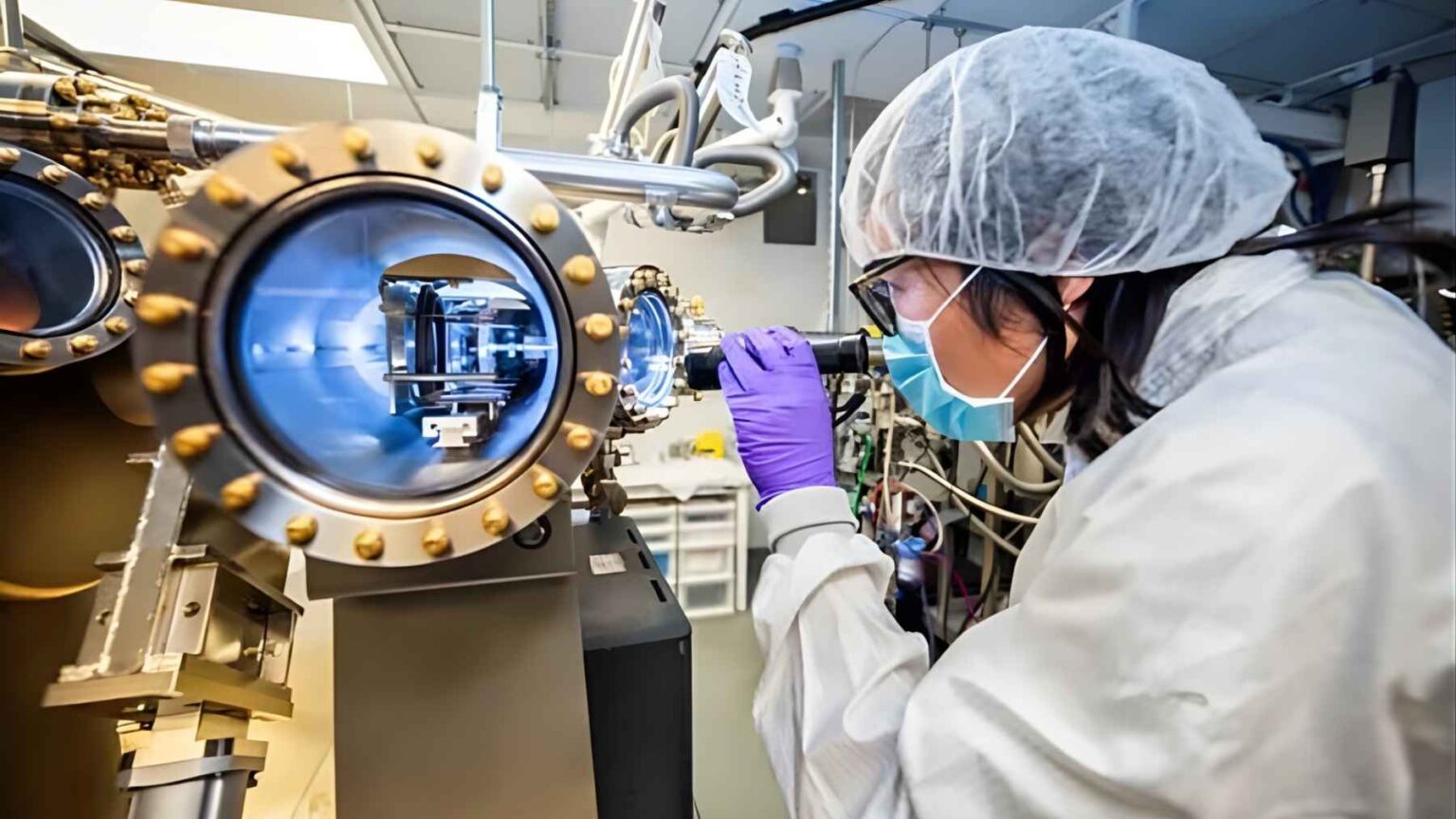
Study Conducted By Researchers From The Chinese Academy Of Sciences And The Hong Kong University Of Science And Technology Presents An Artificial Photosynthesis System That Uses Natural Solar Light To Convert Carbon Dioxide And Water Into Carbon Monoxide, An Input Used In The Production Of Synthetic Fuels
A team of Chinese scientists has developed a laboratory-based artificial photosynthesis system capable of transforming carbon dioxide and water into essential components for synthetic fuels using only natural solar light.
The research indicates a possible pathway to recycle carbon dioxide, one of the main greenhouse gases, and transform it into energy inputs that can be used in the current infrastructure of fuels and engines.
The system described by the researchers uses a material called “charge reservoir,” designed to temporarily store solar energy in the form of electric charge.
-
A “silent skill” is allowing Brazilians to earn up to R$ 22,000 per month without a degree and become indispensable for companies that rely on millions of data to survive.

-
Researchers at the Toyota Research Institute found that if a human uses robotic arms to flip a pancake 300 times in an afternoon, the robot learns to do it on its own the next morning, and this is currently the most promising method to solve the biggest bottleneck in modern robotics.

-
Goodbye iron: a common item in households is starting to lose space to technology that smooths clothes in minutes without an ironing board and with less energy consumption.

-
Antarctica reveals an unusual clue high in the Hudson Mountains, and what appeared to be just an isolated rock began to expose a secret hidden under the ice for ages.


This energy is released on demand to drive chemical reactions capable of converting carbon dioxide into carbon monoxide.
According to the study, water acts as the sole source of electrons for the process, eliminating the need for additional chemicals. The result is an experimental system that seeks to link renewable energy to the industrial production of fuels.
The Attempt To Reproduce Plant Photosynthesis
For decades, scientists have been trying to reproduce in the laboratory the natural mechanism of photosynthesis that occurs in plants. This process transforms carbon dioxide and water into energy-rich molecules using solar light.
The so-called artificial photosynthesis follows this same principle and seeks to generate fuels that can be stored and used without adding fossil carbon to the atmosphere. However, many experimental systems face significant limitations.
Among the main issues is the rapid loss of photo-generated charges during chemical reactions. In several cases, experiments also depend on sacrificial additives, substances consumed during the process that end up generating waste.
The New Catalyst Created By Chinese Researchers
To overcome these challenges, a team led by Yu Huang from the Chinese Academy of Sciences worked in partnership with Shuncheng Lee from the Hong Kong University of Science and Technology.
The researchers developed a new type of catalyst inspired by natural components found in plant cells that retain electrons during photosynthesis. Instead of using organic molecules, the group designed an inorganic charge reservoir.
This reservoir was constructed with tungsten trioxide modified with small amounts of silver. The goal of the material is to capture and store electrons generated by solar light, allowing them to be used later in chemical reactions.
How The Artificial Photosynthesis-Based System Works
In the system developed by the researchers, water acts as the sole supplier of electrons for the chemical reactions. This feature makes the process potentially cleaner and more suitable for larger-scale applications.
When sunlight hits the tungsten-based material, the photo-excited electrons are captured by the charge reservoir. Instead of disappearing rapidly, as occurs in many experiments, they remain stored.
The material releases these stored electrons when needed, allowing the reduction of carbon dioxide to occur independently of water electrolysis. This separation of steps improves control over the chemical reactions in the system.
Production Of Carbon Monoxide And Synthetic Fuels
In the experiment, the charge reservoir was combined with a catalyst known as cobalt phthalocyanine. This material is used in research for its ability to assist in the reduction of carbon dioxide.
The combination of the two components allowed for the production of about 1.5 millimoles of carbon monoxide per gram of catalyst per hour.
This result represents approximately one hundred times more production than when cobalt phthalocyanine is used alone.
The system achieved this performance under natural sunlight, converting carbon dioxide into carbon monoxide. This compound can serve as a starting point for producing methane and other synthetic fuels.
Potential Industrial Applications Of Artificial Photosynthesis
Although carbon monoxide is often associated with engine pollution, in the chemical industry it serves as a raw material for producing hydrocarbons similar to gasoline or jet fuel.
Industrial processes already use gas mixtures rich in carbon monoxide and hydrogen to manufacture synthetic liquid fuels. In this context, producing this gas from carbon dioxide could become an alternative to fossil sources.
The proposal put forth by the study points to the possibility of extracting carbon dioxide from the air or industrial emissions and transforming it into energy raw material.
In this way, the process could reduce dependence on oil extraction.
Research Is Still Considered A Proof Of Concept
Other research groups are also investigating systems inspired by photosynthesis.
Teams from the University of Cambridge, for example, have developed artificial leaves capable of using sunlight, carbon dioxide, and water to produce fuels.
The Chinese strategy focuses on the inorganic charge reservoir that can be combined with different catalysts. The system also keeps water as the sole sacrificial partner in the process.
The researchers describe the catalyst as a proof of concept aimed at advancing artificial photosynthesis toward practical fuel production. The main study was published in the scientific journal Nature Communications.







Seja o primeiro a reagir!