





 Portuguese
  English
  Spanish
  4 min of reading
  0 comments


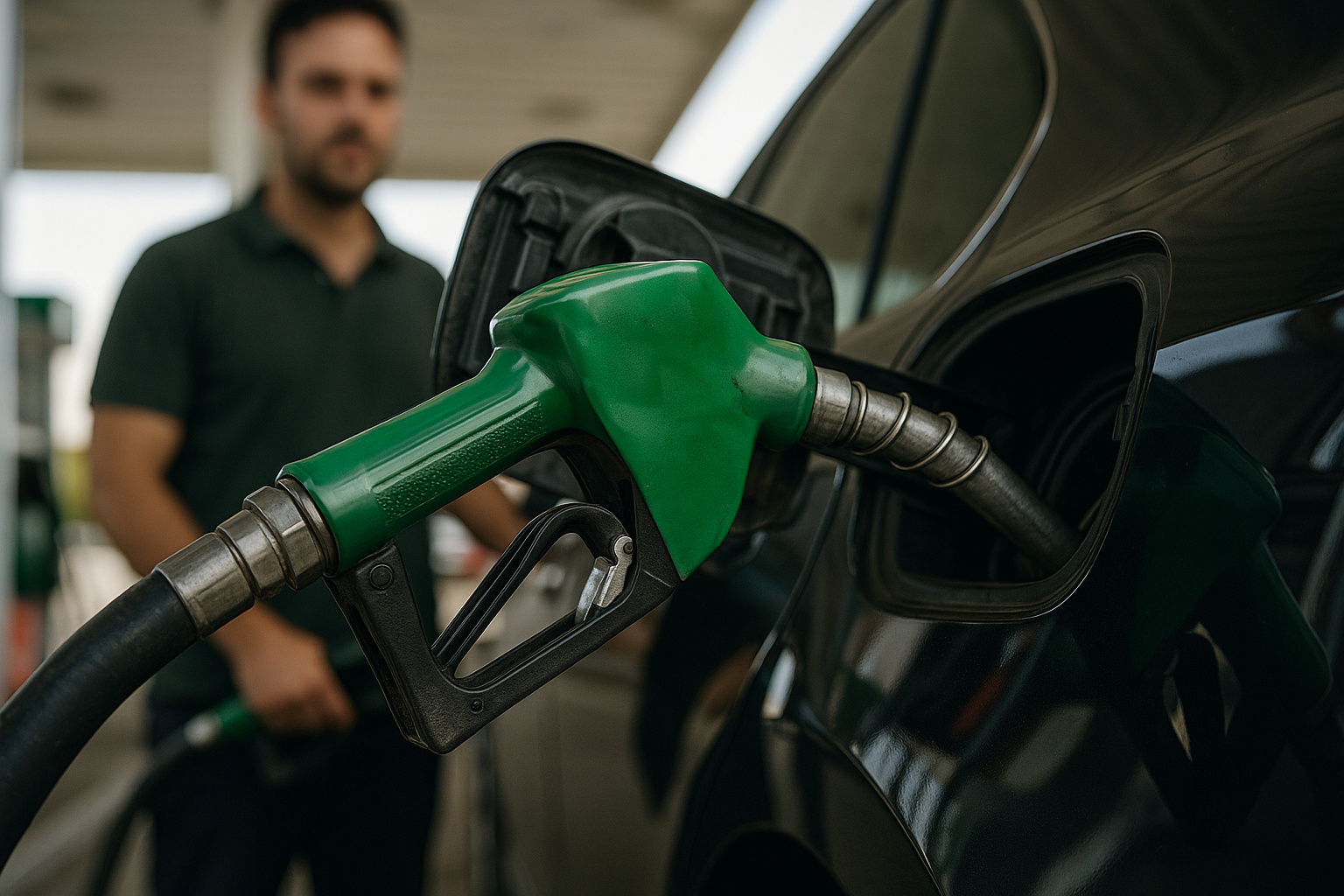
New Mixture Promised Reduction of Up to R$ 0.20 Per Liter, but Official Survey Shows Drop of Only R$ 0.02 Between August and September
A significant change was approved by the federal government on August 1, 2024, when E30 gasoline, consisting of 30% anhydrous ethanol, came into effect nationwide. The measure was announced as part of the Future Fuel Law (14.993/24) and carried the promise of reducing the average price of the liter by up to R$ 0.20. However, recent data from the National Agency of Petroleum, Natural Gas and Biofuels (ANP) shows that the actual drop was only R$ 0.02, disappointing consumer expectations.
Expectations of Savings Were Not Confirmed
The Ministry of Mines and Energy (MME) projected that the new gasoline could lower consumer costs. The first estimate indicated a reduction of R$ 0.20 per liter, but then the calculations were adjusted to R$ 0.13. However, surveys from the Brazilian Institute of Oil and Gas (IBP) indicated a different outcome: instead of the expected drop, internal data suggested even a R$ 0.01 increase.
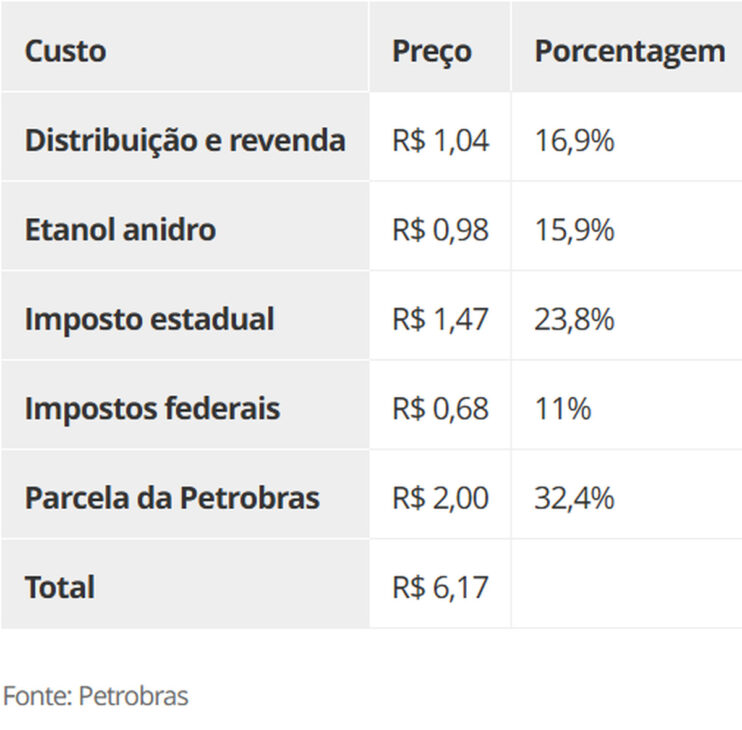
According to Petrobras, during the week of September 7 to 13, 2024, the average price of gasoline in Brazil was R$ 6.17, compared to R$ 6.19 recorded before the adoption of the new mixture. The minimal reduction, of just two cents, made the difference between theory and reality at the gas stations clear.
-
A new law being voted on in Brazil proposes a minimum fare of R$ 10 per trip and R$ 2.50 per kilometer for Uber and 99 drivers, and promises to ensure they earn as well as taxi drivers did during the golden age of taxis in the country.

-
Bauer Group collapses after failed judicial recovery: 25 years, 800 vehicles, and a network of gas stations leave a debt of R$ 50 million and 100 layoffs, exposing costs, tight margins, and expensive credit in Brazil.
-
Premium Brazilian brand born during the pandemic brings fine cocoa from Bahia to Switzerland, Germany, and France, has won 9 awards, and claims to have the 2nd best milk chocolate in the world: meet Luz Cacau.
-
Júnior Friboi has just purchased one of the largest feedlots in all of Brazil, located in Goiás, with the capacity to produce 180,000 cattle per year, and the manager has already come forward to reassure employees about layoffs.


Why Prices Did Not Drop as Expected
According to experts from the IBP and the Brazilian Center for Infrastructure (CBIE), the government’s analysis was considered excessively optimistic. This is because the fuel market is free and depends on multiple factors, many of which are unpredictable. Still, E30 gasoline meets strategic objectives in two main fronts:
- Environmental: contribute to the decarbonization of the fleet, in line with sustainability goals;
- Economic: reduce the dependence on imported gasoline, priced in dollars.
However, a crucial factor weighed against immediate reduction: the anhydrous ethanol became more expensive right during the period of adopting the new mixture. As emphasized by Ana Mandelli, executive director of the IBP, “the increase in demand pressures supply, and tight margins make any variation capable of directly impacting the final price.”
Hidden Costs and Price Variation at Stations
For Pedro Rodrigues, director of the CBIE, the variation is impossible to predict because the fuel market is free. Stations have autonomy to set the final price, which creates discrepancies even within the same city.
Petrobras maintains an official platform that details the composition of gasoline prices. In September 2024, the national average was R$ 6.17, but there were significant differences between states:
- São Paulo: R$ 6.07;
- Ceará: R$ 6.31.
In practice, it was enough to drive a few kilometers to notice the disparity. In the North Zone of São Paulo, for example, there were stations selling gasoline for R$ 5.99, while in neighborhoods in the West Zone, the liter reached R$ 6.25.
Objectives of Increasing Ethanol in the Mixture
The decision to raise the ethanol content in gasoline from 27% to 30% was based on two main factors:
- Environmental: tests by the ANP confirmed that vehicles fueled with E30 emit fewer pollutants. Despite this, there is still no conclusive study on the impact of the measure on reducing greenhouse gas emissions;
- Financial: since Brazil is self-sufficient in the production of sugarcane and its derivatives, expanded use of ethanol decreases the need for gasoline imports.
According to government estimates released in July 2024, the transition from E27 to E30 will enable:
- avoiding the import of 760 million liters of gasoline per year;
- increasing national ethanol production by 1.5 billion liters annually;
- generating around R$ 9 billion in investments in the sugar-energy sector.
Future of E30 Gasoline in Brazil
In addition to the adoption of E30, the Future Fuel Law establishes that the mixture may reach 35% ethanol in subsequent years, provided that technical viability is proven. The aim is to align the country with global practices of energy transition, reducing the carbon footprint and strengthening national energy security.
Thus, even though the direct effect on consumers’ wallets was practically null in 2024, the strategy behind E30 gasoline is clear. It seeks to consolidate a cleaner fuel matrix, less dependent on fluctuations in the international market and more aligned with environmental goals.
What do you think should be a priority for Brazil: betting on an immediate price reduction to ease consumer burden or focusing on sustainability and long-term energy security?







Seja o primeiro a reagir!