





 Português
  Inglês
  Espanhol
  8 min de leitura
  0 comentários


Freshwater Beneath the Atlantic: 2025 Expedition Drilled the Ocean Floor and Confirms Huge Submarine Aquifer Near the U.S. Coast
In 1976, a U.S. government ship was drilling the Atlantic Ocean floor in search of oil and minerals when something unexpected appeared in the drilling pipe: freshwater. It was not just traces or small leaks. It was genuine freshwater, emerging from sediments located beneath the salty ocean tens of miles off the coast of New Jersey.
Geologists recorded the phenomenon as a geological anomaly but were unable to explain its origin at that time. The discovery was cataloged and filed away while the team moved on to other research. For decades, the record remained practically forgotten.

For almost fifty years, the presence of freshwater beneath the Atlantic floor remained in scientific limbo. It was a documented and intriguing phenomenon, but without funding, technology, or sufficient priority to be systematically investigated. This began to change only recently, when new offshore mapping and drilling techniques allowed scientists to finally explore what was hidden hundreds of meters below the seabed.
-
A bright yellow mushroom imported from Asia escaped from a cultivation farm in the United States in 2010 and is now aggressively spreading across 25 states, destroying entire communities of native fungi in American forests.

-
Buried under China, a colossal machine weighing 20,000 tons began operating as the largest neutrino detector on the planet and, in just 59 days, surpassed results that science took half a century to achieve.

-
Iran enters the center of a climate alert after the war emitted 5.6 million tons of CO2 in two weeks, surpassing the annual pollution of entire countries.

-
Lunar exploration may change after a Chinese probe finds a “cavity” of radiation that reduces the impact on astronauts by up to 20% at certain times on the Moon.

Submarine Aquifers: The Hypothesis of Giant Freshwater Reservoirs Beneath the Ocean
The idea that there could be freshwater aquifers beneath the ocean floor did not arise recently. Similar reports had appeared since the 19th century. Fishermen off the coast of Florida, for example, described curious phenomena known as “boils,” where streams of water emerged from the seabed and momentarily altered the ocean surface.
The intriguing detail was that this water did not taste salty. For a long time, these reports were treated merely as local curiosities, without systematic scientific investigation. Only in the 1980s and 1990s did researchers begin to develop geological hypotheses to explain how freshwater reservoirs could exist beneath the ocean.
The Ice Ages
The most accepted explanation involves the period of the last ice ages. At that time, global sea levels were much lower, exposing a large part of the North American continental shelf. In these then-dry regions, water from rain and the melting of large glaciers seeped into coastal sediments.
When the climate warmed and sea levels rose again, these areas were flooded once more. However, the freshwater remained trapped in the sediments, sealed by impermeable layers of clay and silt that prevented mixing with the salty ocean water.
For years, this hypothesis was considered elegant and plausible but remained purely theoretical. Without direct drilling and physical samples, there was no definitive evidence that these reservoirs actually existed on a large scale.
Electromagnetic Mapping Reveals a Gigantic Aquifer Beneath the Atlantic
The scientific turning point began in 2015, when researchers from the Woods Hole Oceanographic Institution and Columbia University applied geophysical technology typically used by the oil industry to study the marine subsoil.
The method uses electromagnetic waves capable of penetrating the sediments of the ocean floor. The technique measures how electric currents behave when passing through different underground materials. Since freshwater and saltwater have distinct electrical conductivities, this difference allows for the identification of where one type of water ends and the other begins.
The result surprised the scientific community. The survey revealed the presence of a continent-scale submarine aquifer system, extending along much of the northeast coast of the United States, from New Jersey to Massachusetts, and possibly even to Maine.
The estimated extent of this reservoir was comparable to that of the Ogallala Aquifer, one of the largest underground reservoirs of freshwater in the world, located beneath the central plains of the United States.
Despite the impressive discovery, the electromagnetic map showed only outlines and general structures. It indicated the possible presence of freshwater but did not provide fundamental information about depth, actual salinity, water age, or whether the system was still being naturally recharged.
To answer these questions, it would be necessary to do something that had never been done before: directly drill the submarine aquifer.
Expedition 501: The First Direct Scientific Drilling of an Aquifer Beneath the Ocean
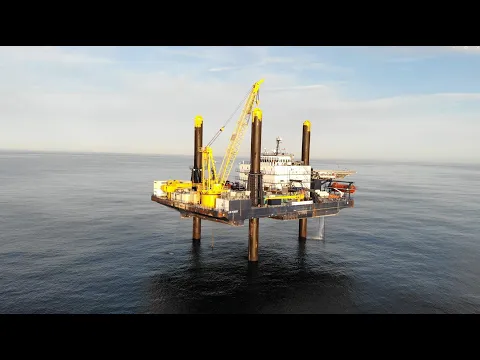
In May 2025, a specialized ship named Liftboat Robert departed from the port of Bridgeport, Connecticut, heading towards the coast of Massachusetts. The vessel belongs to a category typically used for maintenance of oil platforms or offshore wind turbines.
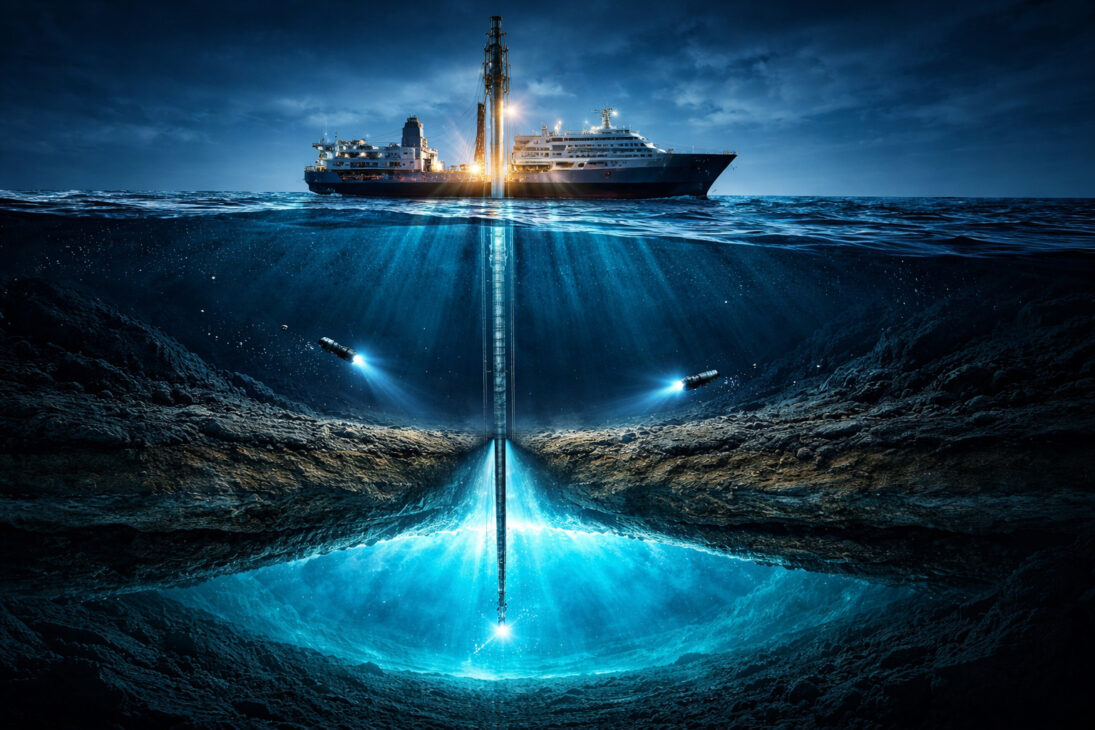
When it arrives at the work site, the ship lowers three massive metal pillars to the ocean floor and elevates above the surface of the waves. This way, it transforms into a stable drilling platform, capable of operating even in open water. This time, however, the goal was not oil.
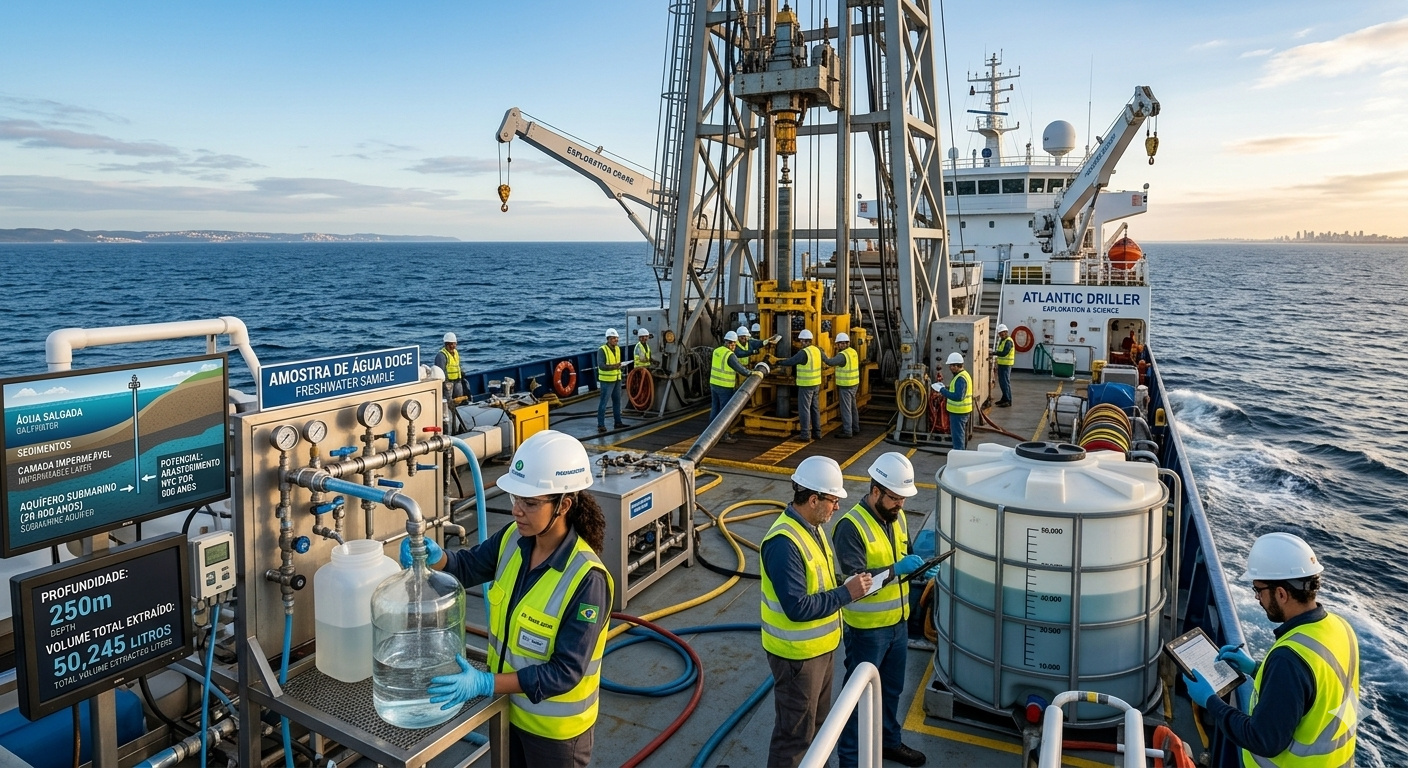
The ship carried an international team consisting of dozens of scientists from over a dozen countries. The mission was named Expedition 501 and received about US$ 25 million in funding from the National Science Foundation of the United States and the European Consortium for Ocean Drilling.
The task was simple to describe but unprecedented in practice: drill the Atlantic floor to reach the aquifer identified in the geophysical maps and collect direct samples.
Drilling Reveals Brackish Water with Much Lower Salinity Than the Ocean
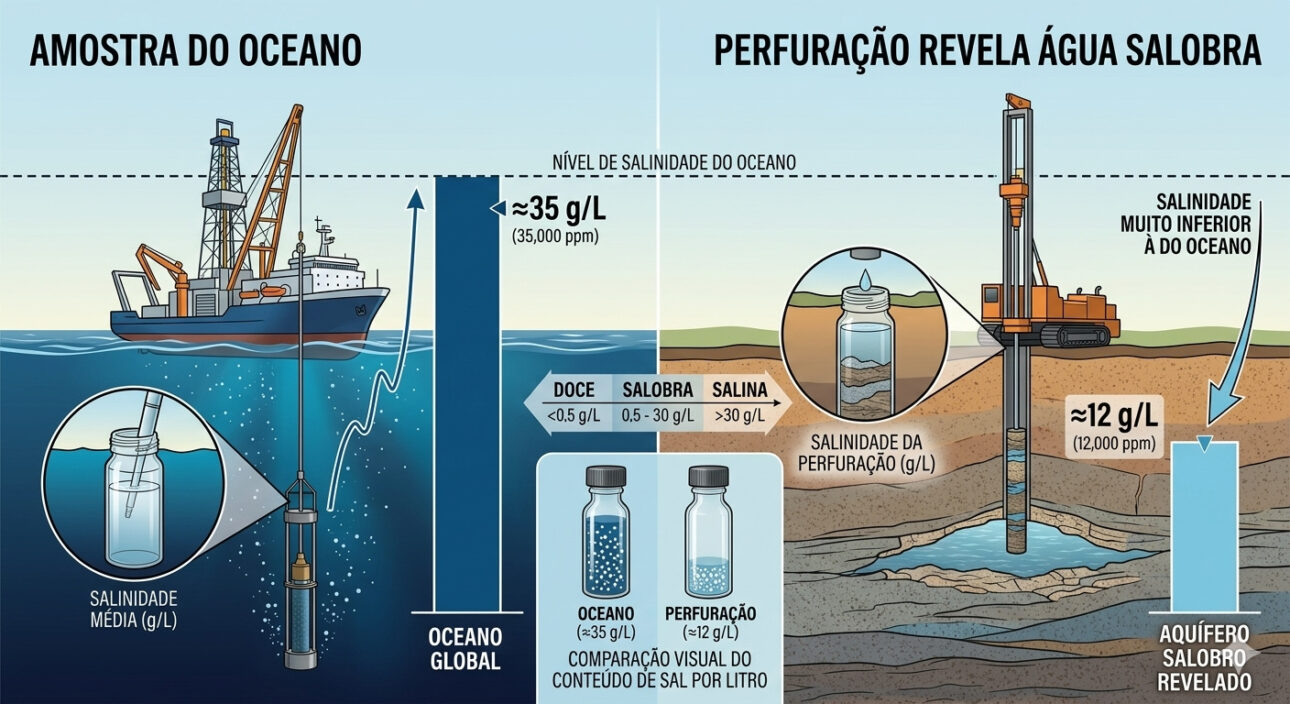
On May 19, 2025, less than twenty-four hours after the ship anchored its pillars at the first drilling point, the drill passed through the marine sediments and the first samples arrived at the surface. The initial analysis showed a salinity of four parts per thousand.
For comparison, ocean water typically has 35 parts per thousand of salt. The drinking water standard used in the United States requires less than one part per thousand.
Four parts per thousand means that the water found was brackish, but still about nine times less salty than the surrounding ocean water. This result represented a pivotal moment for the team.
Brandon Dugan, a geophysicist from the Colorado School of Mines and co-chief scientist of the expedition, described the discovery as a true “eureka” moment.
The low salinity indicated that this water had been connected to a terrestrial system at some point in geological history. In the following weeks, as the ship moved between different points located between 30 and 50 kilometers from the coast, the results became even more impressive.
The drillings reached depths of up to 400 meters below the seabed, and at some points, samples were found with salinity close to one part per thousand — practically freshwater.
Geological Structure Explains How Freshwater Gets Trapped Beneath the Ocean
The geological structure of the aquifer acts as a gigantic natural trap. The porous sediments that store the water, primarily composed of sandstones and siltstones, are trapped between impermeable layers of clay and silt.
These layers function as true natural caps that prevent freshwater from mixing with the salty ocean water. Above the reservoir lies the sea, and below it are additional layers of sedimentary rocks.
The most likely origin of this water remains the period of glaciations. During the last ice age, roughly 2.6 million to 11,700 years ago, sea levels were up to 130 meters lower than they are today.
At that time, the continental shelf off the northeast coast of the United States was dry land, covered by large ice masses. The melting of these glaciers produced immense quantities of water that infiltrated the coastal sediments.
When the ocean began to rise again with climate warming, the water got trapped in the sediments before it could escape or mix with the sea.
Expedition Collects Over 50,000 Liters of Samples for Scientific Analysis
Between May and July 2025, Expedition 501 collected over 50,000 liters of samples, including water, sediments, and rock cores. All of this material was sent to laboratories in various countries for detailed analysis.
Scientists seek to answer four fundamental questions. The first concerns the age of the water. If tests with carbon-14 and noble gases indicate ages between 15,000 and 20,000 years, the aquifer would be considered a fossil reservoir formed during the last glaciation.
Another important question is the actual extent of the system. The 2015 maps suggested a broad structure along the coast, but the drillings indicated that the reservoir may be deeper and larger than previously thought.
The third question involves the quality of the water. Besides salinity, scientists need to analyze the presence of metals, chemicals, and microorganisms.
Finally, there is the environmental question. Extracting water from these systems may alter the balance of nutrients slowly released into the ocean, which could affect coastal marine ecosystems. The complete results of the analyses are expected to be presented at a scientific conference in Germany in 2026.
Submarine Aquifers May Also Exist in Other Parts of the World
The discovery has global implications. Similar submarine reservoirs have already been detected or suggested in various regions around the globe, including areas off the coast of South Africa, Australia, Indonesia, New Zealand, Malta, and Canada. The Brazilian continental shelf, one of the largest in the world, is also considered a potential environment for similar formations, although it has never been systematically investigated.
According to Jez Everest, project manager at the British Geological Survey, phenomena of this type may be much more common than previously thought, but have rarely been directly investigated. Brandon Dugan estimates that it will take at least ten years until technology allows for the exploration of these reservoirs at a scale sufficient for urban use, if that is considered environmentally safe.
Global Freshwater Scarcity Increases Interest in Submarine Aquifers The growing interest in these reservoirs is directly linked to the global water crisis. Projections from the UN indicate that by 2030, global demand for freshwater may exceed the available supply by up to 40%.
Coastal cities in various parts of the world are already facing severe scarcity issues. In Jakarta, Indonesia, excessive extraction of groundwater has caused land subsidence of up to 25 centimeters per year in some areas. In Cape Town, South Africa, the water crisis of 2018 nearly led the city to so-called “Day Zero,” when water supply would be cut off for millions of residents.
In the United States, the Ogallala Aquifer, which supplies eight agricultural states, is being consumed much faster than it can recharge. In this context, the possibility that enormous reservoirs of freshwater are hidden beneath the ocean has ceased to be merely a geological curiosity.
Freshwater Was There All Along Beneath the Atlantic Ocean
There is a curious detail in the history of this discovery. The first evidence of freshwater beneath the Atlantic was recorded in 1976. The first map revealing the scale of the reservoir emerged in 2015. The first direct investigation through drilling only took place nearly fifty years later, in 2025.
The reason is simple: for decades, the presence of freshwater beneath the ocean had no immediate economic value nor sufficient scientific urgency to justify large investments. The situation changed when global water scarcity began to transform this geological curiosity into a potential strategic source.
Today scientists know something that seemed unlikely for decades: a huge reservoir of freshwater exists beneath the Atlantic Ocean floor. It has been there all along, hidden under hundreds of meters of marine sediment, waiting for someone to finally investigate it.







Seja o primeiro a reagir!