





 English
  Francês
  Alemão
  Italiano
  Japonês
  Norueguês
  Portuguese
  Spanish
 4 min of reading


Paraná Encourages Distributed Generation Since 2021, with the Launch of RenovaPR. Now, with Copel’s Authorization, Agricultural Units Will Benefit from Self-Production of Energy.
According to the State News Agency, in an announcement during the Show Rural in Cascavel, Paraná, where one of the most discussed topics was distributed generation, Copel authorized the installation of self-generation models. From this point on, the company’s customers can install solar capture systems that enable energy storage. The decision contributes mainly to rural production units sensitive to energy absence that require low loads, such as fish farming and tobacco farming.
Read Also:
- Construction of Solar Power Plant by CelgPAR in the State of Goiás Will Include 15 Thousand and 300 Solar Modules;
- Higher Oil and Gas Prices Increase Profits for French Multinational TotalEnergies;
- Eletronuclear Signs Contract and Resumes Construction of Angra 3 Nuclear Plant in Rio de Janeiro
A customer who owns a generating facility and connects it to the distributed generation network will be able to use the energy as needed. The ability to store energy is made possible by the so-called hybrid inverter, formed by adapted batteries, which was recently approved by Inmetro after years of research ensuring safety.
The Paraná Rural Development Institute-Iapar-Emater (IDR-Paraná) plans to include the costs of establishing the model with the hybrid inverter in the financing allowed by the RenovaPR program. Depending on the situation, the cost of the system may increase by 20% to 80% compared to a common inverter.
-
Rio Grande do Sul accelerates energy transition: State invests in renewable technologies and consolidates decarbonization strategies and pathways to attract billions in new industrial investments.

-
With 160,000 m² of collectors, an area larger than 20 football fields, Silkeborg, in Denmark, hosts a solar thermal plant that heats 19,500 homes and could become the largest solar heating plant in the world.

-
A study reveals the expansion of renewable energy procurement in Brazil and shows how companies are taking advantage of opportunities to reduce expenses, ensure energy efficiency, and strengthen strategic environmental commitments.

-
Mato Grosso do Sul excels in the sugar-energy sector: the state reaches a milestone of 22 operating mills and accelerates the production of clean energy in MS with a focus on sustainability.
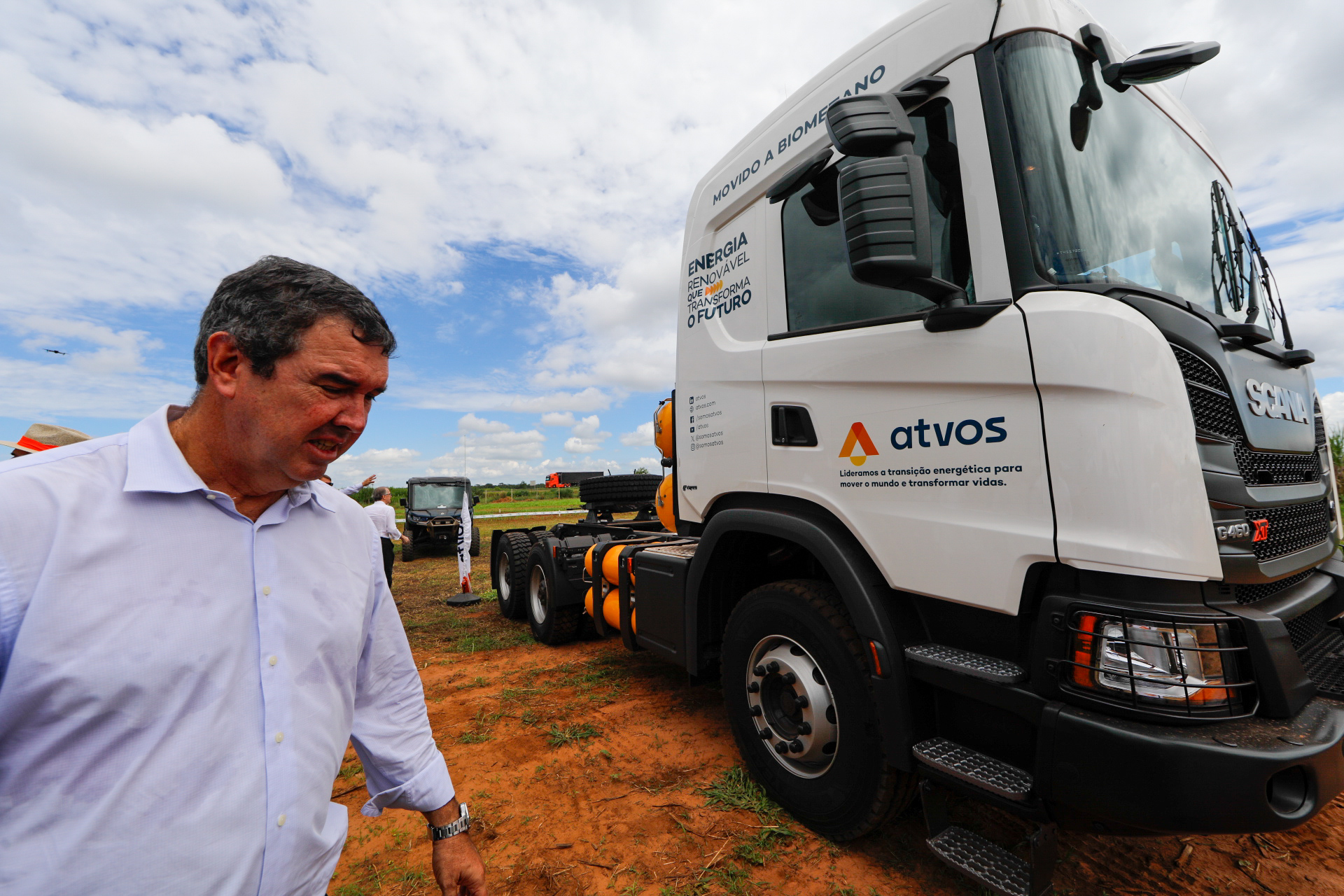

RenovaPR encourages the distributed generation of electricity in the countryside. The Paraná program sponsors renewable energy projects for farmers, enhancing the competitiveness of their actions. Since last year, more than 1,600 distributed generation projects in fields have been approved in the state.
Daniel Slaviero, president of Copel, states: “RenovaPR is a very important initiative for agribusiness, and Copel is supporting distributed generation. This brings two important messages. Firstly, that the Ratinho Junior government is unified, with a single guideline and the objective of making people’s lives easier. The second important message is to put an end to the ‘urban legend’ that Copel is against distributed generation. Lowering electricity bills benefits everyone and helps everyone.”
“It is a modern vision to create private systems that will interconnect with Copel’s three-phase system. Today, we have a favorable regulatory environment for this interaction. I do not know of any other installed capacity in Brazil that is as competent and competitive as the agribusiness sector, and to grow, it needs energy,” says Norberto Ortigara, Secretary of Agriculture and Supply. “The partnership with Copel is extremely important because the company has expertise in energy, and we have the sensitivity to usage and the needs in rural areas. That’s why we are joining forces to provide this condition to our farmers,” he adds.
Distributed Generation and Self-Production in Paraná
Currently, there are 77,635 customers in Paraná who produce their own energy and are connected to the Copel network through distributed generation. 99.75% of the connections are solar energy, while there are 126 units using biomass, 27 hydropower, and 7 wind turbines.
A large part of these connections is in cities in the West and Southwest of Paraná, which are regions with high solar irradiation. In Foz do Iguaçu, for example, there are 4,531 solar plants, equivalent to 5.83% of all the connections in the state. Other notable municipalities in Paraná include: Toledo, with 2,816 connections, Cascavel (2,566), Marechal Cândido Rondon (1,735), Palotina (1,736), and Francisco Beltrão (1,131).
How Distributed Generation Works
In this model, the consumer produces the energy they consume from a renewable source. The system is connected directly to the distribution network. If more energy is produced than consumed, the difference is converted into credits that can be used to discount the electricity bill within up to 5 years.
To carry out self-production and obtain compensation on the electricity bill, there are a few steps to follow:
- Understand your own needs – For this, it is advisable to have the assistance of a qualified technician to understand and size your demands;
- Prepare the infrastructure – Choose the model and energy source, invest in the generating facility;
- Request connection to Copel’s network – Request access from Copel in two ways: if the system is microgeneration (75kW), the request should be made through the Electric Project Web site (www.copel.com/pewweb). If the system ranges from 75kW to 5MW, the request will be via the Access Connection Web site (www.copel.com/caw).
- Network connection – Energy generation will be possible immediately after Copel confirms the documentation.






Seja o primeiro a reagir!