





 English
  Francês
  Alemão
  Italiano
  Japonês
  Norueguês
  Portuguese
  Spanish
 4 min of reading
  0 comments


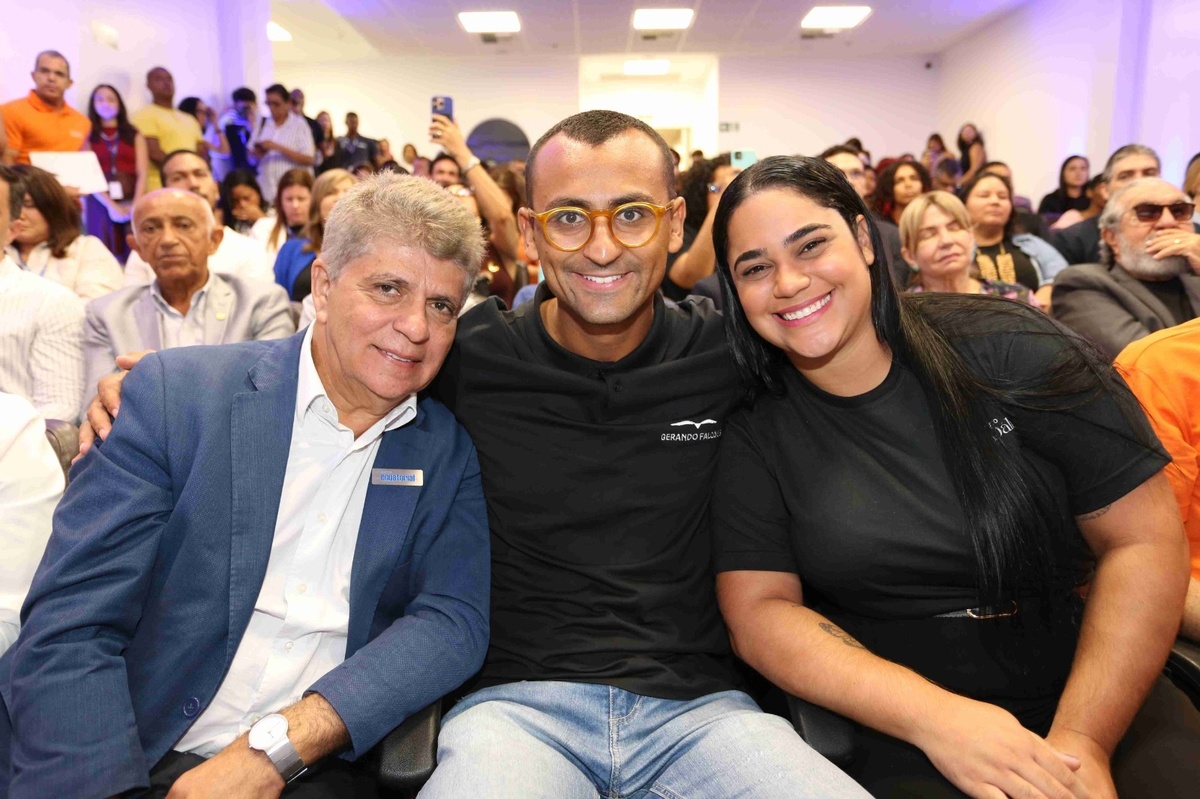
Favela 3D Initiative Arrives in Maranhão to Benefit Around 2,000 Families in Residencial Paraíso with Integrated Social Actions
Last Wednesday, March 11, the Favela 3D – Dignified, Digital, and Developed program was launched in São Luís, Maranhão.
The initiative was presented by Gerando Falcões in partnership with the Equatorial Institute.
The event took place at the headquarters of Equatorial Maranhão and was attended by Edu Lyra, CEO and founder of Gerando Falcões, Augusto Miranda, CEO of the Equatorial Group, and Sérvio Túlio, president of Equatorial Maranhão.
-
Expansion of Federal Institutes: 38 new campuses and R$ 200 million for public education; see the cities included.

-
Lula’s government changes rule in important benefit and thousands of Brazilians will no longer receive it; see what has changed.
-
New Gripen fighter makes Argentines surrender to Brazil, and the heavy reaction exposes envy, frustration, and shock at Brazil’s technological leap.

-
This discovered deposit near the Andes could change the future of Argentina, attract billions, and even shake up the global metals market.


Additionally, business, social, and community leaders participated in the launch, reinforcing the commitment to social transformation in vulnerable territories.
Thus, the project becomes part of a national strategy to combat multidimensional poverty.
What Is Favela 3D and How Social Technology Operates in Communities
First, Favela 3D is a social technology developed by Gerando Falcões.
The model acts systemically to transform Brazilian favelas and peripheries.
Moreover, the project recognizes that poverty has multiple dimensions, requiring integrated solutions.
Therefore, the actions cover educational, social, economic, and infrastructure areas.
With this approach, vulnerable communities receive structured solutions to break historical cycles of inequality.
Consequently, the central objective is to generate dignity, social inclusion, and sustainable development.
Project Will Benefit Around 2,000 Families in Residencial Paraíso
In Maranhão, Favela 3D will be implemented in Residencial Paraíso, located in the Itaqui-Bacanga region, in São Luís.
In this territory, approximately 2,000 families are expected to benefit from the program’s actions.
Thus, the community becomes the 17th Favela 3D implemented in Brazil.
According to Augusto Miranda, CEO of the Equatorial Group, the arrival of the program represents a significant advancement.
“For us, it is a great satisfaction to bring Favela 3D to São Luís,” said the executive during the launch event.
In addition, he emphasized that the city is part of the beginning of the Equatorial Group’s history.
Furthermore, Miranda stated that the initiative enhances institutional partnerships and strengthens social investment in the state.
Program Operates in Eight Strategic Fronts of Social Transformation
Structuredly, Favela 3D works in eight strategic areas of community development.
These include:
• Dignified Housing and Social Urbanism
• Access to Health
• Citizenship and Culture of Peace
• Right to Education
• Early Childhood
• Women’s Empowerment
• Culture, Sports, and Leisure
• Income Generation
Moreover, the actions are planned together with the residents of the communities.
After that, the results are monitored in a personalized manner.
Thus, community development occurs with active participation from the local population.
Residents Celebrate the Program’s Arrival in the Community
For residents of the region, the arrival of Favela 3D represents new opportunities for social development.
Manu Oliveira, social project manager at the Dália Institute and a resident of Residencial Paraíso, highlighted the initiative’s impact.
According to her, the neighborhood has existed for 28 years and continues to grow.
Now, with the new program, families will be able to expand opportunities for training and entrepreneurship.
“The arrival of the project brings more dignity and empowers many women and families who want to undertake with quality,” stated Manu Oliveira.
In addition, she declared that the goal is to transform the neighborhood into a national reference for the Favela 3D model.
Partnership Between Organizations Strengthens the Fight Against Poverty
For Edu Lyra, founder of Gerando Falcões, each new Favela 3D represents a concrete advance in combating poverty.
According to him, the implementation of the program in Maranhão marks a new chapter of social development in the region.
Additionally, Lyra emphasized that vulnerable territories can be transformed into hubs of dignity and prosperity.
During the event, he also thanked the partnership with the Equatorial Group.
He then reinforced that dignity should be a common good in the country.
On the other hand, Ofélia Silva, head of the Unicef office in Maranhão and Piauí, highlighted the role of institutional cooperation.
According to her, addressing social vulnerability requires joint action among companies, organizations, and society.
Equatorial Group Expands Social Investment with Pioneering Initiative
The Equatorial Group, through the Equatorial Institute, had previously participated in similar initiatives.
Previously, investments were made in the Vergel do Lago community, in Maceió, and in Residencial JK, in Goiânia.
Now, the company becomes the first private organization to invest in the Favela 3D program in Maranhão.
For Maurício Velloso, president of the Equatorial Institute, the partnership strengthens the institutional mission to promote community development.
Furthermore, Janaína Ali, coordinator of the institute, stated that the project reinforces the group’s commitment to improving the quality of life in communities.
According to her, Favela 3D expands access to education, culture, and citizenship in the most vulnerable regions.
Gerando Falcões and Equatorial Institute Work on Reducing Inequalities
The Equatorial Institute is the social strategy of the Equatorial Group.
Its mission is to promote inclusion and reduce inequalities through high-impact social projects.
Meanwhile, Gerando Falcões operates as a social development ecosystem focused on overcoming poverty in Brazilian favelas.
The organization works in a network with NGOs, social leaders, and community initiatives in various regions of the country.
Furthermore, programs like Falcons University, Favela 3D, Decolagem, and ASMARA are part of this strategy.
Thus, the central aim of the network is to transform social realities and expand opportunities in Brazilian peripheries.
In this context, the implementation of Favela 3D in Maranhão reinforces the advancement of structured initiatives to reduce inequalities in the country.








Seja o primeiro a reagir!