





 Portuguese
  English
  Spanish
  5 min of reading
  0 comments


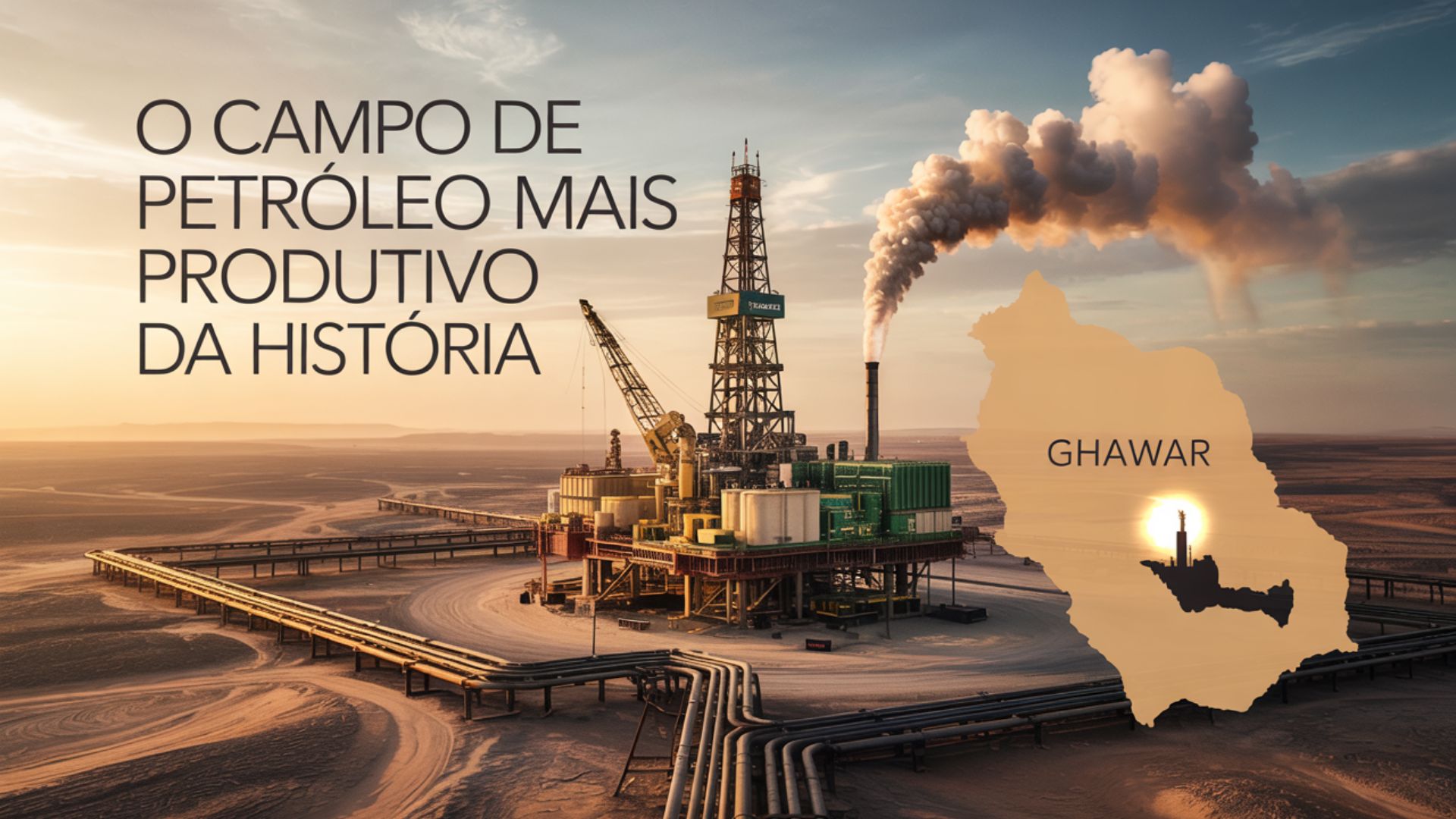
Discover How the Ghawar Oil Field in Saudi Arabia Has Produced More Than 70 Billion Barrels and Is Larger Than Many Brazilian States. Understand Its Global Strategic Importance.
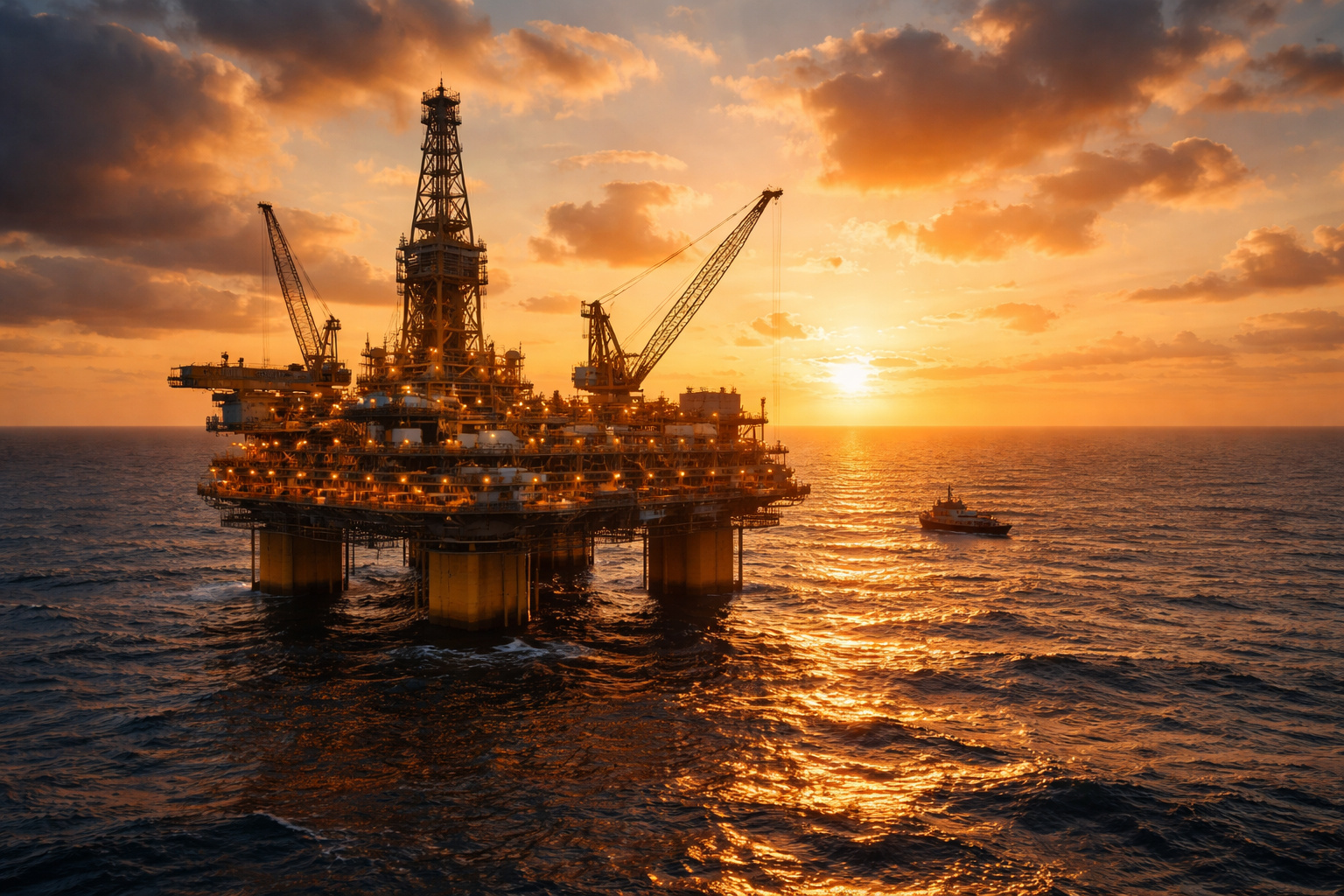
The Ghawar oil field is located in the Eastern Province of Saudi Arabia, extending approximately 280 kilometers in length and 30 kilometers in width. With a total area of 8,400 km², it is larger than the Federal District state in Brazil and nearly the size of the state of Espírito Santo. Exploited by Saudi Aramco, the world’s largest oil company, Ghawar is recognized as the largest oil field in the world by cumulative production. Since it began operating in 1951, the field has been responsible for producing more than 70 billion barrels of oil, placing it in a unique position in the history of the global energy industry.
Why Is Ghawar Considered Strategic to the World?
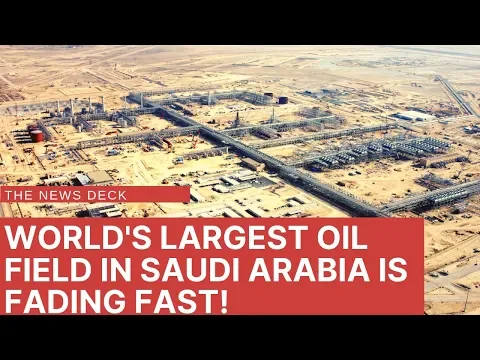

The relevance of Ghawar goes beyond its size. This field accounts for a significant share of Saudi Arabia’s oil production, a country that leads the Organization of the Petroleum Exporting Countries (OPEC) and directly influences international commodity prices.
For decades, Ghawar has been one of the main pillars of Saudi economic stability and global energy security. It is estimated that, at its peak, the field produced around 5 million barrels per day, approximately 6% of the global oil demand.
-
Offshore industrial demand in Macaé skyrockets with the recovery of oil and gas and could grow by up to 396% by 2026 in the Campos Basin.
-
Offshore industrial demand in Macaé surges with the recovery of oil and gas and could grow by up to 396% by 2026 in the Campos Basin.
-
Brazilian giant expands borders in the Southeast: Petrobras confirms new oil discovery in ultra-deep waters in the pre-salt of the Campos Basin.

-
Alert in the global energy market: Severe tropical cyclone hits the coast and disrupts gas production at major plants in Australia, threatening global supply.


Record Production and Estimated Reserves
According to reports published by Saudi Aramco itself and the International Energy Agency (IEA), Ghawar has been responsible for more than 50% of Saudi Arabia’s total oil production in various decades. Until recently, many experts estimated that the field had the capacity to produce 5 to 6 million barrels daily. However, a financial report released in 2019 revealed that its current capacity is around 3.8 million barrels per day — still an impressive number.
Geological studies indicate that the remaining reserves of Ghawar still exceed 40 billion recoverable barrels, although this number is constantly revised based on new extraction and drilling technologies.
An Oil Field Larger Than Many Brazilian States
With over 8,000 km², the Ghawar field is territorially larger than the state of Sergipe (with 21,910 km² but proportionally comparable in terms of productivity per area) and nearly the size of Espírito Santo, which has 46,095 km². To give you an idea, the Tupi oil field (Pre-salt) in Brazil has about 2,000 km² — less than a quarter of Ghawar’s area.
This colossal scale is one of the main factors justifying its dominance in the global energy sector. Ghawar is a geological structure in the shape of an anticline (arc-shaped fold), which facilitates the concentration of large volumes of hydrocarbons in highly porous and permeable reservoirs.
The field was discovered in 1948, during the golden era of exploration in the Arabian Peninsula, and began being systematically developed and explored from 1951. The state-owned Saudi Aramco, at the time a joint venture with the American Standard Oil, was responsible for the initial infrastructure that would allow Ghawar to become the energy heart of the kingdom.
The growth of the field went hand in hand with the development of the country itself, which at the time was still an emerging tribal monarchy. With the resources raised from the exploration of Ghawar, Saudi Arabia was able to invest in infrastructure, education, health, and, above all, geopolitical influence.
The Geology Behind the Wealth
Ghawar is located in a sedimentary basin rich in carbonate formations, with ideal characteristics for storing large volumes of light, high-quality oil. The main reservoir rock is the Arab-D formation, composed of limestones and dolomites with excellent porosity.
The average depth of the wells in the field is around 2,000 to 2,800 meters. Because it is a well-structured reservoir, oil can be extracted more efficiently than in more fragmented or hard-to-reach fields, such as those in the Brazilian pre-salt.
The state-owned Saudi Aramco is the sole operator of Ghawar and has full control over its production and reserves. However, its transparency has been criticized for years — until, in 2019, the company opened part of its capital to the public and was required to publish detailed information about its production capacity.
This made it evident that, although Ghawar is still gigantic, its production peak has already passed. Still, its role as the largest oil field in the world remains crucial in shaping OPEC policies and international market decisions.
Environmental Impact and Future Challenges
Like other mega oil fields, Ghawar faces the challenge of balancing its economic importance with environmental impacts. Saudi Arabia has been pressured by international organizations to diversify its energy matrix and reduce its dependence on oil. The country launched the ambitious Saudi Vision 2030 plan, which includes investments in renewable energy and green technology.
Nevertheless, Ghawar is expected to continue operating in the coming decades, especially with the application of advanced recovery technologies (EOR – Enhanced Oil Recovery), such as gas and CO₂ injection to increase the extraction of residual oil.
- Alone, Ghawar has produced more oil than any other country in the world, except for Saudi Arabia, the USA, and Russia.
- The cumulative production of Ghawar exceeds 70 billion barrels — more than all of Brazil’s historical production combined.
- Its name was kept classified for strategic reasons for years, often omitted from Saudi Aramco’s public reports until the 2000s.
- Ghawar is a reference study for petroleum engineers at universities around the world.
Comparison with Other Global Mega Fields
| Oil Field | Location | Cumulative Production (barrels) | Approximate Area (km²) |
|---|---|---|---|
| Ghawar | Saudi Arabia | +70 billion | 8,400 |
| Burgan | Kuwait | +60 billion | 1,000 |
| Safaniya | Saudi Arabia | +35 billion | 6,500 (offshore) |
| Tupi (Lula) | Brazil (Pre-salt) | +15 billion (estimated) | 2,000 |
| Rumaila | Iraq | +17 billion | 1,800 |
Is Ghawar Still the Largest Oil Field in the World?
Yes. Even with the natural decline in production, the Ghawar oil field remains the largest in the world by cumulative production, and its remaining volume still positions it as a global strategic asset. However, new giant fields have emerged or gained prominence with the advancement of offshore exploration, such as the Brazilian pre-salt.
Moreover, the growth of alternative energy sources and the global energy transition raise questions about how long Ghawar’s oil will maintain its dominance. Nevertheless, as long as the world relies on the commodity, the name Ghawar will continue to resonate in the corridors of global power.
Ghawar, a Subterranean Power with Global Influence
The Ghawar oil field is not only a geological feat or a colossal source of oil — it is also a symbol of the power that fossil energy still wields over global politics and the economy. Larger than many Brazilian states and with a historical production that exceeds 70 billion barrels, Ghawar remains the centerpiece of Saudi Arabia’s energy strategy.
In a world moving towards decarbonization, Ghawar represents both the legacy of the 20th century and the challenges of the 21st century. And even with the gradual decline in production, the largest oil field in the world remains active, influential, and surrounded by unparalleled strategic importance.






-

2 pessoas reagiram a isso.