





 Portuguese
  English
  Spanish
  2 min of reading
  0 comments


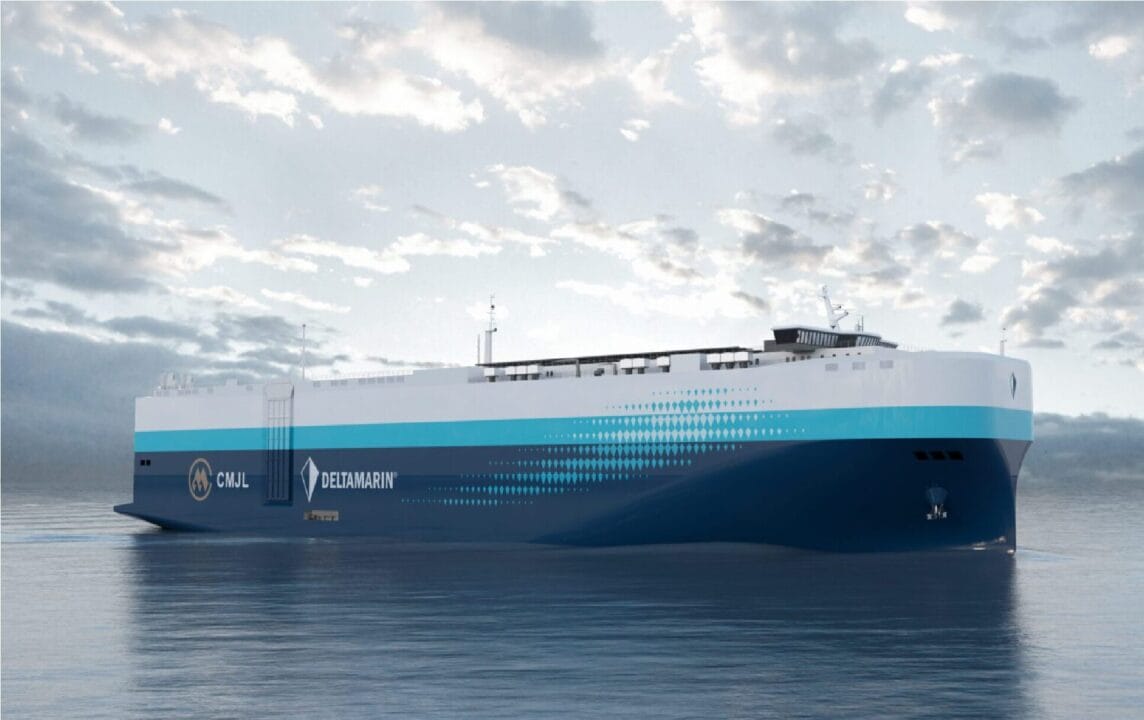
The New Giant Car Transport Ship GNL Will Set Records for Size, Energy Efficiency, and Vehicle Capacity
The naval architecture company Deltamarin has just received Approval in Principle (AiP) from DNV for its ambitious car and truck carrier project, reaching the impressive mark of 11,000 pure CEUs (PCTCs). These gigantic LNG-powered vessels not only break records but promise to redefine the limits of the car carrier market with their revolutionary energy efficiency.
Powered by green technology, the ships from Deltamarin are true symbols of energy efficiency. With excellent EEDI performance, these giants of the seas feature innovations such as solar panels, waste heat recovery, and air lubrication, promoting cleaner and more sustainable navigation.
The Operation of an LNG-Powered Ship
Liquefied Natural Gas (LNG) carriers operate through engines that burn this clean and efficient fuel. LNG is obtained from cooling natural gas to extremely low temperatures, turning it into a liquid state and significantly reducing its volume to facilitate storage and transportation.
-
OceanPact Announces Acquisition of CBO and Creates One of Brazil’s Largest Maritime Support Structures with 73 Vessels, Annual Revenue Above R$ 4 Billion and R$ 14 Billion Backlog
-
With Extreme Winds, Giant Waves, and Unrestricted Currents, Drake Passage Is Considered the Most Violent Stretch of the Oceans
-
15th Century Merchant Ship Surprises Archaeologists
-
Odfjell Inaugurates First Operational Green Corridor Between Brazil and Europe Using Sustainable B24 on Maritime Routes and Reinforces Decarbonization Strategy

In LNG engines, the fuel is vaporized back to a gaseous state before ignition, resulting in more complete and efficient combustion compared to other traditional fuels. This process yields substantially lower emissions of air pollutants, contributing to more sustainable navigation and aligning with the growing demands for environmentally friendly practices in the shipping industry. Additionally, the use of LNG offers further benefits, such as reduced operating costs and compliance with increasingly stringent environmental regulations.
Race to the Giant Ocean
In collaboration with China Merchants Jinling Shipyard (Nanjing), Deltamarin, affiliated with China Merchants Group, is leading the race for a new standard in car carriers. While the Horizon class from Hoegh Autoliners, with its 8,500 CEUs, currently reigns, the Aurora class ship, with a capacity of 9,100 CEUs, is about to break all limits.
In a bold move, Seaspan Corporation is entering the automobile carrier market, ordering an impressive series of PCTCs with a capacity of 10,800 CEUs, with deliveries expected to start in 2027. These giant sea carriers will be leased long-term to Hyundai Glovis, marking an innovative turnaround in the industry.
The Growing Demand for Vehicle Carriers
All eyes are on these new ships at a time when the industry faces increasing scrutiny regarding safety, especially after high-profile incidents involving PCTCs. Meanwhile, the growing demand for electric vehicle carriers drives this wave of transformation. As the seas witness these technological marvels, the industry prepares for a new era, facing challenges while navigating towards a revolutionary future.








Seja o primeiro a reagir!