





 Portuguese
  English
  Spanish
  5 min of reading
  1 comment





With the new law, the government raises the Income Tax exemption to salaries of up to 5 thousand reais, releases 28 billion for consumption, promises to correct historical distortions, and finance tax relief with higher taxation on super-rich individuals, according to the government, mainly benefiting formal workers and the middle class.
President Luiz Inácio Lula da Silva presented the expansion of the exemption range as a kind of supplement to the annual income. In the government’s assessment, the impact is close to a “nearly 14th salary” for millions of taxpayers earning up to 5 thousand reais who will no longer withhold taxes from their paychecks.
The measure, signed into law on November 26 and effective from January 2026, is treated by the government as a symbolic step in correcting “historical tax injustices”. The Federal Revenue Service estimates that the change will inject about 28 billion reais into the economy, easing the budget of families pressured by debts and the cost of living.
What Exactly Did the Government Change in the Income Tax

In practice, the new law raises the Income Tax exemption range to salaries of up to 5 thousand reais per month, removing this taxpayer base from direct tax collection.
-
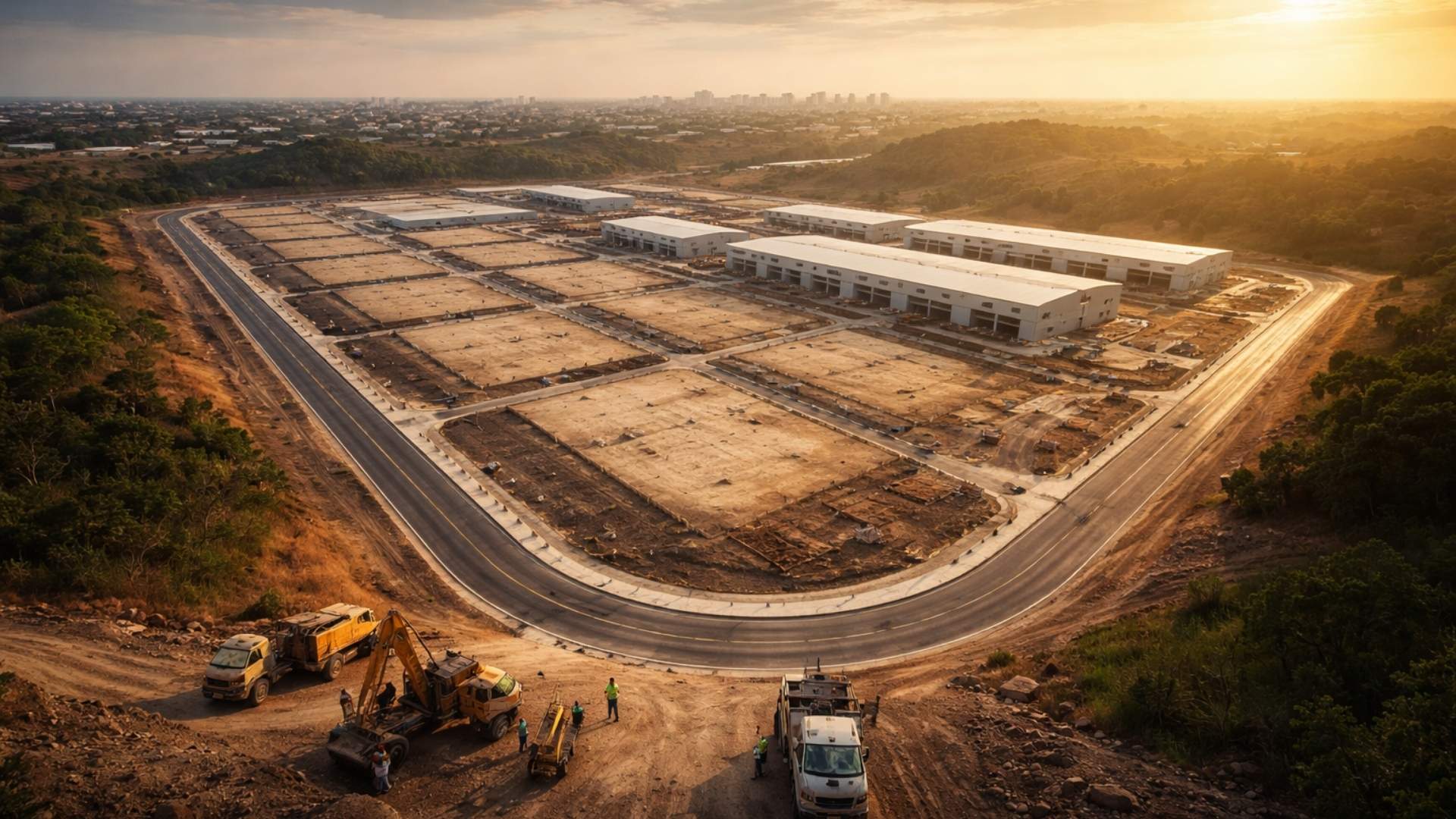
Brazilian city gains industrial hub for 85 companies that is equivalent to 55 football fields.

-
Peugeot and Citroën factory in Argentina cuts production by half and opens a layoff program for more than 2,000 employees after Brazil drastically reduced purchases of Argentine vehicles.

-
A Brazilian city gains a factory worth R$ 300 million with the capacity to process 200 thousand tons of wheat per year, a mill of 660 tons/day, silos for 42 thousand tons, and an industrial area of 276 thousand m².

-
Havan will leave the shopping mall in Blumenau to inaugurate something that the chain has never done before: a megastore in half-timbered style in the Historic Center of the city, which is expected to be completed in May and change the landscape of local retail.

According to the government, the goal is to increase the purchasing power of the middle class and formal workers, who have been adjusted at a slower rate than inflation and salary increases.
Lula presented the change in a statement broadcast on radio and television.
Defending the expansion of the exemption, the president stated that the government is fulfilling a campaign promise and trying to rebalance who pays more or less within the tax system.
The official narrative is clear: less burden on the paycheck of those who live on salaries, more contribution from the top of the income pyramid.
The Government’s Argument: Almost a 14th Salary and a New TV for the World Cup


In trying to explain the effect of the measure in daily life, Lula resorted to concrete examples.
He called the tax relief a “almost 14th salary” and suggested that the extra money could be used for paying off debts or for immediate consumption, such as buying a larger TV to watch the 2026 World Cup.
The government’s communication targets the popular imagination.
The idea of an additional amount per year, even if distributed month by month in the paycheck, reinforces the perception of real gain.
In the official rhetoric, the government is not just reducing tax burden; it is “returning” part of the taxed income to workers, with the potential to stimulate commerce, services, and small home renovations throughout 2026.
How the Government Says It Will Pay for the Exemption
The expansion of the exemption means forgoing direct revenue from salaries, but the government claims to have a defined source of compensation.
According to Lula, the cost will be covered by increasing taxation on the “super-rich”, a group estimated to be 0.1 percent of the population.
In the presidential explanation, this segment will face a minimum rate of 10 percent, well above the current average for the financial elite, which he placed at about 2.5 percent.
At the same time, the president recalled that workers may end up paying up to 27.5 percent in income tax, which helps to sustain the narrative of imbalance and regressiveness in the tax structure.
In the government’s view, the change in Income Tax is the first step toward a broader reconfiguration, where those who live off financial investments and large assets contribute proportionately more than those who depend on a monthly salary.
Less Inequality but Still Far from the End, According to the Government
Lula stated that inequality in Brazil is at its lowest level in recent history, but emphasized that the situation is still far from ideal.
In this context, the government presents the new exemption range as a “initial measure” of a longer agenda aimed at combating privileges and expanding opportunities through tax policy.
The discourse fits the decision regarding the Income Tax into a larger narrative, which includes reform of the system, review of concentrated benefits, and reinforcement of social programs.
By associating the exemption with fiscal justice, the government tries to show that it is not just a one-off gesture before the World Cup, but a structuring movement, albeit gradual.
Expected Impact on Consumption and Economic Sentiment
By projecting the injection of 28 billion reais into the economy, the Federal Revenue Service and the government are working with the idea that a good portion of the amount released from paychecks will be channeled towards current consumption and debt payments.
Indebted families may renegotiate installments, regularize overdue bills, and open up room in their monthly budget.
The government also bets on the psychological effect.
By communicating that millions of people will stop paying income tax at the source, the political signal is one of relief and recognition of the strain experienced by those earning up to 5 thousand reais.
This movement is expected to be leveraged throughout 2026 as a showcase of economic policy aimed at the working base and the middle class, contrasting with the historically lenient image toward large assets.
Next Steps in the Government’s Tax Agenda
In his official speech, Lula indicated that the expansion of the Income Tax exemption does not end the tax debate, but inaugurates a new phase.
The government speaks of addressing other distortions, revisiting concentrated benefits, and continuing to increase the wealthiest’s share in revenue, alongside income transfer policies.
The reconstruction of this path will depend on political negotiations in Congress, resistance from affected sectors, and fiscal space to maintain balance in public accounts.
Within this framework, the exemption measure serves as both a signal of social priority and a test of sustaining the strategy of taxing the top to relieve the base.
In your case, if the government puts more liquid money in your paycheck, would you use that relief to pay off debts, consume more, or try to save?









Oi