





 Portuguese
  English
  Spanish
  3 min of reading
  0 comments


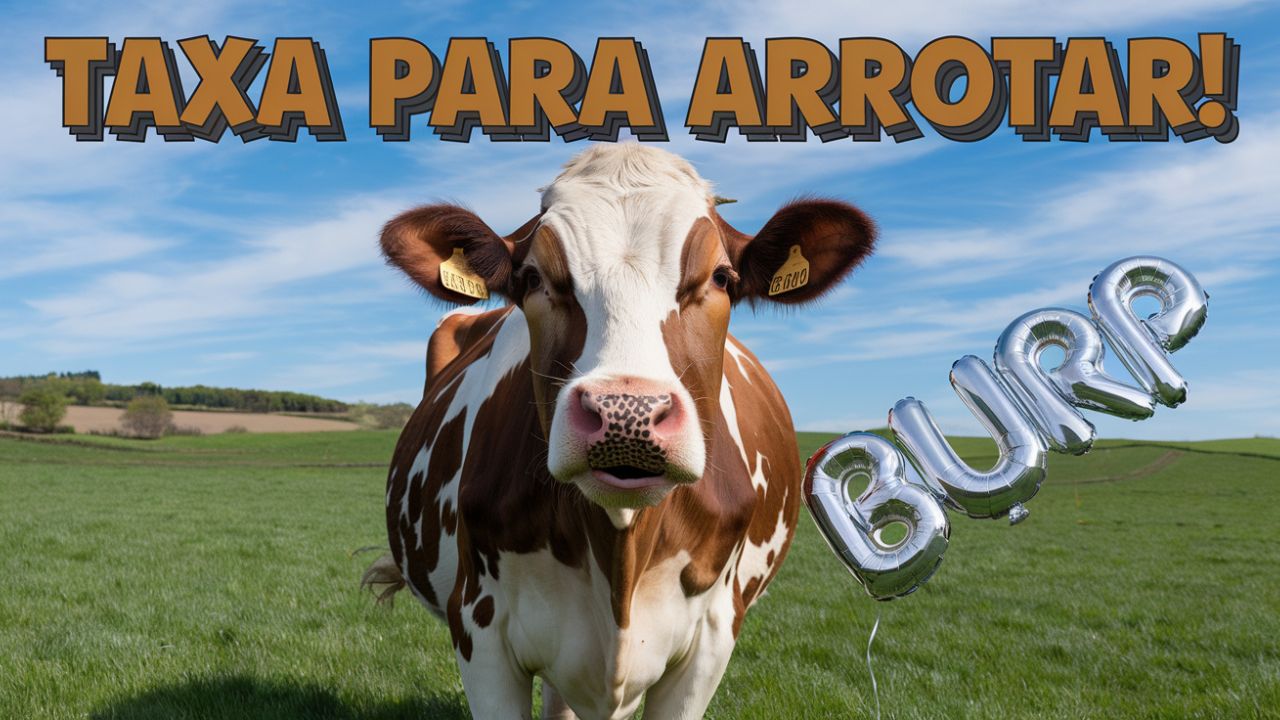
The Measure Launches With a US$ 43 Tax Per Ton of CO2 and Is Set to Reach US$ 106 by 2035, Impacting More Than 1.5 Million Cattle Heads and Moving Billions in the Danish Agricultural Economy.
Denmark is once again in the global spotlight, but this time it’s not for its famous minimalist designs or enviable quality of life. The country has approved the world’s first “burp tax,” a measure aimed at taxing the greenhouse gas emissions generated by cattle. It sounds like a comedy bit, doesn’t it? But this decision has profound implications for farmers, consumers, and the environment.
The idea, which has already sparked heated debates, starts with a charge of 300 Danish kroner (about US$ 43) per ton of carbon dioxide emissions, rising gradually to US$ 106 by 2035. For many, this measure is seen as a bold step to tackle climate change. For others, it’s a drastic attempt that could harm the agricultural economy and fail to deliver the expected results.
What Is the “Burp Tax”?
The so-called “Burp Fee” is a way to tax methane emissions resulting from cattle burps and flatulence. Yes, you read that right: burps. Methane is a greenhouse gas far more potent than carbon dioxide, and cattle are responsible for a significant portion of these emissions.
-
50 viaducts, 4 tunnels, 28 bridges, and 40 kilometers of bike paths: BR-262 in Espírito Santo will receive 8.6 billion reais for the largest engineering project in the state’s history, inspired by the Immigrant Highway in São Paulo.

-
Brazil produces too much clean energy and doesn’t know what to do with it: over 20% of solar and wind capacity was wasted in 2025 while investors flee and 509 renewable generation projects were abandoned in the last year.

-
Piauí will produce a new fuel that replaces diesel without needing to change anything in the truck’s engine and reduces pollutant gas emissions by half: truck drivers from all over the Northeast are already celebrating the news that will arrive later this decade.

-
A new Brazilian shopping center worth R$ 400 million will be built in an area equivalent to more than 4 football fields, featuring 90 stores, 5 cinemas, a supermarket, a college, and parking for 1,700 cars, potentially generating 3,000 jobs.


This charge will be applied directly to farmers, who will have to pay an amount proportional to the emissions generated by the cattle on their properties. While the idea is to reduce the carbon footprint of agriculture, critics argue that the practical impact may be minimal, especially considering the rising costs that will be passed on to the end consumer.
The Justifications Behind the Measure
The main justification for the tax is environmental. According to experts, agricultural emissions represent a growing share of climate pollution in Denmark. Proponents of the tax argue that it is a way to promote more sustainable agricultural practices and reduce greenhouse gas production.
However, the debate goes beyond environmental impact. There is a concern that by burdening farmers, the government is shifting focus away from other sources of emissions, such as transportation and residential heating. After all, if the goal is to curb climate change, why not tax consumers or other more harmful sectors directly?
Criticisms and Policies
Danish farmers are not pleased at all. They argue that the measure places a disproportionate burden on their shoulders, especially compared to other sectors of the economy. Many also fear that the tax could increase production costs and decrease the international competitiveness of Danish agriculture.
Moreover, critics point out that taxation may be ineffective in addressing the real problem. Studies show that cattle grazing can have a positive impact on the carbon cycle, which raises questions about the effectiveness of the simplistic approach of taxing isolated emissions.
Alternative Solutions to the Problem
If the idea is to reduce emissions without suffocating farmers, why not invest in technological alternatives and more sustainable practices? There are promising initiatives, such as feed additives that reduce methane production in cattle, along with soil management methods that can offset emissions.
Other countries, like New Zealand, have been exploring collaborative solutions between government and farmers, rather than punitive taxes. This includes subsidies for sustainable technologies and incentives to reduce emissions without compromising agricultural production.
The Danish “Burp Tax” is a measure that, at the same time, provokes laughter and reflection. On one hand, it shows the country’s commitment to fighting climate change. On the other hand, it raises important questions about economic justice, environmental effectiveness, and the balance between sustainability and the financial survival of farmers.
In the end, the issue is not just about cattle burps, but about how to balance the urgent demands of a planet in climate crisis with the economic and social needs of those who produce the food that reaches our table. Has Denmark found the right formula with this tax? Or are we all just laughing at a very serious problem?









-

-

2 pessoas reagiram a isso.