





 Portuguese
  English
  Spanish
  5 min of reading
  0 comments


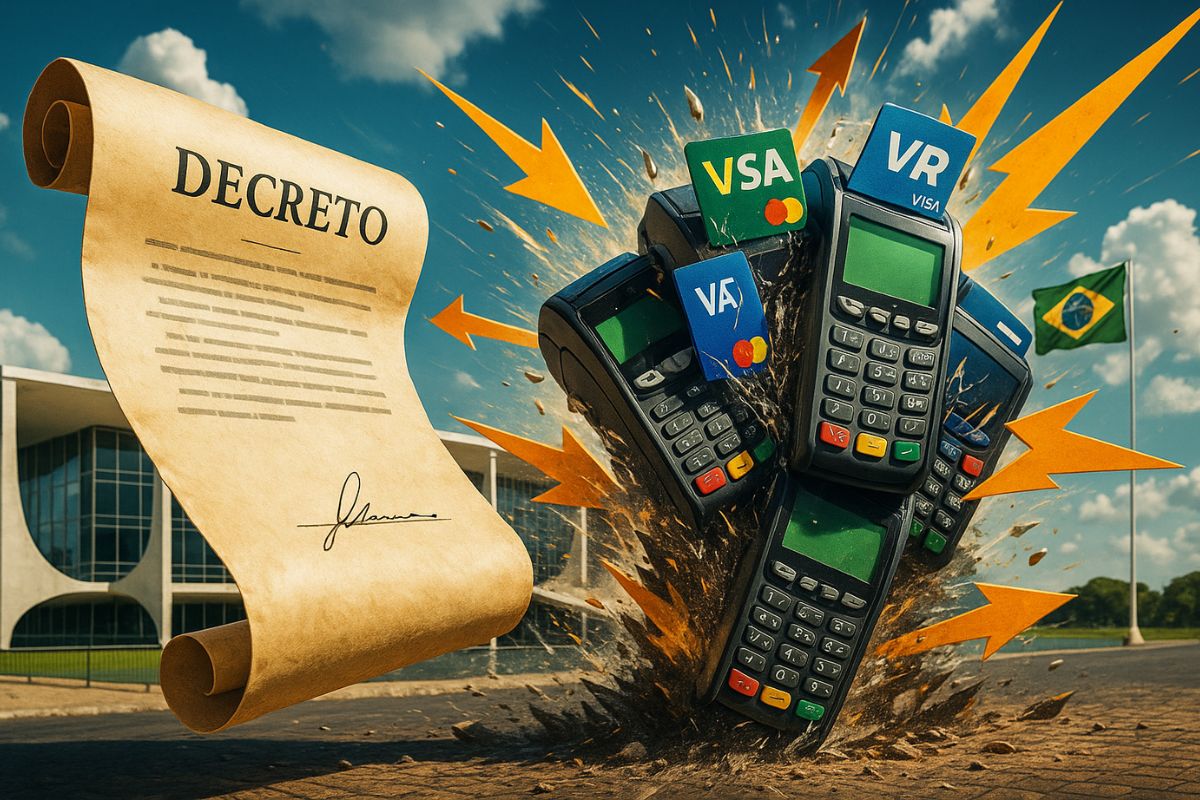
Government Signs Decree That Redefines The Worker Benefits Market, Limits What Companies Can Charge Establishments And Requires Broad Acceptance At Payment Machines, With Shorter Transfer Terms.
The government signs a decree that reorganizes the meal voucher and food voucher market and directly targets the costs borne by bars, restaurants, supermarkets, and other establishments that accept this type of payment. The regulation, which will be formalized on Tuesday (11), establishes limits on the fees currently charged by card brands and the companies that operate these benefits, and determines that the money reaches merchants in shorter terms, ending the practice of payments being made up to 30 days after the sale. The measure also replicates the logic of opening that occurred in the card market about a decade ago, increasing competition among payment machines.
With the decree, the government aims to create a more competitive and less concentrated environment, allowing any payment machine to accept vouchers from all brands and preventing the merchant from being forced to maintain different contracts for each operator. The limitation on fees, which currently range from 3.5% to 6.5%, is expected to move toward a cap of around 3% to 4%, but with a transition period until the final level is reached. According to the design released, the Ministry of Labor will be responsible for oversight, as the Worker Food Program (PAT) is the axis that supports the benefits policy.
What Changes With The Decree
The main point of the decree is that the government signs a decree to reorganize the charging logic in the sector and reduce the cost of accepting vouchers. Today, the establishment pays a high percentage to receive a benefit that, in practice, is part of the worker’s remuneration.
-
A new Brazilian shopping center worth R$ 400 million will be built in an area equivalent to more than 4 football fields, featuring 90 stores, 5 cinemas, a supermarket, a college, and parking for 1,700 cars, potentially generating 3,000 jobs.

-
Larger than entire cities in Brazil: BYD is building a 4.6 km² complex in Bahia with a capacity for 600,000 vehicles per year, but the discovery of 163 workers in conditions analogous to slavery has shaken the entire project.

-
With an investment of R$ 612 million, a capacity to process 1.2 million liters of milk per day, Piracanjuba inaugurates a mega cheese factory that increases national production, reduces dependence on imports, and repositions Brazil on the global dairy map.

-
Brazilian city gains industrial hub for 85 companies that is equivalent to 55 football fields.


With the new rule, this percentage will be limited and there will be a maximum deadline for the transfer of money, which improves the cash flow of small and medium businesses.
The operation ceases to be an asymmetric relationship, where the benefits company sets the price and the merchant merely accepts.
Another goal is to bring the voucher model closer to the card model, where there is a cap on the so-called interchange fee. In the card market, the Central Bank is already working with limits of 0.5% for debit and 0.7% for prepaid.
The decree for vouchers does not exactly copy these figures, but reflects the regulatory spirit: to prevent a chain with few issuers and few acquirers from maintaining high margins at the expense of commerce and, consequently, the consumer.
Fee Limits And Transition Phase
Today, companies that operate meal vouchers and food vouchers charge between 3.5% and 6.5% per transaction. This is considered a high level, especially when compared to traditional cards. The decree puts this charge on a downward trajectory, indicating a ceiling to be reached and providing for a transition period for the market to adapt.
This is not a sudden change; it is a controlled change. The gradual reduction avoids breaking contracts and gives companies time to recalculate their business models.
This same section of the decree should also establish the maximum deadline for transferring to the establishment. Today, it is common for merchants to receive payment up to 30 days after the sale.
With the new rule, payments must be advanced, reducing the mismatch between the date of service provision and the inflow of money. For food sectors, which work with daily supplies and adjusted margins, this advance has a direct effect on financial health.
Freedom In Payment Machines And End Of Exclusivity
Another important axis is the opening of acceptance. The government signs a decree to allow any card machine to accept vouchers from all brands.
This may seem like a technical detail, but it is not. Today, there are exclusive arrangements that require establishments to have more than one terminal to be able to accept all the vouchers used by customers.
With the opening, the logic becomes the same that transformed the card market: multiple companies competing for the same merchant, with better prices and more complete services.
This opening was historically the turning point in Brazil’s acquiring market. Previously, two companies concentrated the operation of cards. When acceptance was liberated, a competitive environment emerged, and payment machines had to lower prices and offer more features.
The decree seeks to replicate this experience in the benefits sector, addressing the root of the problem: If everyone can accept everyone, no one can charge above a reasonable amount.
Oversight By The Ministry Of Labor
Oversight will be the responsibility of the Ministry of Labor because meal vouchers and food vouchers are linked to the Worker Food Program, which grants tax benefits to companies offering this type of benefit.
Since there is tax waiver involved, the government understands that there should also be control over how the benefit is operationalized.
The decree, therefore, is not only economic; it is also in compliance with the public food policy for workers.
In practice, this means that the Ministry of Labor will be able to monitor whether companies are respecting the fee cap, whether they are transferring the amounts within the defined term, and whether they are not creating technical barriers for universal acceptance at payment machines.
This is a way to ensure that the purpose of the benefit is preserved and that the cost is not excessive for those selling food, groceries, or services.
Impact On Merchants And Workers
For the merchant, the most immediate impact will be the reduction of operational costs and faster receipt of money. This improves cash flow, facilitates the purchase of supplies, and reduces the need for working capital. For the worker, the effect is indirect but relevant: by reducing the cost of acceptance, the government lessens the pressure for commerce to refuse the voucher or create usage restrictions.
The cheaper it is to accept meal and food vouchers, the more establishments will accept them without restriction.
There is also a transparency effect. With clear limits, the business owner will know how much they will pay and how long it will take to receive it. Today, with fees of up to 6.5% and transfers taking 30 days, many establishments end up incorporating part of this cost into prices, which diminishes the actual purchasing power of the voucher itself. The decree, by tackling fees and deadlines, aims to curb this cascading effect.
The government signs a decree to rebalance a market that has grown significantly but has become costly and less transparent for vendors.
The opening of payment machines, the cap on fees, and faster transfers form a package that tends to increase competition and reduce costs for commerce, without affecting the worker’s right to the benefit.
Now the question is whether the transition period will be sufficient for the market to adjust without passing costs onto the consumer.
Do you think this opening of payment machines and the fee limits will really reach the small restaurant and neighborhood grocery store?










-

Uma pessoa reagiu a isso.