





 Português
  Inglês
  Espanhol
 5 min de leitura
  0 comentários


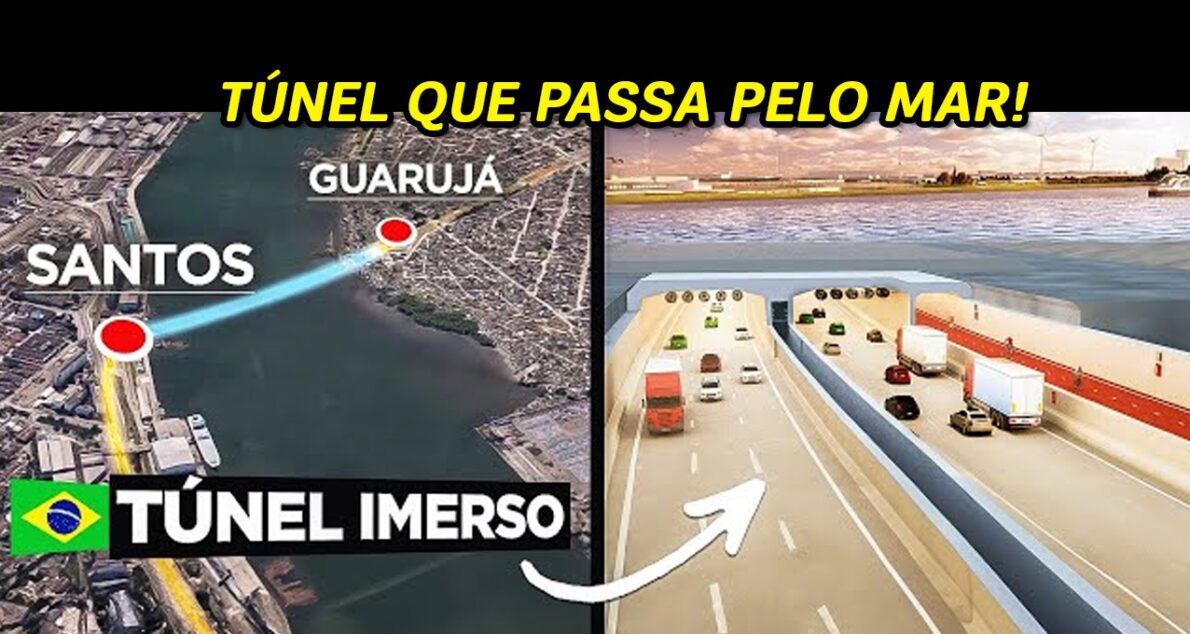
Santos-Guarujá Underwater Tunnel, A Project Worth R$ 6 Billion, Promises To Transform Mobility On The São Paulo Coast. The Construction, Which Will Be The First Of Its Kind In Latin America, Will Also Bring Great Economic Impact, Generating 9,000 Direct And Indirect Jobs.
The most awaited project of the São Paulo coast is finally on its way, but few imagine the transformative impact that a billion-real tunnel could bring to the region.
The project that promises to revolutionize mobility between Santos and Guarujá has taken its first steps with recent approval.
However, the real effect of this construction goes far beyond a simple tunnel. Do you know how much this could impact the daily lives of those who live in or visit the São Paulo coast?
-
Brazilian city gains industrial hub for 85 companies that is equivalent to 55 football fields.

-
Peugeot and Citroën factory in Argentina cuts production by half and opens a layoff program for more than 2,000 employees after Brazil drastically reduced purchases of Argentine vehicles.

-
A Brazilian city gains a factory worth R$ 300 million with the capacity to process 200 thousand tons of wheat per year, a mill of 660 tons/day, silos for 42 thousand tons, and an industrial area of 276 thousand m².

-
Havan will leave the shopping mall in Blumenau to inaugurate something that the chain has never done before: a megastore in half-timbered style in the Historic Center of the city, which is expected to be completed in May and change the landscape of local retail.

Last Wednesday (23), the Governor of São Paulo, Tarcísio de Freitas, signed Law Project No. 655/2024, which authorizes the construction of the Santos-Guarujá Immersed Tunnel, a public-private partnership (PPP) involving impressive investments of R$ 6 billion.
The Legislative Assembly of the State of São Paulo (Alesp) approved the project earlier in October, consolidating plans for this monumental work, which aims to improve transportation infrastructure in the Baixada Santista and drastically reduce travel time between the two cities.
The governor emphasized the tunnel’s importance for the economy and daily life of people.
According to him, the project will bring a significant change to the lives of residents, allowing them to get home faster and boosting the regional economy.
This is not just a matter of mobility, but a response to a historical demand from the local population and those who visit the São Paulo coast.
As highlighted by the Secretary of Investment Partnerships, Rafael Benini, the tunnel will provide a crossing that previously took about 20 minutes in just five.
The project is part of the São Paulo State Investment Partnerships Program (PPI-SP) and is also integrated into the Growth Acceleration Program (PAC), an initiative of the federal government.
With a forecast of generating 9,000 direct and indirect jobs, the project promises to stimulate economic growth and create new job opportunities in the region.
The funding will be divided among three sources: the Government of São Paulo, the Union, and the private sector.
The majority of the resources, 86%, will come from public contributions, equally distributed between state and federal governments.
An Unprecedented Underwater Tunnel In Latin America
The Santos-Guarujá Immersed Tunnel will be the first of its kind to be built in Latin America, with a total length of 1.5 km, of which 870 meters will be submerged.
This structure will allow traffic of passenger vehicles, buses, trucks, and even cyclists and pedestrians, thanks to the inclusion of bike lanes and walking space.
This detail of the project makes the work even more special, as it meets different mobility needs, promoting the integration of transportation modes.
The impact on the crossing between the two cities will be immediate. Currently, about 21,000 vehicles cross daily the canal between Santos and Guarujá using ferries and small boats.
In addition, 7,700 cyclists and 7,600 pedestrians make this crossing every day, which demonstrates the importance of a more modern and efficient infrastructure.
The tunnel will be a definitive solution to a problem that affects thousands of people daily, representing a true revolution in the region’s logistics.
Next Steps And Challenges
Despite the grandeur of the project, there are still obstacles to be overcome before construction begins.
A new tunnel layout will be presented next Monday (28) to residents of the Macuco neighborhood in Santos by the State Government, which is also waiting for the approval of the Environmental Impact Study and Environmental Impact Report (EIA-Rima).
The environmental license is a crucial step for the project’s feasibility, and authorities hope to have all documentation ready to submit to the Federal Court of Accounts (TCU) by December.
The bidding process is also already planned.
The Public-Private Partnership tender for the construction, operation, and maintenance of the tunnel is expected to be published in the second quarter of 2025, with the auction taking place in the second half of the same year.
If everything goes as planned, construction may begin soon, finally bringing to reality a decades-long dream for the Baixada Santista population.
Essential Partnerships
In addition to the Government of São Paulo, other important players are involved in realizing this monumental work.
The Ministry of Ports and Airports, the National Agency of Waterway Transportation (Antaq), the Port Authority of Santos (APS), and the Agency of Transportation of the State of São Paulo (Artesp) are key players in this complex execution process.
The cooperation among these agencies will ensure that the work follows best practices and meets the highest standards of safety and efficiency.
From this cooperation, it is expected that the tunnel will improve not only urban mobility but also the flow of goods, facilitating the transport of cargo between the Port of Santos and the rest of the state.
With the increase in logistical demand in the coming years, this project could play a vital role in the economic development of the state and, consequently, the country.
The Regional Impact
In the end, the Santos-Guarujá tunnel will not just be an infrastructure project.
It will be a milestone for the development of the São Paulo coast, transforming the daily lives of thousands of people and opening new economic perspectives for the region.
The São Paulo coast will become even more attractive to investors and tourists, strengthening the local economy.
But could the impact of this work be felt in other regions of Brazil? What does the future hold for other states with significant infrastructure demands? These questions may drive discussions about national development in the coming years.








Seja o primeiro a reagir!