





 English
  Francês
  Alemão
  Italiano
  Japonês
  Norueguês
  Portuguese
  Spanish
  4 min of reading
  6 comments


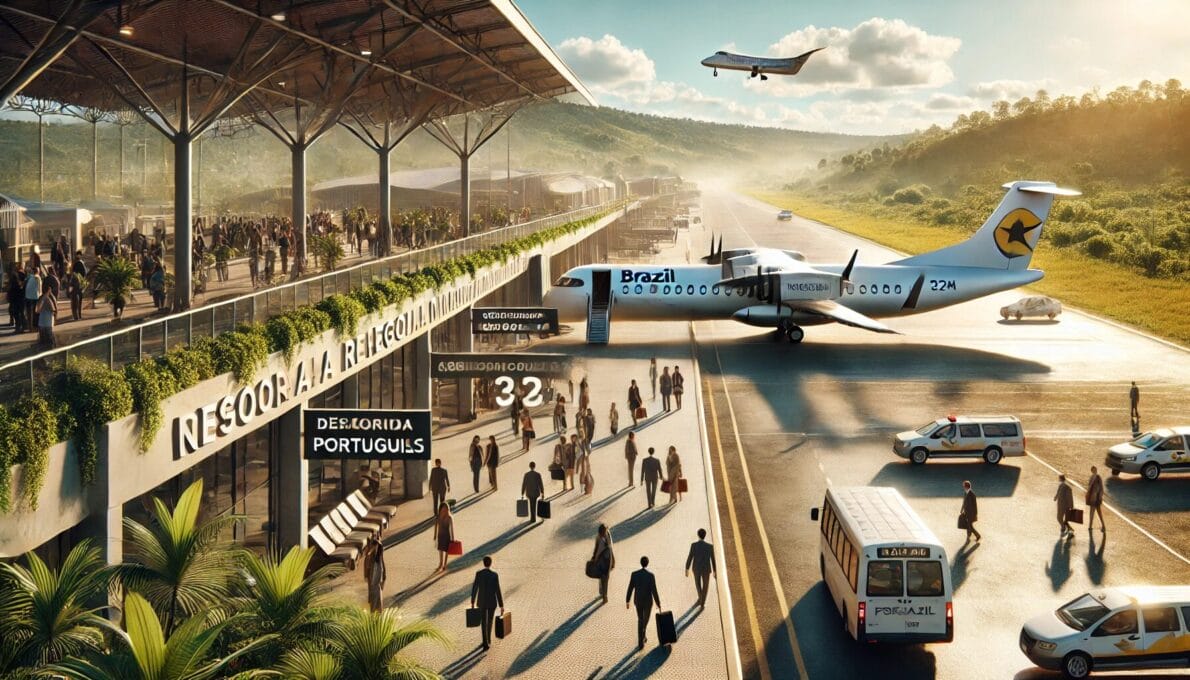


Brazilian Government Projects Largest Regional Aviation Plan in History, with Over 130 Airports under Construction and Renovation. This Expansion Promises to Transform Tourism, Economy, and Health in the Interior, Integrating Remote Regions into the Country.
In the coming years, Brazil may experience a revolution in the aviation sector.
Quietly, the federal government has an ambitious plan: to connect the interior of the country to urban centers, generating impacts in areas such as tourism, health, and the economy.
But what is the true scope of this proposal?
-
Expansion of Federal Institutes: 38 new campuses and R$ 200 million for public education; see the cities included.

-
Lula’s government changes rule in important benefit and thousands of Brazilians will no longer receive it; see what has changed.

-
New Gripen fighter makes Argentines surrender to Brazil, and the heavy reaction exposes envy, frustration, and shock at Brazil’s technological leap.

-
This discovered deposit near the Andes could change the future of Argentina, attract billions, and even shake up the global metals market.

The promise includes over 100 airports and will be announced in detail later this year, with the start of construction scheduled to transform the aviation system within five years.
In total, there are 130 airports expected to enter this project, the largest of its kind ever planned in Brazil.
According to the Minister of Ports and Airports, Silvio Costa Filho, this initiative combines three strategic fronts of development.
The goal is not only to shorten distances but also to create opportunities that benefit underexplored areas of the regional economy.
The Phases of Airport Construction
First Front: Airports Granted to the Private Sector
The first phase of the plan involves the renovation of about 30 airports that are under private management.
These smaller airports are part of granted blocks that also include important terminals, such as Congonhas (SP) and Manaus (AM).
The responsible operators have until December this year to deliver the first batch of renovations, consolidating the first phase of works.
This system was designed to leverage the structure of major airport concessionaires, giving them the task of modernizing smaller units within the same concession package.
Second Front: Expansion of Infraero and New Projects
The second front of development focuses on airports taken over by Infraero, a state-owned company that began managing terminals that were previously administered by states and municipalities.
According to the minister, 20 airports, including the new international airport in Olímpia (SP), are on this list of modernizations.
This movement comes after a period where Infraero managed only Santos Dumont (RJ), as previous auctions allocated a large part of the terminals to the private sector.
Recently, however, some cities have decided to transfer management again to the federal government, aiming for greater efficiency and security in development.
Third Front: Regional Concessions Linked to Major Airports
Finally, the most promising – and challenging – strategy will be tested with the concession of Guarulhos Airport (SP), one of the largest in the country.
In exchange for an extension of the concession period, the managing company will take on the responsibility of managing smaller airports.
This model could become the new concession standard for the main national airports, pending approval from the Federal Court of Accounts (TCU).
The goal is to include about 80 regional airports in the contracts of current concessionaires, broadly and integrally connecting the regional system.
“We are talking about around 130 airports, combining these three programs. It is the largest regional aviation program in the history of Brazil. We are working hard to ensure that these deliveries are made to the population. In the next five years, we will undoubtedly see the strengthening of regional aviation,” Costa Filho said in an interview with CNN.
Impacts on Tourism, Health, and the Regional Economy
The expansion is not limited to improvements in tourism infrastructure.
The minister argues that regional aviation plays an essential role in agribusiness and the integration of local economies into the rest of the country.
As an example, he highlighted the need for an airport in Barreiras, in the interior of Bahia, to meet the demands of the agribusiness sector and improve connectivity with distribution centers.
Furthermore, the impact on public health is no less important.
In Amazonas, where about 10 regional airports are still needed, the absence of these terminals complicates emergency medical care.
Costa Filho emphasizes that in severe situations such as accidents or health crises, the presence of airports facilitates urgent transport, including the arrival of mobile ICUs, which often cannot reach remote regions.
This need for quick access to emergency care makes it evident how regional aviation can save lives and transform the healthcare system.
The development plan aims to ensure that even areas far from major urban centers have quick and efficient access to essential services.
The Promise of Integrated and Sustainable Regional Development
To make this project viable, the government proposes to work in partnership with private and state-owned companies, sharing responsibilities and leveraging private sector expertise.
The concession model and the inclusion of new airports in contracts with large concessionaires are strategic to ensure long-term success, avoiding overburdening public administration.
According to the minister, the expectation is that, with the consolidation of the project, the less accessible regions will have access to high-quality air transport infrastructure, boosting economic growth.
This advancement will bring benefits that go beyond aviation, directly impacting tourism, the economy, and the development of each state.
Do you think this program will really change the aviation and city landscape in Brazil?








Na verdade é mais Um jeitinho do governo DESVIAR MUITA VERBA pros ****
Parabéns pela matéria Alisson, não se importe com críticas de pessoas que não sabem fazer melhor!
Com relação a proposta, realmente excelente, uma pena que os projetos desse governo sempre ficam pela metade, e infelizmente a forma que os políticos usam para desviar dinheiro público são através de grandes obras… O Brasil é um país rico e com pessoas trabalhadoras, o que destrói nosso país é a corrupção.
Esse foi um projeto da época se não me engano de Dilma, essa sigla que não pode nem falar gosta de inaugurar o futuro que não existe.
Disse tudo, projetos desse governo é apenas VISANDO desvio de verbas em larga escala.
Vocês conseguem ser muito ruins não só nos textos, mas até mesmo nas imagens geradas através de inteligência artificial.
Faça melhor! Que pessoa amarga você é, ao invés de comentar sobre o conteúdo, fica criticando um trabalhador.