





 Portuguese
  English
  Spanish
 5 min of reading
  0 comments


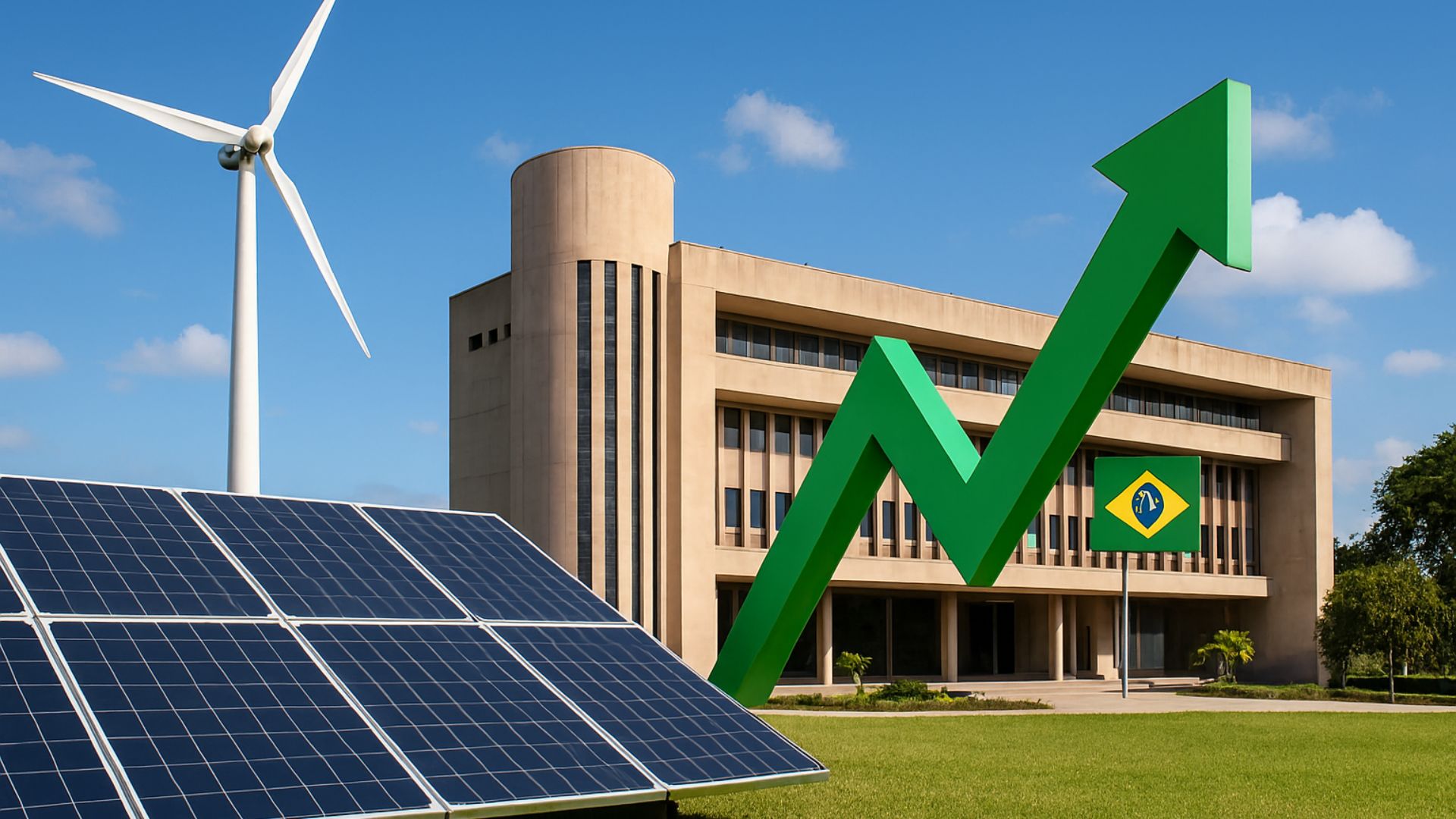
The Government of Ceará Achieves Significant Savings by Adopting Renewable Energy in 130 Public Buildings. The Initiative Reduces Costs, Expands Energy Efficiency, and Reinforces Commitment to Sustainability
On November 17, 2025, the Government of Ceará released an official report confirming one of the largest reductions in public energy spending ever recorded in the state.
In just 12 months, thanks to the migration of 130 public buildings to the Free Energy Market, the state administration achieved a savings of R$ 11.908.861,54, equivalent to a 31.17% reduction in electricity costs.
The information was published by the Department of Infrastructure (Seinfra) in an official statement. It is a significant result that reinforces the state strategy to adopt renewable energy and expand sustainability actions.
-
Renewable energy advances over protected areas in Brazil, and a survey by the Energy Transition Observatory reveals silent impacts that challenge environmental conservation and pressure sensitive traditional territories.

-
Rio Grande do Sul accelerates energy transition: State invests in renewable technologies and consolidates decarbonization strategies and pathways to attract billions in new industrial investments.

-
With 160,000 m² of collectors, an area larger than 20 football fields, Silkeborg, in Denmark, hosts a solar thermal plant that heats 19,500 homes and could become the largest solar heating plant in the world.

-
A study reveals the expansion of renewable energy procurement in Brazil and shows how companies are taking advantage of opportunities to reduce expenses, ensure energy efficiency, and strengthen strategic environmental commitments.


Record Economy in Public Buildings
Right at the beginning of the report, the government highlights that this savings is directly linked to strategic and sustainable decisions. By prioritizing clean sources and more competitive contracts, the state was able to reduce spending, lessen environmental impacts, and strengthen long-term public policies.
The central point of the announcement is the significant reduction in amounts paid by the public administration to maintain the operation of its public buildings. According to Seinfra, the adopted strategy ensured a savings of almost R$ 12 million, a result that exceeded initial estimates and reinforced the efficiency of the adopted model.
This figure is especially relevant because it involves large units, such as hospitals, schools, the Arena Castelão, the Ceará Events Center, and even equipment from the prison system. The scope of the program demonstrates that the state’s energy policy is broad, consistent, and aligned with an administrative efficiency vision.
Moreover, this reduction is not limited to the financial aspect. The adoption of renewable energy reinforces an environmental commitment that has been built over the last few years. Ceará, which has one of the largest wind and solar potentials in the country, uses its natural vocation as a driving force to reduce public spending and encourage sustainable practices.
How the Government of Ceará Achieved This Savings
One of the pillars of the initiative was the migration to the Free Energy Market, an environment where large consumers can negotiate directly with suppliers, choosing providers and ensuring more competitive prices. In this model, the Government of Ceará opted for contracts, primarily for renewable energy, reinforcing the sustainability of operations.
This process began in mid-November 2024 and gradually advanced over the course of a year. At each stage, new buildings were incorporated into the model, expanding its scope and consolidating a more efficient structure.
By combining clean energy with contractual predictability, the government reduced costs and also the risk of tariff fluctuations. This generates a direct positive impact on the state budget planning.
The savings achieved encompass various segments of public administration:
- Education: dozens of state schools began using lower-cost energy, reducing fixed expenses.
- Health: hospitals experienced a significant reduction in spending, which helps to free up resources for maintenance and improvements.
- Infrastructure: large facilities, such as the Events Center and Arena Castelão, were also migrated.
- Prison System: correctional units were incorporated into the program, expanding the reach of energy policy.
The impact is broad and reaches essential services that serve thousands of people daily.
Program Expansion and New Projections
The Government of Ceará has already announced that it will continue to increase the number of buildings served by the model. According to official projections, at least 144 public buildings should be integrated into the system in the coming months. This expansion should intensify expense reduction and deepen the use of sustainable energy in state administration.
Moreover, estimates previously released by Seinfra itself already indicated the possibility of an annual savings that could exceed R$ 15 million with the full expansion of the program. Although projections depend on factors such as consumption and contract renegotiation, they indicate a growing potential for the coming years.
This combination of financial savings and sustainability consolidates Ceará as a national reference in public energy management.
Why the Free Energy Market Generates Savings
The Free Energy Market allows consumers to negotiate directly the price, the contracted volume, and the type of energy supplied. For the Government of Ceará, this meant greater freedom to choose the source — in this case, renewable energy — and secure more advantageous prices.
In the regulated market, tariffs are set by Aneel and can vary according to tariff flags, water crises, among other factors. In the free market, the state negotiates long-term contracts with more predictable values.
This predictability is essential for the financial planning of the public sector, which depends on stability to keep essential services operating efficiently. Another significant difference is that all electricity contracted by the state comes from clean sources.
This makes public consumption even more aligned with decarbonization policies and reduces the environmental footprint of the state machine. Choosing renewable energy is not just an environmental choice, but also an economic one.
Comparison with Other Initiatives in Ceará
The savings achieved by the Government of Ceará was not an isolated case. Other state institutions have been recording equally impressive results.
One example is Cagece, which saved over R$ 13 million in 2024 by migrating to the Free Energy Market. This move reinforces that the energy transition, when combined with efficient management, has the potential to generate significant gains in different areas.
Additionally, Seinfra had already announced, months before the current report, that over 100 public buildings in Ceará were already operating with clean energy — a number that has now consistently increased. These advances reveal that energy savings have become a structuring policy within the state.
Social and Environmental Impact of the Savings
The savings generated not only benefits the public budget — it also positively impacts the population. With fewer resources devoted to paying for electricity, the state can direct investments to essential areas, such as health, education, and infrastructure.
Furthermore, by strengthening the use of sustainable energy, Ceará contributes to reducing carbon emissions, strengthening the energy transition, and stimulating the development of new green technologies.
Why This Initiative Matters for the Future of Ceará
The savings of almost R$ 12 million demonstrates the importance of public policies that unite financial efficiency and environmental responsibility. The use of renewable energy and the migration of public buildings to the Free Market consolidate a model that should serve as a reference for other Brazilian states.
Ceará shows that it is possible to save money, innovate, and protect the environment at the same time. This combination establishes a solid foundation for future actions and positions the state as a leader in public energy management in the country.









Seja o primeiro a reagir!