





 Portuguese
  English
  Spanish
  5 min of reading
  5 comments


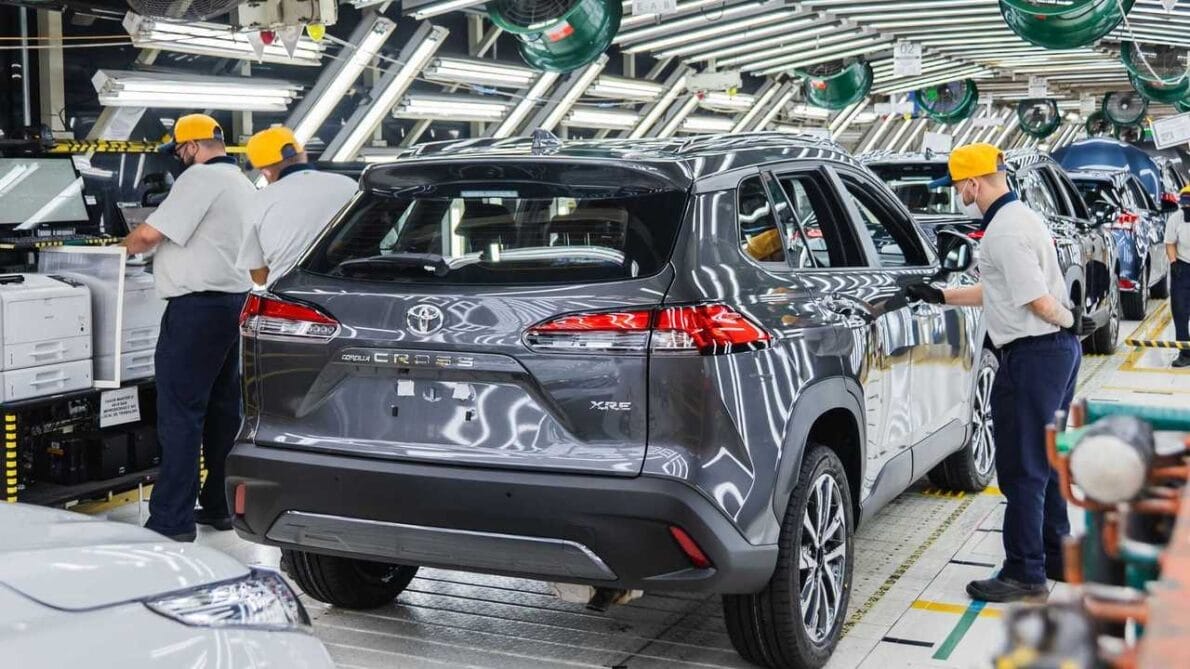

Federal Government Program Promises to Increase 20% Car Production in Brazil, Reaching Over 2.7 Million Units by Next Year. Toyota, Renault, Volkswagen, GM, Ford, Fiat, Honda, Nissan, and More Automotive Giants Have Already Been Approved!
Revolution in the Brazilian Automotive Industry: The Federal Government presented on Wednesday (26) the regulation that allows automakers to qualify for R$ 19.3 billion in tax incentives through the National Program for Green Mobility and Innovation, known as Mover, after extensive discussion on the program’s points until 2028.
The goal is to stimulate the automotive industry with the production of new technologies and to enhance the decarbonization of the fleet, covering passenger cars, buses, and trucks. Automakers established in the country, through this program, commit to making an investment cycle of R$ 117 billion, valid for the period between 2021 and 2030.
Geraldo Alckmin, Vice President and Minister of Development, Industry, Commerce, and Services, signed the ordinance that establishes the requirements for qualification and granting of credits. The text of the ordinance regulates various aspects, including minimum investments in research and development, monitoring systems, and penalties for non-compliance with obligations.
-
OMODA & JAECOO grows in Europe in 2026 with an integrated strategy of sales, innovation, local production, and technological advancement in the United Kingdom, Italy, and Spain.
-
OMODA & JAECOO expands after-sales service in Brazil with competitive maintenance, a 7-year warranty, and high availability of parts for technological SUVs.
-
OMODA & JAECOO appoints Alessandra Souza as executive marketing director in Brazil and accelerates brand expansion with a focus on innovation, networking, and hybrid portfolio.

-
Jaecoo 7 with super hybrid SHS system exceeds 1,200 km of combined range with a 1.5 turbo engine, high-density battery, and intelligent energy management.

Mover Program Promises to Increase 20% Car Production in Brazil, Reaching Over 2.7 Million Units by Next Year.
Companies interested in accessing credits must invest, at a minimum, between 0.3% and 0.6% of their Gross Operating Revenue. For each real invested, a credit between R$ 0.50 and R$ 3.20 will be granted, which can be used to offset any taxes administered by the Federal Revenue Service.
The Minister of Finance, Fernando Haddad, anticipates that the Mover Program will achieve a 20% increase in car production in the country, reaching over 2.7 million units by next year.
According to the government, all companies, whether qualified or not for the program credits, must meet mandatory requirements, including new demands and metrics such as recyclability and measuring carbon emissions throughout the entire lifecycle of the propulsion source and during the production and disposal stages of the vehicle.
The government enacted the provisional measure (PM) that established Mover in December of last year, putting the regulation into effect. Recently, a bill (PL) was presented to Congress that formalizes the program, operating in conjunction with the PM. The texts are identical, and it is up to Congress to decide the best way to proceed with the legislative proposal.
The Mover Program establishes minimum recycling limits in the vehicle manufacturing process and introduces lower taxation for less polluting vehicles through the Green Industrial Products Tax (IPI Verde). Geraldo Alckmin mentioned that the regulation of the Green IPI is still in the definition process and will be detailed later.
The expectation is that the new regulation will change the tax calculation structure, replacing the current system, which is based on engine capacity, with a new criterion focused on emissions and thermal efficiency indices. This will mean assessing how much a motor pollutes and its ability to maximize energy usage without waste.
Understand the Mover Program, Which Represents an Evolution in the Incentive Policies for the Automotive Industry in Brazil
The Mover Program, an initiative that follows Rota 2030 launched in 2018, which in turn replaced Inovar Auto from 2012, represents an evolution in the incentive policies for the automotive industry in Brazil. During the validity of Rota 2030, the average annual tax incentive reached approximately R$ 1.7 billion until 2022.
According to the government, the goal for all automakers in the country is ambitious: to reduce carbon emissions by 50% by the year 2030. Furthermore, it is established that the vehicles produced must meet minimum requirements, making them more economical, safer, and environmentally sustainable.
Companies qualified in the program are required to submit an annual monitoring report by July 31 of the following calendar year. The validity of the qualification extends until January 31, 2029. If there is non-compliance with the requirements, commitments, conditions, or accessory obligations established, this may result in the retroactive cancellation of the qualification or its suspension.
In addition, the investment projects submitted by companies must detail the products, systems, or strategic solutions geared towards mobility and logistics that will be developed, including descriptions and technical specifications. It is also expected that there will be plans for new investments in fixed assets and research and development, reinforcing the commitment to innovation and sustainability in the sector.
Qualification Criteria: Projects Must Generate Jobs and Qualify the Workforce, Promoting Professional and Technical Advancement in the Brazilian Industry
The criteria for qualifying projects under the Mover Program include generating increasing levels of productivity and competitiveness. This must be achieved through the incorporation of advanced technologies in both products and production processes, aligned with the current state of the art and technique. Furthermore, projects must focus on the training and capacitation of human resources, essential for scientific and technological development.
Another important criterion is the effective contribution of projects to meeting the guidelines set out by the Mover Program, ensuring that each initiative aligns with the program’s overall objectives. Additionally, projects must promote the hiring and development of qualified labor, reinforcing the program’s commitment to professional and technical advancement in the industry.
Toyota, Renault, Volkswagen, GM, Ford, Fiat, Honda, Nissan, and More Automotive Giants Have Been Approved by the Government
The Ministry of Development, Industry, Commerce, and Services (MDIC) announced this Tuesday (4/9) that 23 companies have been approved to participate in the Mover Program. The list, published in the Diário da União, includes major names in the automotive sector, such as Toyota, Renault, Volkswagen, Peugeot-Citroën, General Motors, Mercedes-Benz, and Nissan. In addition, Honda, Ford (research center), FCA Fiat Chrysler, and other companies such as Sodecia, Marcopolo, and Weg electric equipment have also been approved.
Additionally, the MDIC reported that another 18 applications for joining the program are still under review. The approved companies encompass a diverse range in the sector, including manufacturers of passenger vehicles, trucks, and buses such as Volkswagen Trucks and Buses and On-Highway, as well as companies specializing in components and equipment, such as Weg Drive & Controls, FTP, Eaton, Faurecia, FMM, Horse, and Schulz.
New Industry Brazil: New Government Project Offers Special Credits Through BNDES and Tax Incentives for Machinery Renovation
The Brazilian government is expanding its efforts to combat deindustrialization with the introduction of the New Industry Brazil program, complementary to the Mover Program. The New Industry Brazil focuses on strengthening the industrial sector through providing special credit lines made available by the National Bank for Economic and Social Development (BNDES), in addition to offering tax incentives aimed at machinery renovation. These measures aim to revitalize industrial production, improve efficiency, and drive the modernization of production facilities in the country.








Quanto ganharam na reportagem e uma reportagem publicidade do governo o povo não naoha nem 800 dólares como comprar nada nem comida lei pis astisan13 bilhões carro 13 bilhões 3 treze ajudando quem não prescisa tem ganha a bolha estourou vem com essas reportagem fake e propaganda conta a verdade para de mentira
Sempre dando incentivos para indústria e na ponta as mesmas lucram mais e não repassam os mesmos créditos para fomentar as vendas,mercado já está dando a resposta com desaceleração nas vendas dos Zero km,não vejo está meta ser cumprida com os preços fora da realidade da população deste país.
Do que adianta tanto incentivo, e praticamente ninguém poder comprar um carro novo, um Mobi custando R$ 70.000 e não ter sequer um rádio, mesmo padrão do uno que custava R$ 25.000 novo, usando dinheiro público para enriquecer montadoras como a Ford que sequer produz no país, mais uma prova que tanto faz esquerda ou direita, todos governam somente para ricos, que vão poder comprar seus carros elétricos incentivados pelo governo de esquerda, enquanto o pobre se vira com seus carros usados de mais de 10 anos, ou andando em latas de sardinha.
Você está coberto de razão. Nosso dinheiro, mão de obra, valor humano não servem pra nada nesse país. Falta de credibilidade por parte do poder público. BYD prometendo carros elétricos por 40 mil reais, será verdade isso ??????
De 40000 entra só metade da **** no carro. De tão pequeno.