





 Portuguese
  English
  Spanish
  3 min of reading
  0 comments


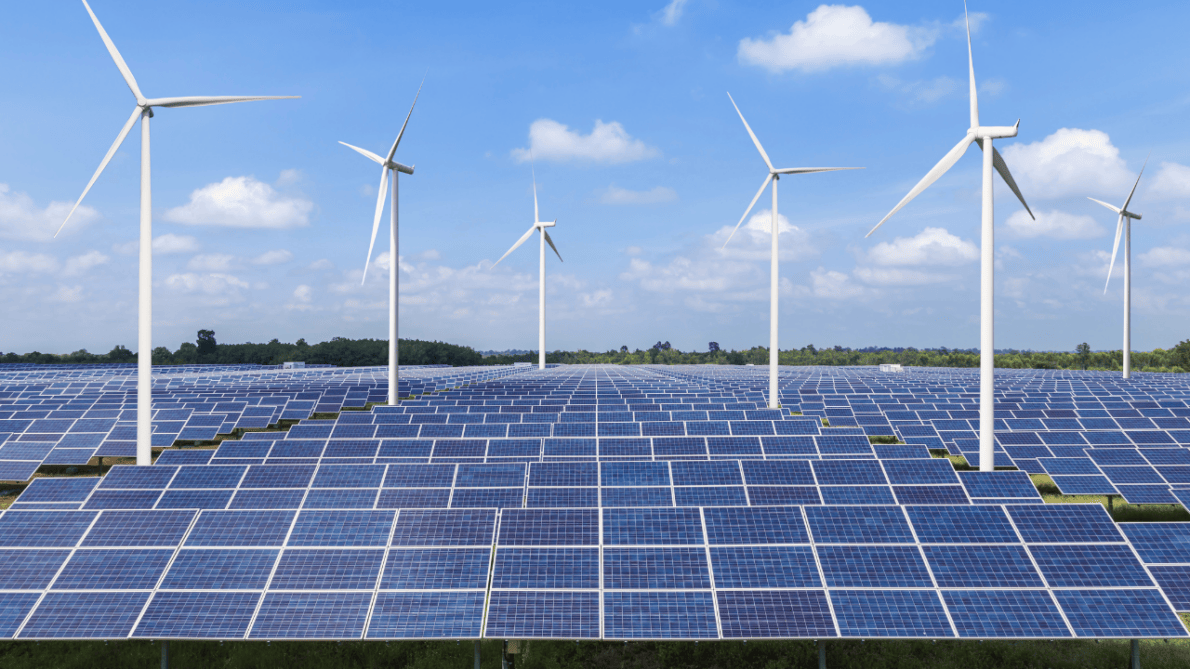
Structural Measures Must Be Announced In The Coming Days To Mitigate Billion-Dollar Losses In The Renewable Energy Sector, According To Federal Government Promise.
The federal government signaled that it will act urgently to address the crisis caused by cuts in the generation of renewable energy, which have severely impacted companies in the wind and solar sectors. The promise was highlighted in a message from the Minister of Mines and Energy, Alexandre Silveira, read by the president of the Brazilian Wind Energy Association (ABEEólica), Elbia Gannoum, during an industry event this week.
According to the minister, the government recognizes the financial losses faced by companies and intends to adopt structural measures in the coming days.
Increasing Losses Challenge The Renewable Energy Sector
Since 2023, renewable energy generators, especially wind and solar, have been facing billion-dollar losses due to so-called “curtailments” — production cuts caused by transmission network limitations and low electric consumption growth in the country.
-
Renewable energy advances over protected areas in Brazil, and a survey by the Energy Transition Observatory reveals silent impacts that challenge environmental conservation and pressure sensitive traditional territories.

-
Rio Grande do Sul accelerates energy transition: State invests in renewable technologies and consolidates decarbonization strategies and pathways to attract billions in new industrial investments.

-
With 160,000 m² of collectors, an area larger than 20 football fields, Silkeborg, in Denmark, hosts a solar thermal plant that heats 19,500 homes and could become the largest solar heating plant in the world.

-
A study reveals the expansion of renewable energy procurement in Brazil and shows how companies are taking advantage of opportunities to reduce expenses, ensure energy efficiency, and strengthen strategic environmental commitments.


The president of ABEEólica stated that the government will issue a regulation to formalize an agreement with the generators, aiming to end the legal dispute on the subject and regulate compensation for accumulated losses.
These government actions come amid one of the biggest crises ever faced by renewable energy in Brazil.
Sector estimates indicate that the cuts imposed by the National Electric System Operator (ONS) frustrated about 10% of the expected generation, reaching rates above 60% in regions of the Northeast.
Litigation And Impact On Financing New Projects
Affected companies have been suing Aneel, the sector regulatory agency, seeking compensation for their losses.
Aneel, in turn, argues that fully reimbursing the losses could burden energy consumers, as these costs would be passed on to electricity bills.
However, ABEEólica counters, stating that the impact on the tariff would be minimal — around 0.3%.
The prolongation of this uncertainty affects investors’ confidence.
Representatives of the financial sector warn that the lack of predictability regarding renewable energy cuts is already affecting the repayment of some projects’ debts and compromising the financing of new long-term ventures.
Short And Medium-Term Actions To Stabilize The Sector
In addition to the immediate solution via regulation, the government is studying new operational guidelines to reduce generation cuts during periods of high production, such as the so-called “wind season,” which runs from July to September.
This phase is crucial for maintaining the balance of the Brazilian energy matrix, especially during the dry period when hydropower production declines.
The government’s initiative also aims at the future: to ensure that the expansion of renewable energy continues with legal and technical security.
Although short-term measures are welcome, experts warn that more solid results are expected to emerge only in the coming years as the sector recovers and starts attracting new investments again.
Prospects For The Renewable Energy Sector In Brazil
Despite the government’s efforts, the sector still anticipates a decline in the volume of new wind farms in 2025. According to estimates from ABEEólica, the increase will be only 2 to 2.4 gigawatts, below the 3.3 GW installed the previous year, which already represented a reduction of over 30% compared to 2023.
Still, experts believe that the government’s actions to resolve the cuts in renewable energy generation could mark the beginning of a new phase of confidence and sustainable expansion in the sector, essential for the country’s energy transition.








Seja o primeiro a reagir!