





 Portuguese
  English
  Spanish
  4 min of reading
  0 comments


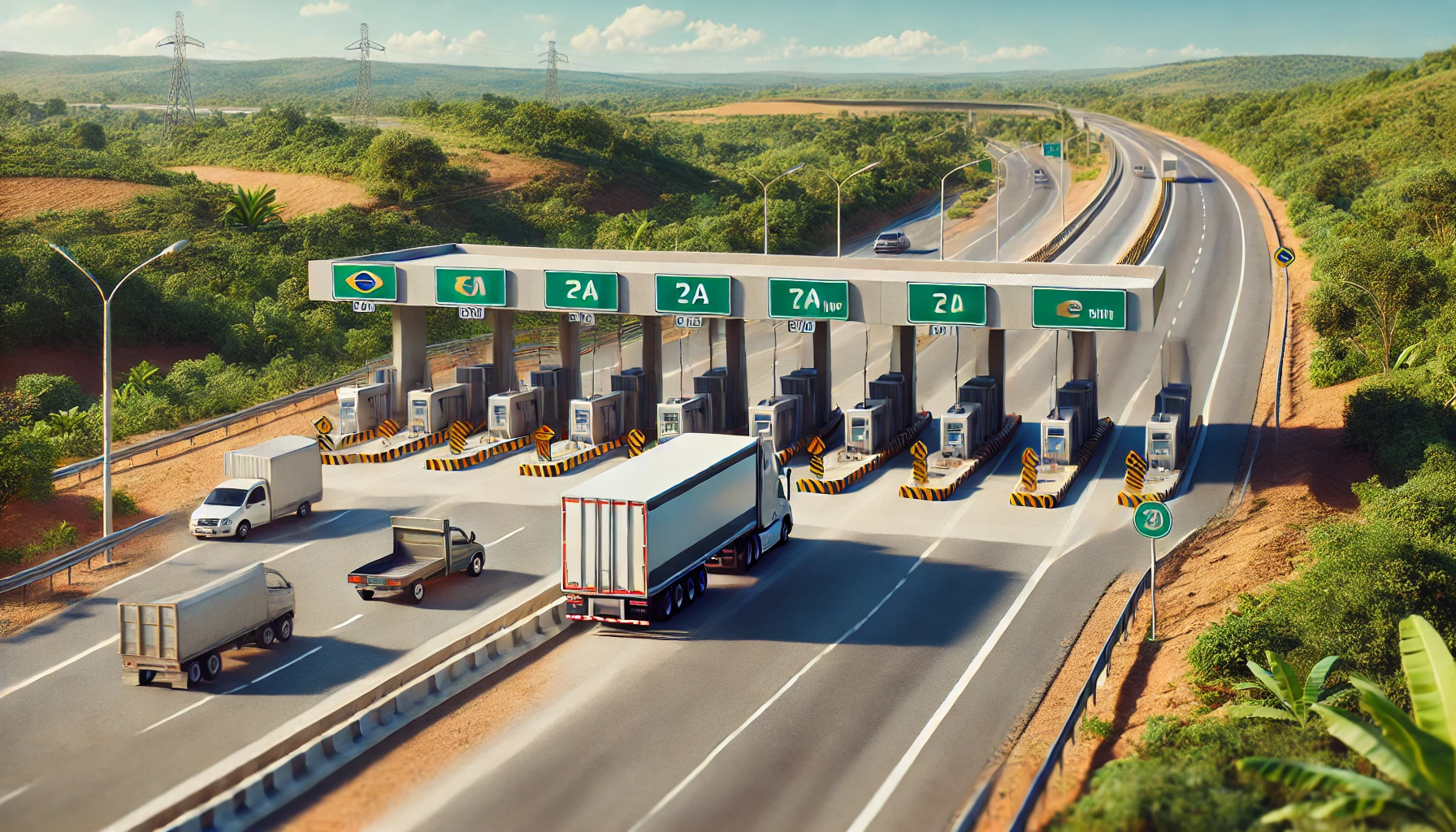
The Federal Government Plans A New Highway Concession Model, Aiming For “Light” Contracts To Attract The Private Sector And Offer Cheaper Tolls. Sections Will Be Offered In RJ, MG, GO, SC, And BA.
Next year, a strategic change in the concession of federal highways promises to awaken investors’ interest and impact drivers in various regions of Brazil.
The concession of these routes will occur with “slim” contracts – known as “light” model.
This new format stands out for requiring less investment and flexibly managing contractual obligations, sparking curiosity and speculation about its benefits and challenges.
-
Larger than entire cities in Brazil: BYD is building a 4.6 km² complex in Bahia with a capacity for 600,000 vehicles per year, but the discovery of 163 workers in conditions analogous to slavery has shaken the entire project.

-
With an investment of R$ 612 million, a capacity to process 1.2 million liters of milk per day, Piracanjuba inaugurates a mega cheese factory that increases national production, reduces dependence on imports, and repositions Brazil on the global dairy map.

-
Brazilian city gains industrial hub for 85 companies that is equivalent to 55 football fields.

-
Peugeot and Citroën factory in Argentina cuts production by half and opens a layoff program for more than 2,000 employees after Brazil drastically reduced purchases of Argentine vehicles.


The proposal may result in cheaper tolls, but it raises questions about maintenance and service quality on the highways. But how will these changes truly benefit users?
New Concession Model
The “light” concession is the focus of the government’s strategies to attract investment in infrastructure.
According to George Santoro, Executive Secretary of the Ministry of Transport, the goal is to award, by the second half of 2025, six highways distributed between Bahia, Espírito Santo, Goiás, Minas Gerais, Rio de Janeiro, and Santa Catarina, with contracts that ask less from the private sector and offer quicker financial returns.
What Changes In The ‘Light’ Contract?
The model reduces traditional requirements for lane duplications and major works, focusing investment on essential improvements such as road maintenance, signage, and possible adjustments in the layout.
This limited focus aims to make highway concessions with less vehicle traffic viable, but with significant cargo transport, thus reducing the cost and toll fee.
Santoro clarifies that these concessions will not require robust infrastructure, as the flow of vehicles does not justify duplications or major works.
For him, “the differential of this auction is the type of service; on low traffic highways, the focus is to recover the basic quality of the road without burdening the toll with unnecessary investments.”
Cost Reduction And Affordable Tolls
The government’s bet is that by streamlining contracts, toll rates will become more accessible.
Today, in conventional contracts, costs of rescue and emergency services, such as ambulances, are included in the toll.
Under the proposed model, the concessionaire will not be responsible for these services, leaving it to owners or insurers to cover such expenses in case of incidents.
This model seeks to balance financial viability for companies without burdening the user.
“With the new format, those who use pay less, without including the cost of services for rare events in the toll,” points out Santoro.
Maintenance and improvements of the basic structure will be prioritized, allowing for efficient service, but without the additional cost of towing and emergency medical assistance.
Highways Included In The Concession Plan
The following highways are expected to be awarded under the “light” model:
BR 393 in Rio de Janeiro: the famous Steel Highway, which connects strategic points and is in the process of contract cancellation with the current operator.
BR 356 and State Highway RJ-240: important for freight transportation to Porto do Açu, in Rio, and Minas Gerais. An agreement between the federal government and Rio de Janeiro will allow for the inclusion of this highway in the package.
BR 242 and BR 101 in Bahia: both divided into several lots.
BR 040 in Goiás: another significant freight segment.
BR 262 in Minas Gerais and Espírito Santo: a route that connects states and serves as an important transportation route for goods.
Highways in Santa Catarina: with specific sections still under review.
Investment And Priority In Recovery
The new concession model requires that the initial investment from the concessionaires be directed towards recovering and improving road conditions and signage, with the possibility of adjustments in the layout where necessary.
This investment aims to increase the safety and functionality of the highway without the high costs of complete infrastructure.
These highways were chosen by the government precisely because they have characteristics that facilitate a light concession: lower vehicle flow and an important role in cargo transport, characteristics that attract investor interest due to cost-benefit relation.
Thus, it is expected that the toll will be cheaper and proportional to use, without burdening frequent users.
Government Vision On The New Model
According to George Santoro, the “light” model tries to solve a problem faced by highways with less traffic, which do not attract large investments.
For him, by focusing on lower-cost projects and flexible contracts, the government aims to give new utility to strategic routes and promote economic development in areas further away from major urban centers.
“These are highways with a relevant cargo volume, but which do not require duplication or major works,” highlights Santoro. He believes that by attracting investors with this approach, infrastructure can improve without high costs for society.
The Impact On Users
While the government believes that the model will reduce rates and keep highways in adequate conditions, critics question whether the lack of emergency services could compromise safety in case of accidents.
After all, highways without ambulance and towing coverage, although cheaper, may put drivers in challenging situations.
With this project, the government attempts to reconcile investors’ interests with the need to improve strategic highways for cargo transport without increasing costs for users.
But the question remains: will the “light” model be able to provide good infrastructure with lower tariffs, without compromising driver safety?





Seja o primeiro a reagir!