





 Portuguese
  English
  Spanish
 3 min of reading
  6 comments




Government Chooses an Innovative Solution to Connect Cities: An Underwater Tunnel. The Decision Avoids Limitations and Promises to Bring an Unprecedented and Strategic Project to the State. This Structure, Besides Being Functional, Is Expected to Boost the Regional Economy and Urban Mobility.
Imagine the anticipation of a monumental bridge linking Itajaí and Navegantes.
This idea, which seemed the obvious choice to connect the two cities in a modern and efficient way, was recently set aside by the Government of Santa Catarina.
Instead, the surprising decision was to construct an underwater tunnel, an ambitious and unprecedented project in Brazil. But after all, what led the government to choose this curious and challenging solution?
-
Unemployment rises again to 5.8% at the beginning of 2026, raising alarms about the end of temporary positions and its impact on the Brazilian job market.

-
Document organization can cut invisible costs in small businesses, a simple step that prevents waste, rework, and losses in daily operations.

-
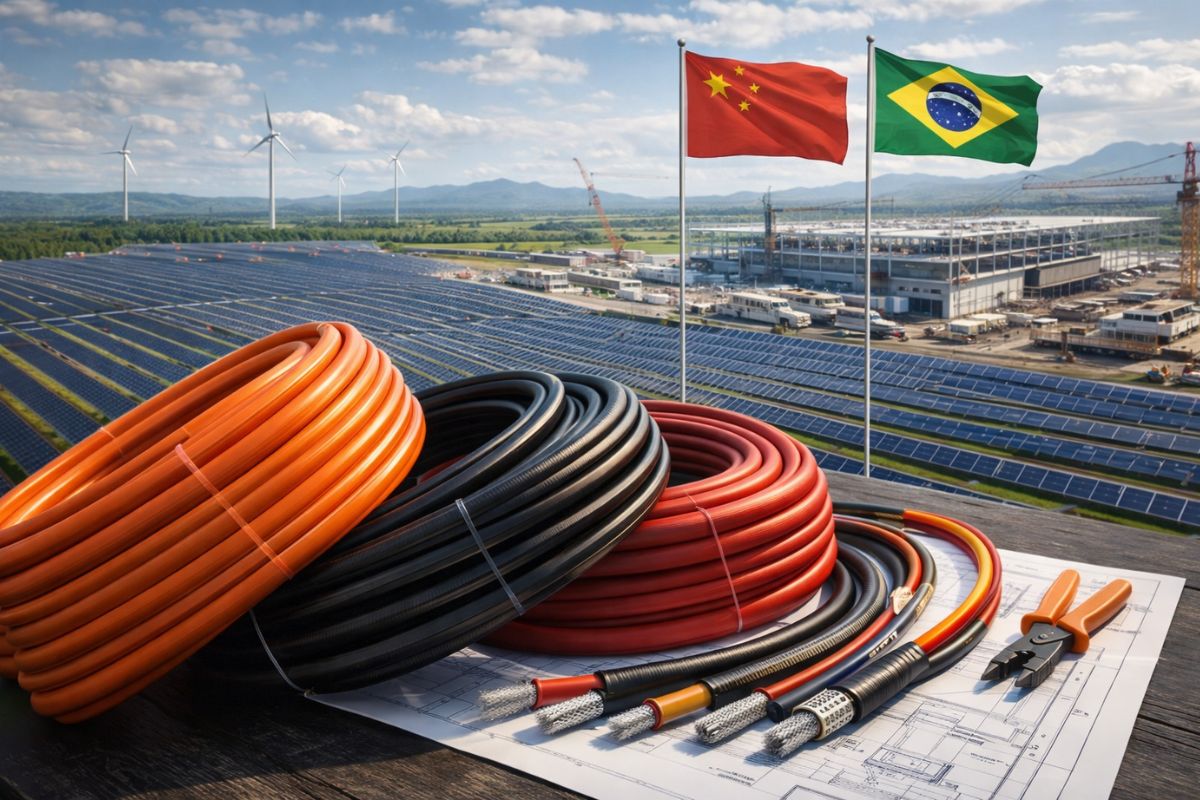
Chinese giant worth nearly R$ 4 billion that manufactures cables for electric cars, solar energy, and robotics wants to open a factory in SC.
-
Many employers do not know, but the law guarantees domestic workers a 25% increase in salary during trips, 50% for overtime, 20% for night shifts, and 17 additional benefits that can lead to labor lawsuits if not paid.


Strategic Decision to Avoid Height Restrictions
According to the NSC Total website, the project’s mobility coordinator, João Luiz Demantova, states that the decision to build a tunnel instead of a bridge was strongly influenced by a specific infrastructure issue.
As he explained, the initially planned bridge would need sufficient height to not obstruct the passage of large ships that navigate the Itajaí-Açu River towards local ports.
To ensure safe and smooth navigation, studies indicated that the bridge would need to reach about 65 meters high at its highest point.
Challenges Posed by Navegantes Airport for the Project
Although it was technically feasible to raise the structure to that level, the project faced another limitation: the presence of Navegantes Airport.
According to aviation safety regulations, structures near the aircraft approach area cannot exceed 45 meters high.
This restriction includes the exact point where the bridge would cross the river, making the original project unfeasible.
The Innovation of the Underwater Tunnel as a Viable Solution
Faced with the impasse, the underwater tunnel emerged as a possible and advantageous alternative.
Although this type of construction is still rare in the country, the necessary technology is already used in other parts of the world to solve similar issues.
The construction method envisions that the tunnel will be divided into blocks, pre-prepared and then submerged to the riverbed, where they will be sealed to prevent water ingress.
This innovation has yet to be implemented on a large scale in Brazil, but Santa Catarina seems determined to take the lead.
Comparisons and Implementation Timelines
Besides Santa Catarina, the only other underwater tunnel project underway in the country is located between Santos and Guarujá, in São Paulo, but it is facing several delays.
Thus, the State sees a unique opportunity to inaugurate a different construction model that could serve as a reference for future projects in other regions.
The expectation is that the bid for the Public-Private Partnership (PPP) responsible for the construction of the tunnel in Itajaí will be launched in the first half of next year.
The forecast, according to the state government, is that the project will boost not only urban mobility but also the economic development of the region, facilitating the movement of people and goods between the two cities.
What Will Be the Impact on the Local Economy?
The choice of the underwater tunnel represents more than a technical innovation.
Besides avoiding the height problems posed by the airport, this project is expected to create economic opportunities, boost jobs during the construction phase, and reinforce Santa Catarina’s strategic position in the logistical landscape.
According to analysts, the expectation is that the infrastructure will better connect the Santa Catarina coast, reducing travel time and improving access to the Port of Itajaí, which is one of the largest in the country.
How Will Residents of Itajaí and Navegantes Receive This Unprecedented Project? Will the Project Be Executed Within Timelines and with the Necessary Quality? Will This Tunnel Bring the Expected Development to the Region?









Lástima ke o país com mais potencial no planeta Terra tenha essa praga de ineficientes políticos sem capacidades técnicas nem inovadoras para abrir os horizontes da prosperidade necessária para termos alta qualidade de vida e ser a potência ke merecemos ser…
Esse túnel ou pontezinha ….supostamente tem sido bla-bla-bla nos últimos 30 anos….. será ke os políticos CATARINENSES vão finalmente ser eficientes …competitivos e independentes??????
Nós anos setenta foi aventada e até alguns estudos para uma obra desse tipo ser executada na travessia Rio Grande/São José do Norte, depois descartado.
Se tem PPP no negócio, certamente vão cobrar um belo pedágio para passar pelo túnel.
Pelo menos haverá o túnel!
E quem não quiser pagar poderá continuar usando a BR101 como forma de acesso.