





 Portuguese
  English
  Spanish
  7 min of reading
  0 comments


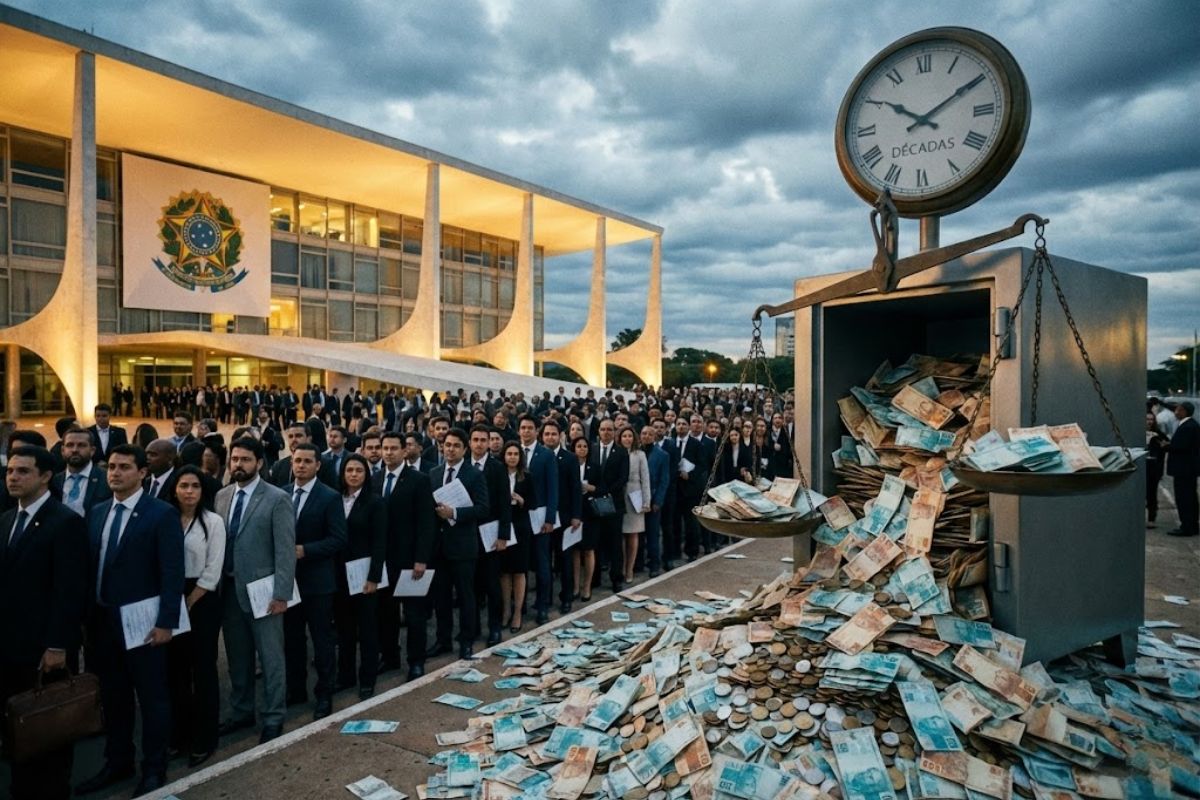
With Forecast of 22,800 New Effective Employees and 24,000 Temporary Ones Until 2026, President Lula Replenishes Positions After Mass Retirements, Delays the Administrative Reform, Maintains Super Salaries and Perks, and Increases Pressure on Federal Public Spending.
The government of Luiz Inácio Lula da Silva aims to end 2026 with 22,800 new effective employees in federal administration, more than double the approximately 10,000 appointments made during Jair Bolsonaro’s administration, according to data from the Ministry of Management and Innovation in Public Services. By 2025, 19,100 appointments have already been authorized, and the program forecasts 3,652 additional positions in 2026, in a scenario of accelerated recomposition following the wave of retirements that started with the Pension Reform of 2019.
While the Executive prepares contests for thousands of new employees, it keeps the decision regarding the Administrative Reform, which has been pending in Congress since the previous administration, in suspense, delaying changes in careers, performance criteria, and limits on super salaries and perks. Experts warn that without new rules approved before the entry of these employees, the country may consolidate for decades a higher level of spending on personnel in federal public service, amid official projections that up to 456,410 employees could retire between 2024 and 2074.
How Many Positions Does the Government Plan to Open Until 2026
According to the Ministry of Management, the Lula administration is expected to close its term with 22,800 additional effective employees in federal administration.
-
50 viaducts, 4 tunnels, 28 bridges, and 40 kilometers of bike paths: BR-262 in Espírito Santo will receive 8.6 billion reais for the largest engineering project in the state’s history, inspired by the Immigrant Highway in São Paulo.

-
Brazil produces too much clean energy and doesn’t know what to do with it: over 20% of solar and wind capacity was wasted in 2025 while investors flee and 509 renewable generation projects were abandoned in the last year.

-
Piauí will produce a new fuel that replaces diesel without needing to change anything in the truck’s engine and reduces pollutant gas emissions by half: truck drivers from all over the Northeast are already celebrating the news that will arrive later this decade.

-
A new Brazilian shopping center worth R$ 400 million will be built in an area equivalent to more than 4 football fields, featuring 90 stores, 5 cinemas, a supermarket, a college, and parking for 1,700 cars, potentially generating 3,000 jobs.


This figure includes appointments already authorized since 2023 and projected positions until 2026, at a much faster pace than the previous administration, which totaled around 10,000 appointments.
As of this year, 19,100 appointments have been authorized.
For 2026, the estimate is to fill 3,652 positions, including 3,144 at the higher education level and 508 at the intermediate level.
Of this total, 2,480 positions are immediate, and 1,172 are expected to be filled in the short term after the approval of the contests.
In parallel, the government plans 24,000 temporary hires, mainly census takers for the IBGE, with lower costs and fewer rights than effective employees.
Mass Retirements and the Recomposition Argument
The Ministry of Management argues that the increase in employee hiring since 2023 is a movement of recomposing the public machinery after a combination of mass retirements and a freeze on contests during Jair Bolsonaro’s administration.
After the Pension Reform of 2019, 38,500 employees retired, reducing the workforce in strategic areas of federal administration.
Even with the entry of new employees, the government projects a net loss of personnel.
The official estimate is that the Lula administration could end its term with a deficit of up to 47,000 federal public employees between 2023 and 2026.
This estimate combines the creation of up to 22,000 positions during the period with the possibility of retirement for up to 69,000 employees, which, in the view of the economic team, would justify accelerated recomposition.
Future Pressure: 456,000 Retirements and Payroll for Decades
In the long-term horizon, the Ministry of Management estimates that 456,410 employees could retire between 2024 and 2074.
For public administration experts, this volume emphasizes the need to plan, starting now, the profile of new employees and the design of careers, for fear of maintaining a rigid spending structure that is poorly adaptable to technological and social changes.
In 2023, the first year of the current government, 12,000 employees retired only from federal public administration.
The ministry projects that approximately 57,000 employees from the federal Executive could retire between 2024 and 2026, reinforcing the sense of urgency in recomposition.
At the same time, each effective employee entering today could remain on the payroll for decades, making the decision about entry and progression rules central to future fiscal balance.
Administrative Reform Stalled and Political Impasse in the Planalto
The Administrative Reform, which aims to change remuneration, performance evaluation, and benefits rules in the public sector, remains stalled in Congress under the leadership of Congressman Pedro Paulo from the PSD of Rio de Janeiro.
The bill is not among the priority projects for a vote this year and faces resistance from within the government itself, fueling the perception that there is a lack of a clear decision from the political core of the Planalto.
Pedro Paulo reports that there are divided opinions in the Esplanada dos Ministérios.
The Minister of Finance, Fernando Haddad, has already expressed support for parts of the proposal, such as limiting super salaries and creating stricter performance rules for employees.
On the other hand, members from the management area and sectors of the governing base fear that the reform could weaken public service and reduce the bargaining power of organized categories.
As this dispute remains unresolved, the hiring of new employees continues to follow the current rules.
Super Salaries, Perks and the Risk of Crystallizing Privileges
Recent studies point out that Brazil leads rankings of super salaries in the public sector, with annual spending around 20 billion reais when considering salaries above the limit and additional benefits.
In addition to these super salaries, known as perks, such as aids and retroactive benefits, inflate super retirements and increase internal inequality among employees.
The proposed Administrative Reform under discussion foresees a single remuneration table, mandatory performance targets, ending privileges such as vacations over 30 days and premium leave, as well as limiting food, health, and transportation aids to 10 percent for those earning above 90 percent of the constitutional cap.
Without these restrictions approved, experts point out the risk that the entry of new employees under the old design will consolidate super salaries and perks for another generation.
Criticisms of “Hyper-constitutionalization” and Lack of Focus in Management
The Secretary of Personnel Management at the Ministry of Management, José Celso Cardoso Junior, evaluates that the text being discussed in Congress is excessively broad, taking everyday management issues to the constitutional level.
In his assessment, the reform ends up creating a kind of hyper-constitutionalization of matters that could be handled in law or regulation, which would reduce flexibility for future adjustments.
According to O Globo, for the professor of Public Administration at Fundação Getulio Vargas, Alketa Peci, the debate needs to advance toward a model that combines structured performance evaluation with effective limitation of perks and super salaries.
In the researcher’s view, the absence of clear rules opens space for more radical responses, such as those adopted in moments of strong political polarization, and increases the risk of abrupt reforms that weaken public service instead of modernizing it.
Opportunity for Modernization and Qualitative Leap in Careers
Renata Vilhena, president of the board of the NGO República.org, believes that the wave of retirements and the need to replace employees in the coming years constitute a rare opportunity to modernize public service.
For her, the focus should be on three axes: regularity of contests, transformation of careers, and more precise sizing of the workforce in each area.
The professor of Public Administration at Unicamp, Oswaldo Gonçalves Junior, highlights that the competition of narratives about the role of the State has been blocking the debate about a consistent administrative reform.
He states that it is necessary to reconcile the strengthening of strategic careers with more flexible arrangements for other functions in order to allow a qualitative leap in management.
Without this redesign, the replacement of employees tends to repeat old patterns, with little integration between performance, remuneration, and delivery of services to citizens.
New Careers Project and Impact of 4.2 Billion Per Year
In parallel with the discussion of the Administrative Reform, the Lula government is preparing to send a bill to Congress to restructure federal careers, in line with the promise to value employees made since the campaign.
The proposed changes are expected to affect around 200,000 employees, both active and retired, with an estimated annual impact of 4.2 billion reais on public accounts.
The text being drawn up creates 8,600 effective positions for federal universities and 225 for the National Health Surveillance Agency, Anvisa, to be filled through contests.
It also proposes a new career of technical analyst in the Executive, with the possibility of working in different ministries, replacing functions currently fragmented among archivists, librarians, accountants, and other support roles.
In practice, this expands the space for the entry of new employees in technical areas, even before any definition regarding the Administrative Reform.
Hirings Today Determine the Format of the State in the Next Decades
Since 2016, over 70,000 employees have already left federal public service, and the projection that hundreds of thousands may retire by 2074 indicates that the replacement process will be continuous.
Every decision made now regarding contests, careers, evaluation, and benefits helps define what the Brazilian State will look like in the coming decades, both in size and in cost and delivery capacity.
For analysts, the central dilemma is balancing the need to refill emptied areas with the responsibility of avoiding a unsustainable trajectory of spending on employees.
Without a clear decision on the Administrative Reform and without stricter criteria for super salaries and perks, the hiring of 22,800 new effective employees by 2026 may turn into a missed opportunity to reorganize the public machinery on more modern bases.
In your opinion, should the government approve an Administrative Reform before hiring thousands of new employees, even under pressure to quickly replenish the federal public machinery?









Seja o primeiro a reagir!