





 English
  Francês
  Alemão
  Italiano
  Japonês
  Norueguês
  Portuguese
  Spanish
  3 min of reading
  0 comments


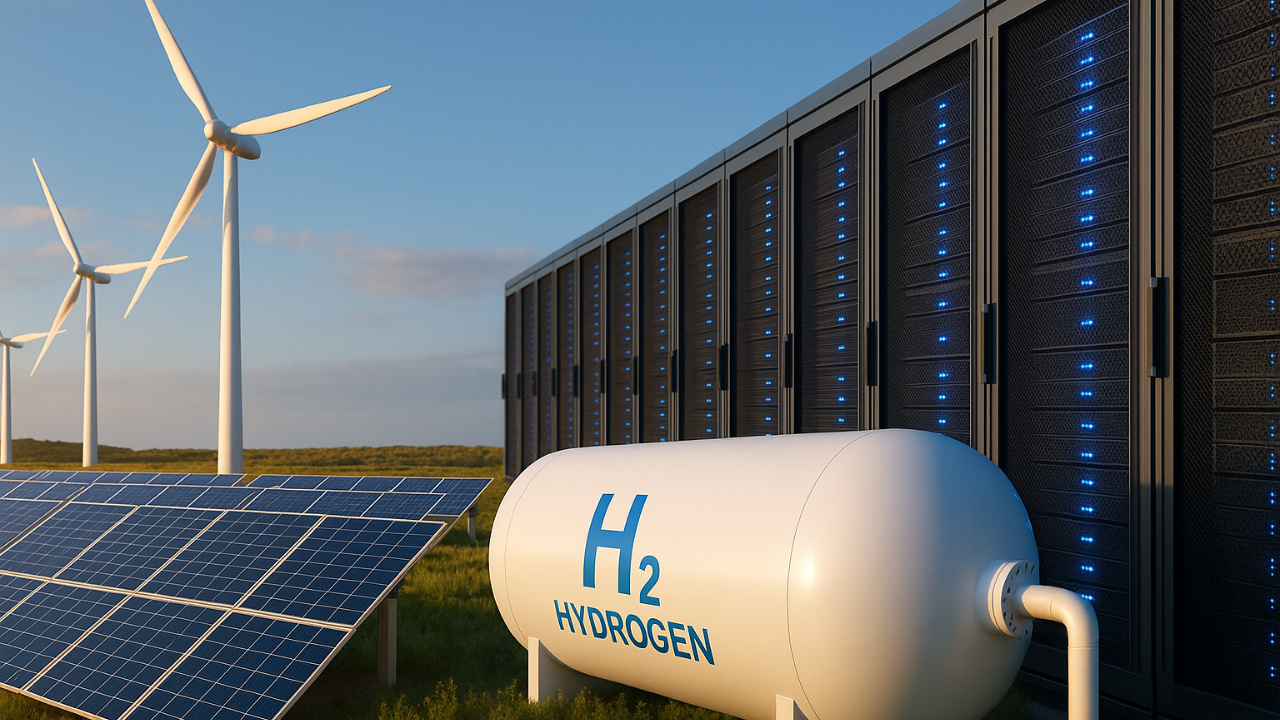
Decree Prioritizes Data Centers and Green Hydrogen in Transmission Lines of the Northeast to Reduce Reverse Outages.
The federal government will implement a new model to prioritize data centers and green hydrogen factories in access to the transmission lines of the Northeast.
The measure, outlined in a decree that President Lula is expected to sign later this week, aims to respond to the current pressure on the region’s electrical system, where the advancement of renewable energy in the Northeast has been causing instabilities known as reverse outages.
The new expedited process will allow these ventures to jump the queue currently managed by the National Electric System Operator (ONS), speeding up connections and providing more predictability to investors.
-
Renewable energy advances over protected areas in Brazil, and a survey by the Energy Transition Observatory reveals silent impacts that challenge environmental conservation and pressure sensitive traditional territories.

-
Rio Grande do Sul accelerates energy transition: State invests in renewable technologies and consolidates decarbonization strategies and pathways to attract billions in new industrial investments.

-
With 160,000 m² of collectors, an area larger than 20 football fields, Silkeborg, in Denmark, hosts a solar thermal plant that heats 19,500 homes and could become the largest solar heating plant in the world.

-
A study reveals the expansion of renewable energy procurement in Brazil and shows how companies are taking advantage of opportunities to reduce expenses, ensure energy efficiency, and strengthen strategic environmental commitments.


This change occurs precisely because large consumers located near the wind and solar energy hubs can help alleviate the national grid.
<pThus, the government is trying to redistribute demand, prevent power outages, and enable strategic projects to grow with regulatory security.
System Overload and the Advancement of Renewable Energy in the Northeast
In recent years, the Northeast has established itself as Brazil’s main hub for clean energy generation.
However, the rapid expansion of wind and solar energy has brought an unexpected side effect: reverse outages.
This phenomenon occurs when renewable production remains high until the beginning of the night, but solar generation drops abruptly, creating a fluctuation that puts pressure on the system.
The challenge worsens because hydropower plants and other slow-response sources cannot start operating quickly enough.
Therefore, the ONS has been conducting scheduled outages throughout the day as a way to prevent more severe power drops.
Data Centers and Green Hydrogen Gain Priority in Transmission Lines
The decree establishes that data center projects and green hydrogen industries will have priority for connection analysis for a period of up to ten months.
According to the government, this accelerated screening will help attract large-scale investments that can locally consume part of the excess energy in the Northeast.
The expectation is that this additional consumption may reduce stress on the national system by up to 4 gigawatts.
For authorities in the electric sector, this represents an immediate gain in stability, although the measure does not completely eliminate current fluctuations.
In addition, the policy arises as a response to the global scenario, where data centers are rapidly advancing thanks to artificial intelligence and the growth of cloud storage.
Moreover, green hydrogen is consolidating as a strategic alternative in the energy transition.
Periodic Auctions Will Define New Access to the Grid
After the priority period, the government will launch a model based on periodic auctions—at least two per year—to grant new access to the transmission lines.
Each interested company will need to pay a participation fee and present prior technical documentation.
Projects that offer the highest value for the right to connect will be selected, provided they adhere to the limits of expanding existing infrastructure.
The revenue collected in these auctions will be directed to reducing energy tariffs, creating a cycle of benefits for the end consumer.
Expectation is to Unlock Investments and Reduce Operational Risks
Although the government acknowledges that the decree will not completely eliminate reverse outages, the hope is that local consumption from data centers and green hydrogen factories will serve as an important buffer for the system.
Thus, the region can become more stable and attractive for new businesses.
Additionally, by strengthening the connection between large consumers and clean energy hubs, the country takes another step to consolidate its position in the global energy transition.
The measure also reduces bottlenecks that have hindered large-scale projects in the Northeast for years.










Seja o primeiro a reagir!