





 Portuguese
  English
  Spanish
  4 min of reading
  0 comments


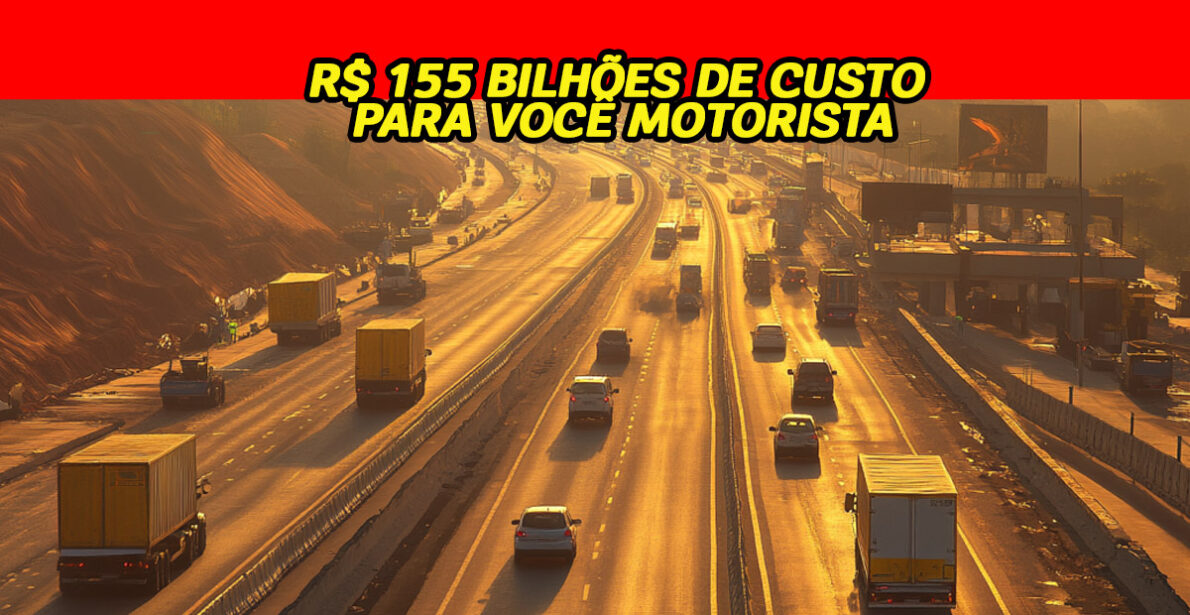
Construction on Famous BR Promises Great Improvements, but Also Brings a Significant Impact on Drivers’ Pockets, with a Cost of Up to R$ 155 Billion. Study Reveals Challenges and Suggests Alternatives Like Variable Tolls and Free Flow to Minimize Costs.
Get Ready: The Construction on BR-101 Promises Not Only to Modernize the Highway but Also to Directly Impact the Pockets of Those Who Use It.
The Federation of Industries of the State of Santa Catarina (Fiesc) commissioned an alarming study that revealed the potential for astronomical spending for drivers who travel along BR-101 in the northern part of the state.
But What Is at Stake? Infrastructure works that, although promising improvements, may result in surprising costs for users of the road until 2047.
-
Unemployment rises again to 5.8% at the beginning of 2026, raising alarms about the end of temporary positions and its impact on the Brazilian job market.

-
Document organization can cut invisible costs in small businesses, a simple step that prevents waste, rework, and losses in daily operations.

-
Chinese giant worth nearly R$ 4 billion that manufactures cables for electric cars, solar energy, and robotics wants to open a factory in SC.
-
Many employers do not know, but the law guarantees domestic workers a 25% increase in salary during trips, 50% for overtime, 20% for night shifts, and 17 additional benefits that can lead to labor lawsuits if not paid.


Fiesc presented a proposal to the Ministry of Transport that includes new improvements for BR-101. According to the organization, the current construction plan could generate a cumulative cost of R$ 155.7 billion for drivers between 2033 and 2047.
These figures include expenses with fuel, vehicle maintenance, time lost in traffic jams, and, of course, damages caused by accidents on the highway.
The Impact of Construction on Your Wallet
According to the study, in addition to financial costs, the planned construction works may not be sufficient to deal with the increasing flow of vehicles by 2048.
Simulations showed that various segments of BR-101 will reach level “F” on the HCM (Highway Capacity Manual) scale, which is the worst possible level.
This means the highway will face chronic congestion, where the demand for vehicles will exceed the capacity of the road, making the experience of traveling on BR-101 a true ordeal for drivers.
Furthermore, the construction will have a significant environmental impact. According to traffic engineer Lucas Trindade, the project anticipates an increase of more than 40% in pollutant emissions.
This would result in an additional 8 trillion tons of CO2, NOx, PM, and VOC released into the atmosphere, significantly contributing to environmental degradation.
Measures Suggested by Fiesc to Alleviate the Problem
Despite supporting the renewal of the concession contract for BR-101, Fiesc emphasized that the proposed construction and improvements are insufficient.
Mario Cezar de Aguiar, president of the federation, highlighted the need to incorporate additional measures to enhance safety and improve service levels on the highway.
Among the suggested improvements are the construction of third lanes, side roads, and modifications at junctions.
These interventions could mitigate the existing bottlenecks and improve traffic flow, but they would also increase costs for drivers.
Tolls and New Technologies: What Lies Ahead?
One of the most controversial points discussed in the study is the implementation of per-kilometer tolls, known as “free flow.”
This charging model aims for a fairer fee, where users pay according to the distance traveled.
Egídio Martorano, president of the Transportation and Logistics Chamber of Fiesc, advocated for the adoption of this model as a way to increase revenues and ensure that more construction can be carried out.
Additionally, the study proposed the implementation of smart traffic and connectivity technologies to enhance safety on BR-101.
These innovations would allow for faster communication in emergency situations and assist transportation companies in optimizing their operations by monitoring fuel consumption and fleet locations in real time.
The Controversy of Variable Tolling
Another highlight is the proposal for variable tolls, which would adjust the fee according to the time of day.
During peak hours, the rate would increase, encouraging drivers to travel at alternative times and helping to spread traffic throughout the day.
But would this measure really bring benefits? For drivers who lack flexibility in travel times, variable tolls could become an additional financial burden.
Innovations in Safety and Sustainability
In order to improve response times in accident situations, the study proposes the adoption of “motolâncias,” motorcycles equipped for rapid response to road accident victims.
These units would help reduce response times to emergencies and, consequently, decrease the congestion time caused by accidents.
Another innovative proposal is the accident sight blocker, a technology that would help prevent onlookers from slowing down to observe accidents, which exacerbates congestion.
Parallel Construction and New Challenges
Fiesc has also reiterated its support for the construction of a parallel highway to BR-101, which would accommodate demand growth in the coming decades.
According to engineer Ricardo Saporiti, this alternative would relieve traffic in several critical segments.
However, the biggest obstacle is the lack of bidding for the engineering project, especially for the segment that would connect the new highway to the highway bypass of Greater Florianópolis.
The optimistic timeline for the completion of this construction, should the project be approved, is four years, with an estimated finish by 2031.
But would this new highway really solve the problem or just shift it to other areas?
The Future of BR-101: A Cost Worth Paying?
The renewal of the concession contract for BR-101 and the implementation of new technologies and construction are urgent measures to prevent the highway from collapsing in the coming years.
However, these advances will come at a high cost, both for the government and for users. The question remains: Are you willing to pay this bill?








Seja o primeiro a reagir!