





 Portuguese
  English
  Spanish
  4 min of reading
  0 comments


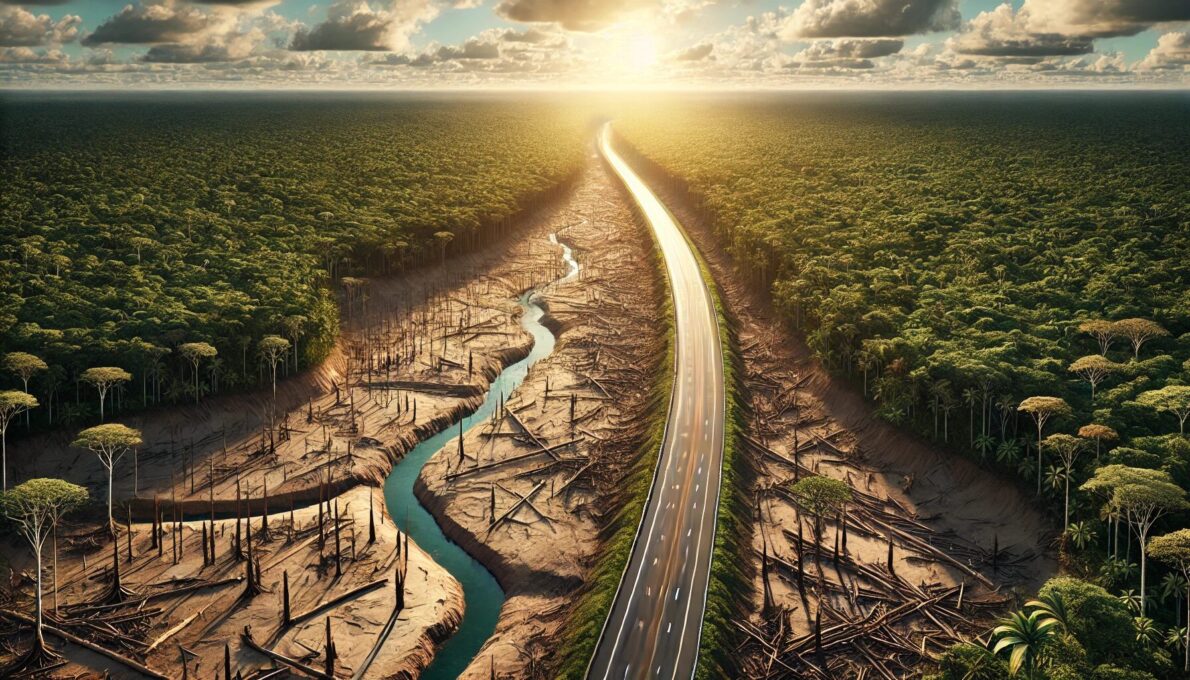
Pavement of BR-319 May Cause Irreversible Damage to the Amazon, Impacting Climate and Indigenous Communities. Researchers Point Out That the Project Favors Deforestation and Land Grabbing, Besides Altering Rainfall Patterns in Brazil.
With the promise of improving infrastructure and facilitating transportation between the states of Amazonas and Rondônia, the paving of BR-319 seems like a simple solution for many.
However, researchers state that the damage caused by the project may be irreversible.
The debate over environmental impact has gained momentum, especially in light of the risks of accelerated deforestation and its consequences for the climate.
-
The government requests the Federal Revenue Service for a new system to automate the income tax declaration, reducing errors, time, and bureaucracy for millions of Brazilians.

-
Pix in installments, international Pix, and contactless payment without internet: the Central Bank revealed the new features coming to the tool that is already used by almost every adult in Brazil.

-
Mercado Livre has just started selling medications with delivery in up to three hours to your door, and this move could completely change the way Brazilians buy medicines on a daily basis.

-
In Dubai, rising tensions from the war in the Middle East are causing super-rich individuals to leave the Gulf and direct their fortunes to a new financial refuge in Asia.

President Luiz Inácio Lula da Silva recently visited the area and defended the resumption of pavement on the highway, ensuring that the project would not result in deforestation.
Lula stated that the government would take measures to prevent forest destruction and land grabbing along the highway, something common in vulnerable areas of the Amazon.
However, experts and local communities disagree, pointing to clear signs that destruction is already underway.
Environmental Impacts Are Already Visible
According to environmentalists, the progress of BR-319 is resulting in a significant increase in land grabbing, deforestation, and illegal hunting.
Residents of Indigenous Lands (TIs) near the highway report that they can already perceive the damage, such as the burial of springs and the predatory exploitation of timber.
A resident, who preferred to remain anonymous for fear of reprisals, stated that the springs of 57 streams have already been destroyed due to the construction work.
Biologist Lucas Ferrante from the University of São Paulo (USP) and the Federal University of Amazonas (UFAM) emphasizes that the impact of the paving of BR-319 is already profoundly affecting the way of life of indigenous communities.
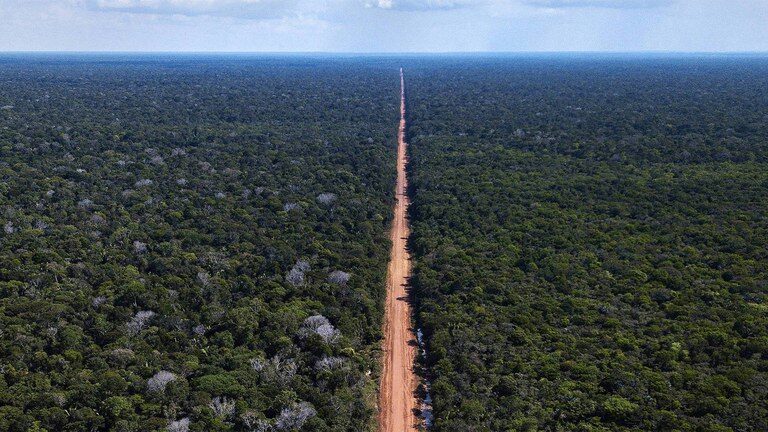
The destruction of the forest is not limited to the main highway but extends to smaller roads – minor roads that connect cities to BR-319, encouraging the invasion of public lands by land grabbers.
Climate Changes May Intensify
The devastation caused by BR-319 also jeopardizes the evapotranspiration system of the Amazon Rainforest, responsible for the formation of the “flying rivers” – large streams of water vapor that help maintain rainfall patterns in Brazil.
Ferrante warns that, in the long term, the paving of the highway could reduce rainfall that supplies the Southern and Southeastern regions of the country by up to 70%.
This could lead to collapses in the Cantareira system, which supplies São Paulo, compromising water supply for millions of people.
Moreover, changes in the hydrological cycle may increase temperatures and intensify heat waves in the Manaus region and Central Amazon.
According to Ferrante, the destruction of the forest also hampers river transport, essential for Amazon communities, as the burial of streams prevents the natural flow of rivers such as the Madeira.
Resumption of Work Intensifies Deforestation
According to data from the National Institute for Space Research (Inpe), deforestation in the area of BR-319 grew by 122% between 2020 and 2022, coinciding with the announcement of the resumption of work by the government of Jair Bolsonaro in 2020.
Now, under the government of Lula, paving continues to advance, fueling fears that the situation will deteriorate further.
The organization Climate Observatory filed a Public Civil Action (ACP) in January 2024, demanding the suspension of the preliminary license issued by the Brazilian Institute of the Environment and Renewable Natural Resources (Ibama) in 2022.
The action highlights that the license was granted without considering technical data and scientific analyses that pointed to environmental risks.
In response, the license was suspended, but construction continues in unpaved parts of the highway.
BR-319 and Risks to Indigenous Communities
BR-319 passes through 13 municipalities, 28 conservation units, and 69 indigenous communities, including isolated peoples, according to a survey by the BR-319 Observatory.
For critics, the paving directly threatens these populations, leading to increased deforestation and land conflicts.
An indigenous person from the Apurinã ethnic group, living on the lands of Igarapé São João and Tawamirim, reported that his community faces intense pressure from the Tapauá municipality for the opening of new roads that would connect their lands to BR-319.
He also mentioned death threats for reporting environmental crimes, highlighting the tension that the construction is generating in the region.
Historic Drought in Amazonas and the Controversies of BR-319
The state of Amazonas is facing one of the worst droughts in its history, with isolated communities and dry rivers.
For biologist Lucas Ferrante, the paving of BR-319 will not help the affected municipalities, as many of them are far from the highway and do not benefit directly from it.
The project, according to him, only worsens the situation by hindering the rainfall cycle and river transport, which is the main form of travel in the Amazon.
“The Amazonas has a unique geography and cannot be treated the same way as other Brazilian states,” says Ferrante, emphasizing that the region’s rivers are essential for the local economy.
An Outdated Project?
According to Paulo Busse, lawyer for the Climate Observatory, the current BR-319 project does not meet the environmental protection requirements.
He suggests that a new, updated project that includes care for traditional peoples and the ecosystem could be discussed.
The original project for the highway was created in the 1960s, when environmental concerns were virtually non-existent.
Revising this proposal from a more modern perspective is essential to balance progress with the preservation of the Amazon.
So far, the federal government has not responded to questions regarding Lula’s statements or the possibility of revising the project.








-

3 pessoas reagiram a isso.