





 Portuguese
  English
  Spanish
  3 min of reading
  1 comment


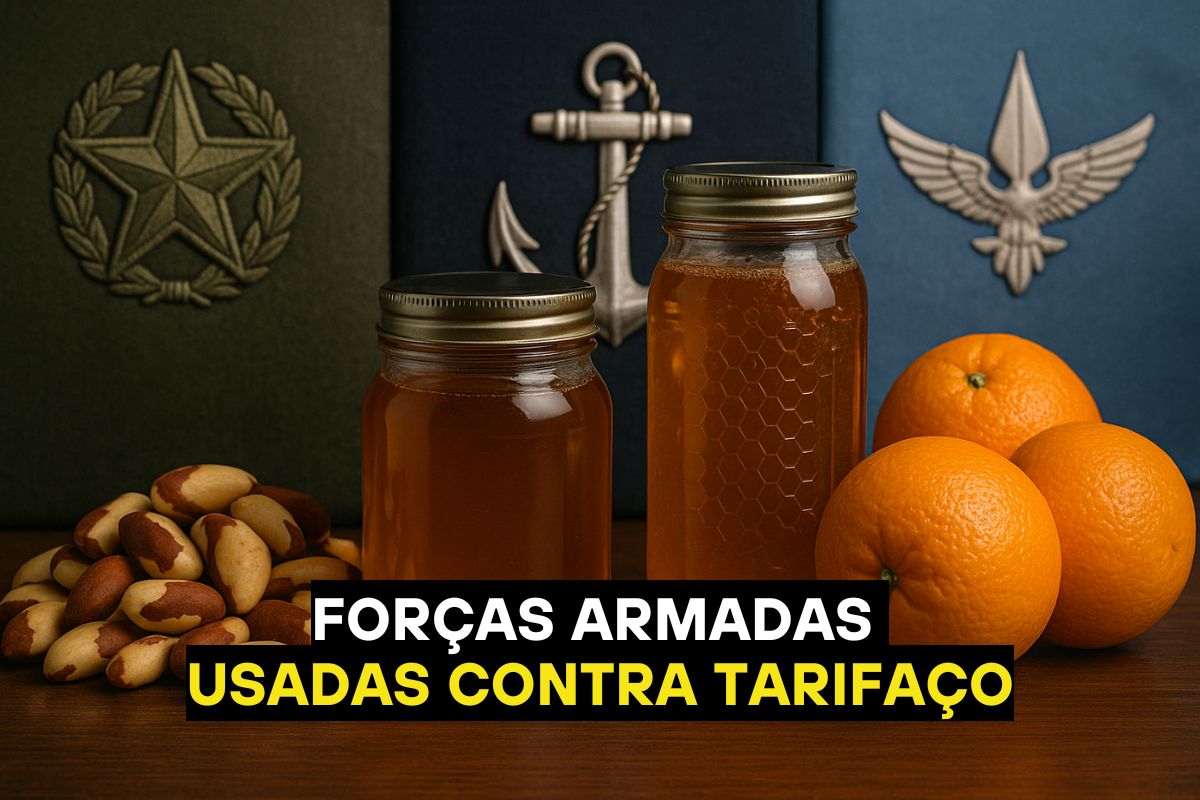


Army, Navy and Air Force Can Be Used as Emergency Buyers to Support Family Farmers Affected by the 50% Tariff Imposed by Trump on Brazilian Products
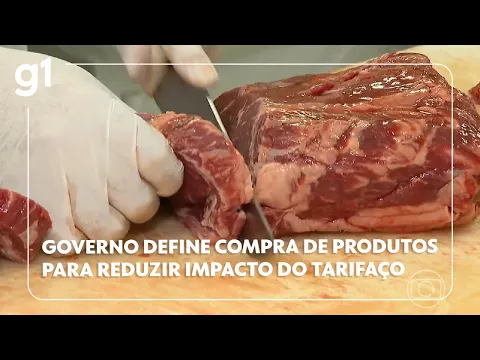
The federal government is preparing an agreement with the Ministry of Defense for the Army, Navy and Air Force to conduct direct food purchases from family agriculture as a way to reduce the immediate impact of the 50% tariff announced by Donald Trump against Brazilian products. The measure provides for special public calls, in which the Armed Forces would start acquiring items like cashews, Brazil nuts, honey, and oranges, incorporating them into the internal consumption of around 350 thousand active military personnel.
The initiative was discussed in a meeting between the Ministry of Defense and the Ministry of Agrarian Development and Family Agriculture (MDA). The logic is to use state purchasing power to maintain the income of cooperatives and rural associations, preventing the blockage of external markets from causing irreversible losses.
How the Purchases Would Work
Unlike traditional bidding processes, special public calls allow for simplified bidding documents, in which the selection takes into account not only the price but also the social origin and the collective supplying capacity of the farmers.
-
With an investment of R$ 612 million, a capacity to process 1.2 million liters of milk per day, Piracanjuba inaugurates a mega cheese factory that increases national production, reduces dependence on imports, and repositions Brazil on the global dairy map.

-
Brazilian city gains industrial hub for 85 companies that is equivalent to 55 football fields.

-
Peugeot and Citroën factory in Argentina cuts production by half and opens a layoff program for more than 2,000 employees after Brazil drastically reduced purchases of Argentine vehicles.

-
A Brazilian city gains a factory worth R$ 300 million with the capacity to process 200 thousand tons of wheat per year, a mill of 660 tons/day, silos for 42 thousand tons, and an industrial area of 276 thousand m².

This mechanism is already used in programs like PNAE (School Feeding) and PAA (Food Acquisition), but would be expanded to the military barracks.
Minister Paulo Teixeira (MDA) confirmed that the plan is underway and stated that the Lula government seeks to buy time until the opening of diplomatic negotiations with Washington.
“While there is no agreement, we cannot leave producers without income”, he stated.
Measures Already in Place

In addition to using the Armed Forces as buyers, the strategy connects to the actions of Conab (National Supply Company), which has started to acquire part of the production from affected cooperatives.
This operation acts as a crisis buffer, as the state-owned company buys, stores, and then redirects the products to the internal market or for donations.
The limits are up to R$ 1.5 million per cooperative per year and R$ 15 thousand per farming family.
The idea is to avoid waste and provide liquidity to perishable items like fruits and honey until they can be redirected to other sales channels.
Impact on Farmers
The products most affected by the American tariff, such as nuts and honey, hold significant weight in the export agenda of family agriculture.
Without emergency measures, thousands of small producers would have no destination for their harvest.
Although oranges and juice have escaped the tariff, they were included in the plan due to the bumper crop in Rio Grande do Sul, Piauí, and Bahia.
According to specialists consulted by the government, this type of institutional purchase can stabilize internal prices and preserve rural jobs, acting as a counter-cyclical policy in a time of strong commercial tension.
Politics and Diplomacy
The announcement comes alongside President Lula’s diplomatic effort to reopen channels with the United States.
In his speech at the UN, Lula criticized unilateral measures by trading partners without directly mentioning Trump, but emphasized that Brazil will not accept unjustified punishments.
Sources from the Planalto confirmed that Lula and Trump are expected to meet soon to discuss the issue.
Meanwhile, the guidance from Brasília is clear: mitigate the internal economic shock and show that there are alternatives for the disposal of production.
The Sovereign Brazil Plan, launched in August, integrates this movement with R$ 30 billion in credit, stimulus to exports, and emergency public purchases.
With Trump’s tariff putting pressure on producers, the Brazilian government is betting on a quick solution: using the barracks as an internal market for nuts, honey, oranges, and other products.
The measure does not replace the need for diplomatic negotiation, but it can make a difference for thousands of rural families.
Do you think this is a good strategy? Should the Armed Forces be used as buyers to protect family agriculture? Leave your opinion in the comments.






Sim, esta atitude do governo brasileiro é louvável, pois cria mais uma alternativa para mitigar problemas criados por uma taxação descabida e unilateral.
Essa medida irá ajudar o agricultor familiar.