





 Portuguese
  English
  Spanish
  4 min of reading
  3 comments


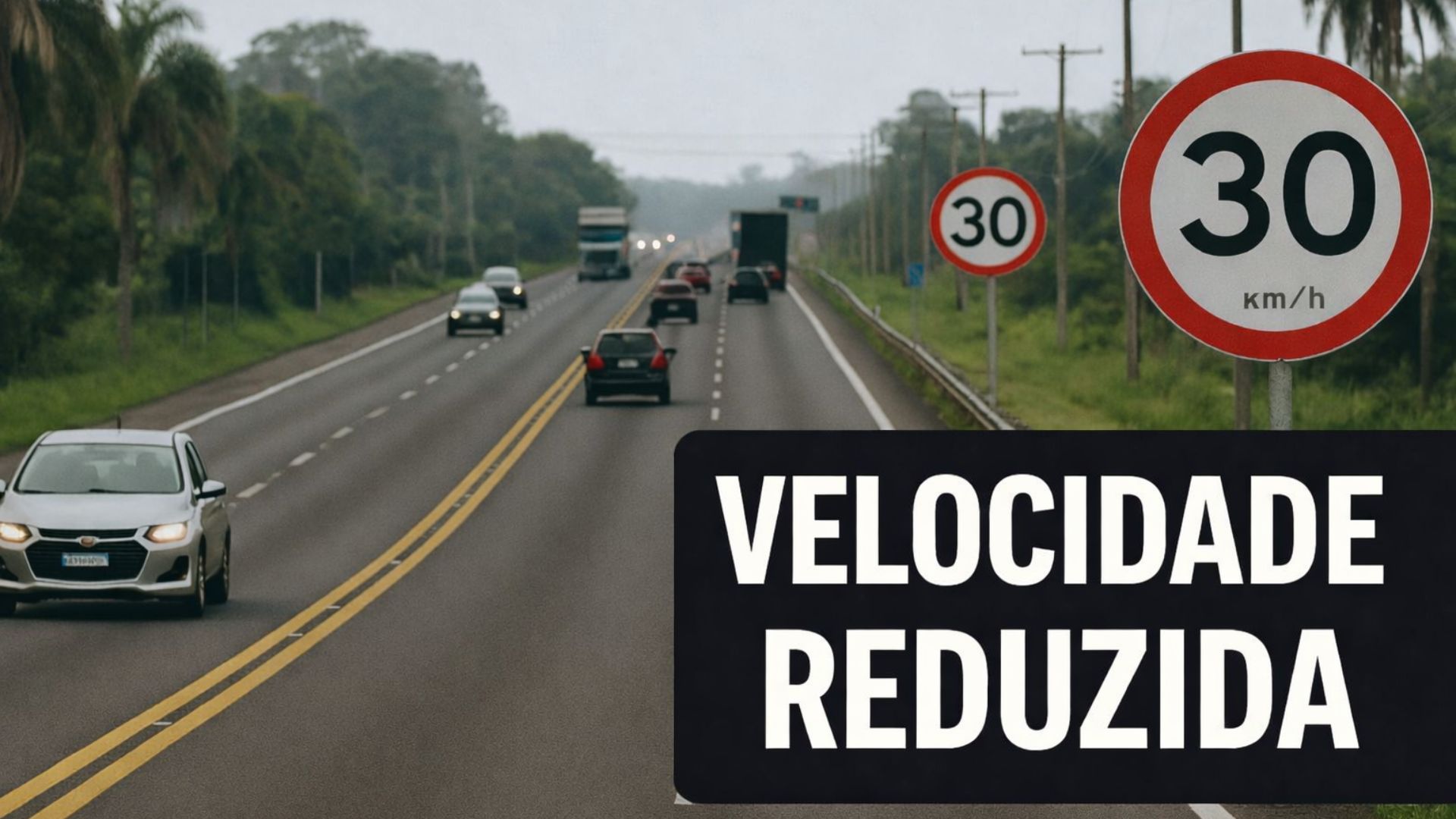


New Pdot of DF Redefines Speed Limits, Foresees Changes in Urban Highways, Creates Regional Mobility Plans and Expands Land Tenure Regularization for the Next Ten Years in the Federal Capital.
The Government of the Federal District sanctioned this Monday (23) the new version of the Master Plan for Territorial Ordering (Pdot), which now foresees roads with a limit of 30 km/h in residential areas and around schools and health units, focusing on road safety.
According to the guidelines of the text, the adoption of this speed can occur on streets in neighborhoods and in areas with higher pedestrian traffic, such as around educational institutions and hospitals, as reported by the Secretary of Urban Development and Housing (Seduh) while detailing the mobility-related points.
According to the government, the reduction of the limit seeks to decrease the risk of accidents and make the coexistence between cars, cyclists, and pedestrians safer, especially in places with frequent crossings and the presence of more vulnerable populations in traffic.
-
Friends have been building a small “town” for 30 years to grow old together, with compact houses, a common area, nature surrounding it, and a collective life project designed for friendship, coexistence, and simplicity.

-
This small town in Germany created its own currency 24 years ago, today it circulates millions per year, is accepted in over 300 stores, and the German government allowed all of this to happen under one condition.

-
Curitiba is shrinking and is expected to lose 97,000 residents by 2050, while inland cities in Paraná such as Sarandi, Araucária, and Toledo are experiencing accelerated growth that is changing the entire state’s map.

-
Tourists were poisoned on Everest in a million-dollar fraud scheme involving helicopters that diverted over $19 million and shocked international authorities.


Limit of 30 km/h and Road Safety in DF
The proposal to demarcate sections with 30 km/h is connected to the idea of redesigning road space to accommodate different modes of transportation, allowing interventions that better organize lanes, sidewalks, and cycling routes according to local needs.
In addressing these areas, Seduh indicated that the aim is to establish a maximum speed compatible with daily circulation in residential regions and around public facilities, where the movement of people tends to be intense during peak hours.
Even with the anticipated possibility, the Pdot does not automatically transform all streets into “zone 30”, and implementation depends on subsequent definitions and regulations, including signage and urban design adjustments when deemed necessary.
Conversion of Urban Highways and Safer Crossings
Another point highlighted by the government is the forecast for the “conversion” of highways that cross urbanized areas, with the intention of transforming them into roads more suited to the city context and, mainly, to pedestrian and cyclist crossings.
In practice, the text paves the way for sections currently focused on through traffic to acquire characteristics of urban streets, which may involve changes in priority, crossing solutions, and adaptations that reduce conflicts between vehicles and non-motorized movements.
The logic presented is to bring the design of these roads closer to the existing environment around them, avoiding barriers created by fast lanes in areas with housing, commerce, and services, as well as reinforcing local connections for daily movement.
Mobility Plans by Administrative Region
In addition to the general guidelines, the Pdot establishes the development of mobility plans by administrative region, promising solutions more tailored to the reality of each area of the Federal District, rather than a one-size-fits-all approach for the entire territory.
According to the proposal, these plans should guide transportation and circulation measures with a focus on sustainable alternatives, taking into account specific characteristics such as urban density, service availability, travel patterns, and existing road infrastructure.
In this framework, the government also emphasizes the possibility of redesigning streets to simultaneously accommodate motor vehicles, pedestrians, and cyclists, indicating the intention to reevaluate priorities and organize coexistence among different types of traffic.
Land Tenure Regularization and Urban Expansion in DF
The Master Plan is the legislation that guides the urban and territorial development of the DF, defining guidelines for land use and expansion, and the sanctioned text will serve as a reference for public planning for the next 10 years.
Within this horizon, the government states that the Pdot combines issues of land tenure regularization, housing, and development, and integrates the mobility agenda with the debate on urban growth, seeking to align infrastructure and expansion with territorial guidelines.
In the same package, the new Pdot foresees the regularization of 28 areas and mentions the expansion of polygons, with examples cited by the government, such as Ponte Nova, as part of measures to reorganize portions currently classified as irregular.
In official communications, the GDF indicated that the planned regularization has the potential to benefit around 20 thousand families, transforming irregular occupations into formal areas integrated into the city, with prospects for access to services and legal security.
Commenting on the approval, Governor Ibaneis Rocha stated: “Besides regularizing what was irregular, which from now on enters the reorganization process, we approved several areas for expansion. And we had a very strong focus on expansion in the area of social housing.”
With the new speed guidelines, conversion of highways, and regional mobility plans, the discussion now shifts to implementation and the impact on the daily lives of those navigating the DF: which roads should change first and how this will be perceived in the daily routine of the population?









Pode reduzir para 0km/h. Problema não é a velocidade, é a falta de fiscalização. Uso vida calma todos os dias em Curitiba e a galera passando a 60km/h ou jogando carro em cima de ciclistas e nada acontece.
Nunca foi por segurança. Isso é só o discurso. A real é tão somente o controle total da população e a arrecadação desenfreada, pois qualquer **** sabe que 30 km/h é ridículo e inviável. Parabéns Brasil. Vamos a passos largos para o outro lado do mundo, pois no fundo do poço já estamos.
Isso demonstra a incapacidade de gerenciar o trânsito. Investir em transporte público ninguém pensa. Mas penalizar o cidadão todos concordam. Isso tem nome, incompetência.