





 Portuguese
  English
  Spanish
  4 min of reading
  0 comments


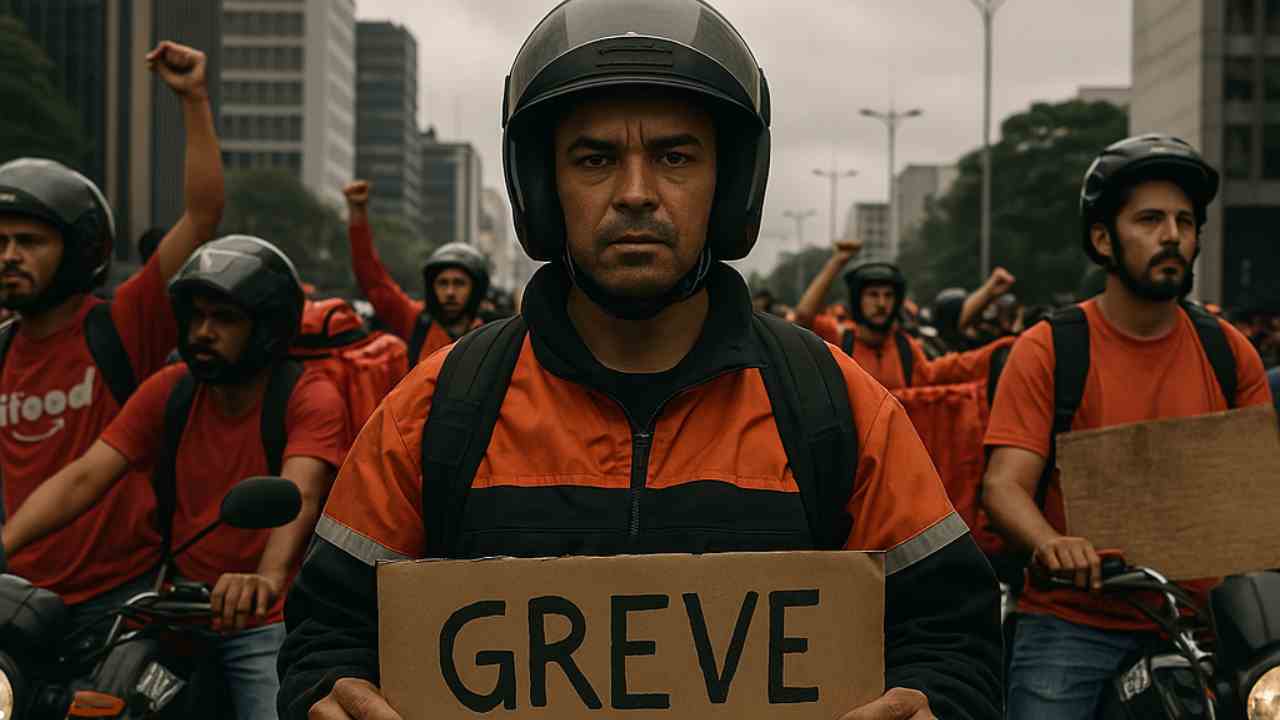
National Protest for Fair Compensation and Better Working Conditions Causes Delays in Orders and Raises Debate on the Precarization of Work by Apps
It began with honking, helmets raised, and much indignation. The App Delivery Workers Strike made a strong entrance this week, paralyzing the country with noise that did not come solely from motorcycle exhausts. It came from the anger of those who ride sun up to sun down and who still find themselves in a bind, earning less and less for each kilometer traveled.
The strike, which began on Monday (31), continued strongly into Tuesday (1st) and is still causing ripples in major urban centers this Wednesday (2nd). The App Delivery Workers Strike is a reflection of a category that, tired of “modern slavery,” has decided to raise its voice.
What Motivated the App Delivery Workers Strike?
The delivery workers demand a minimum payment of R$ 10 per delivery, plus R$ 2.50 per kilometer traveled. In the case of deliveries made by bicycle, they request a maximum limit of three kilometers per run. Another point that generates anger is the grouping of orders without due financial compensation – that is, when the app combines two or more deliveries on one route and the delivery worker does not receive extra for it.
-
50 viaducts, 4 tunnels, 28 bridges, and 40 kilometers of bike paths: BR-262 in Espírito Santo will receive 8.6 billion reais for the largest engineering project in the state’s history, inspired by the Immigrant Highway in São Paulo.

-
Brazil produces too much clean energy and doesn’t know what to do with it: over 20% of solar and wind capacity was wasted in 2025 while investors flee and 509 renewable generation projects were abandoned in the last year.

-
Piauí will produce a new fuel that replaces diesel without needing to change anything in the truck’s engine and reduces pollutant gas emissions by half: truck drivers from all over the Northeast are already celebrating the news that will arrive later this decade.

-
A new Brazilian shopping center worth R$ 400 million will be built in an area equivalent to more than 4 football fields, featuring 90 stores, 5 cinemas, a supermarket, a college, and parking for 1,700 cars, potentially generating 3,000 jobs.


Discontent is also based on the fact that, even with the rising gasoline prices, the cost of living, and motorcycle maintenance, the amounts paid per delivery remain the same.
The Impacts on Deliveries and Consumers’ Daily Lives
With the App Delivery Workers Strike spreading across Brazil, consumers are reporting delays of up to two hours in their orders. In several capitals, partner restaurants temporarily closed the delivery option, causing demand to back up. On social media, there were numerous reports of canceled orders, cold dishes, and also much support for the workers.
The city of São Paulo was the epicenter of the protests. On Monday, a motorcycle rally started near Pacaembu towards Avenida Paulista, shutting down lanes and drawing attention with banners, honks, and chants. In Rio de Janeiro, there were confrontations, and 12 people were arrested, accused of attempting to prevent other delivery workers from working.
Reaction of App Companies
Amobitec, an association that represents companies like iFood, Uber, and 99, declared that it respects the right to protest and maintains channels of dialogue with the delivery workers. iFood stated in a note that there were no significant impacts on operations and that 60% of deliveries are still carried out by the restaurants themselves.
Nonetheless, the pressure is evident. The Strike has brought to light the necessity to reevaluate the work model of apps, which is growing rapidly but, according to the delivery workers, at the cost of exploitation. The discussion on the regulation of this type of work is gaining traction and is expected to continue in the coming months.
New Strike on the Horizon
Even with the promise of negotiation, the delivery workers stated that they will maintain their mobilization. A new App Delivery Workers Strike is being planned for May 2, a strategic date as it is close to a holiday and has high demand for orders. The idea is to continue pressuring the platforms to improve conditions and guarantee fair compensation.
Behind the scenes, there are talks of organizing with other precarious categories, such as app drivers and informal workers, to strengthen the movement. The agenda is broad, but the immediate focus is on valuing the delivery workers, who feel forgotten and overloaded.
The Public Debate and the Need for Regulation
The App Delivery Workers Strike has also shed light on the lack of social protection for these professionals. Without an employment bond, they do not have access to basic benefits such as the 13th salary, vacation, FGTS, and health insurance. When they suffer an accident or need to take time off, they are left without support.
The discussion about the formalization of app work is on the federal government’s agenda. In 2023, the Ministry of Labor presented a draft regulation, but the proposal faces resistance from companies and some workers, who fear losing their autonomy.
Meanwhile, the streets continue to be the stage for protests, while the apps balance public pressure, revenue maintenance, and the search for sustainable solutions.
What Lies Ahead (App Delivery Workers Strike)
The outcome of the App Delivery Workers Strike is still uncertain. But one thing is clear: the category has shown strength, organization, and intends not to remain silent any longer. Society, the apps, and the government will need to sit down and discuss the future of this type of working relationship.
For consumers, the warning remains: behind that warm burger arriving at your door, there is a complex mechanism, and those who drive it are currently demanding respect.
The App Delivery Workers Strike is, above all, a collective scream for dignity.
Source: CNN









Seja o primeiro a reagir!