





 Portuguese
  English
  Spanish
  4 min of reading
  0 comments


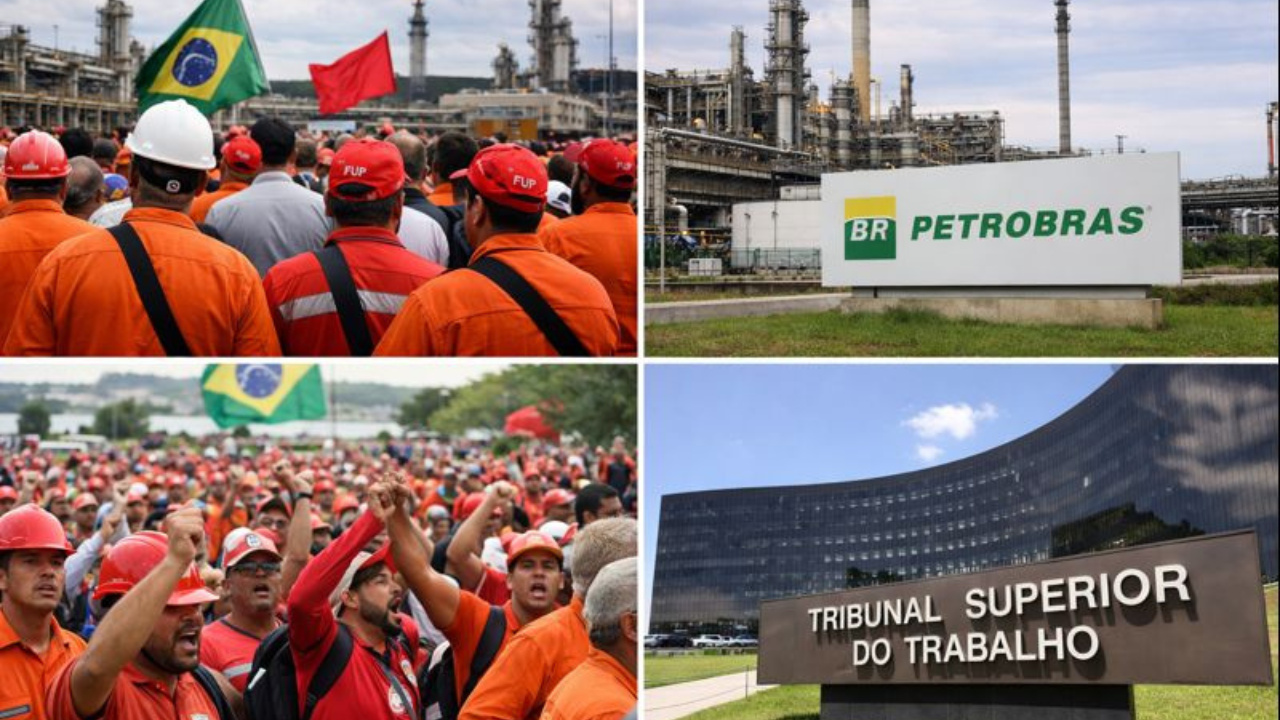
TST Decision Imposes Limits on Strike at Petrobras, Sets Fine, and Reignites Debate on Collective Labor Agreement.
The Strike at Petrobras entered a new phase on Saturday (27), after the Superior Labor Court (TST) granted a preliminary injunction favorable to the company, requiring the maintenance of 80% of the workforce in activity, imposing a daily fine of R$ 200 thousand on the unions and federations.
The decision directly affects the Single Federation of Oil Workers (FUP) and Sindipetro-NF, which are now assessing the next legal steps to preserve the right to mobilization and the guarantees of the Collective Labor Agreement.
The measure was signed by the presiding minister of the TST, Luiz Philippe Vieira de Mello Filho, and officially published on Saturday.
-
Employee Fired After Accumulating 114 Days of Medical Leave in One Year, Labor Court Upholds Company’s Decision

-
Employee Fired While Treating Depression Wins in Court and Vale Is Required to Rehire Him Following Decision Based on the CLT and INSS Benefits

-
Workers Should Be Aware! March 6 Will Be The Fifth Business Day Of March And The Final Deadline For Companies To Pay Salaries According To The CLT

-
2026 FGTS Anniversary Withdrawal Is Released According to Birth Month, Sets Amounts by Balance Range, Establishes Deadlines for March and April, and Changes Rules in Case of Dismissal


Additionally, the court scheduled two decisive dates: a conciliation hearing between the unions and Petrobras on January 2 at 2 PM, and the judgment of the collective dispute in an extraordinary session of the Specialized Section on Collective Disputes (SDC), set for January 6 at 1:30 PM in Brasília.
TST Preliminary Injunction Imposes Limits on Strike
The preliminary injunction from the TST establishes that, even during the Strike, the union bases must maintain at least 80% of the workers in activity.
The failure to comply with the order may result in a daily fine of R$ 200 thousand, imposed on both the unions and the involved federations.
This type of decision is usually adopted by the labor judiciary in strikes considered strategic or essential, as is the case in the energy sector.
Still, union entities argue that the measure restricts the constitutional right to strike and weakens the bargaining power of workers.
FUP and Sindipetro-NF Evaluate Legal Reaction
In light of the new scenario, the FUP reported that it is analyzing the judicial decision together with Sindipetro-NF and their legal advisors.
The goal is to define strategies to protect the right to strike and ensure the historical achievements of the Collective Labor Agreement.
“We will be together in Brasília, I and Cibele Vieira, representing the Federation, along with the NF, at the two hearings that will take place on January 2 and 6,” says the General Coordinator of FUP, Deyvid Bacelar.
Participation in the hearings reinforces the attempt at institutional dialogue, while the unions assess legal measures to challenge the effects of the injunction.
Criticism of the Judicialization of the Strike
Union representatives also reiterated criticisms of the judicialization of the conflict. According to the director of FUP and Sindipetro-NF, Tezeu Bezerra, the TST decision was already expected and had been discussed with the category beforehand.
“We had warned in yesterday’s assembly. The injunction came out in favor of Petrobras, ordering the return of 80% of the workforce, a daily fine of R$ 200 thousand and naturally, we know how bourgeois justice is.
So, when we talk and warn about the risk of going to the TST, it is always in that sense, of having responsibility,” says Bezerra.
Sindipetro-NF Advocates Dialogue with Workers
The General Coordinator of Sindipetro-NF, Sérgio Borges, emphasized that the priority now is to technically analyze the content of the injunction and to engage in dialogue with the base.
“There will be a board meeting along with the legal team to analyze the content of this injunction.
And based on the decision from that analysis, we will be dialoguing with the workers to try to construct a new solution,” he explained.
He emphasizes that, although the willingness to fight is clear, the moment requires responsibility to avoid harm to the category and the unions themselves.
Collective Labor Agreement at the Center of the Impasse
At the center of the Strike at Petrobras is the defense of the clauses of the Collective Labor Agreement, deemed fundamental by the unions to guarantee historical rights of the category.
The entities claim that any setback in this instrument compromises not only salary conditions but also safety, benefits, and stability of workers.
Next Steps of the Strike at Petrobras
With the injunction in effect, the striking movement enters a period of strong institutional tension.
The conciliation hearing on January 2 may open space for direct negotiation between the unions and the company. The judgment of the collective dispute, scheduled for January 6, should define the course of the strike and the Collective Labor Agreement.
Meanwhile, FUP and Sindipetro-NF reinforce that they will continue to act in a coordinated manner, seeking balance between mobilization, legal responsibility, and defense of workers’ rights.
See the full TST decision:
https://fup.org.br/fup-e-sindipetro-nf-analisam-liminar-obtida-pela-petrobras/










-

Uma pessoa reagiu a isso.