





 English
  Francês
  Alemão
  Italiano
  Japonês
  Norueguês
  Portuguese
  Spanish
  3 min of reading


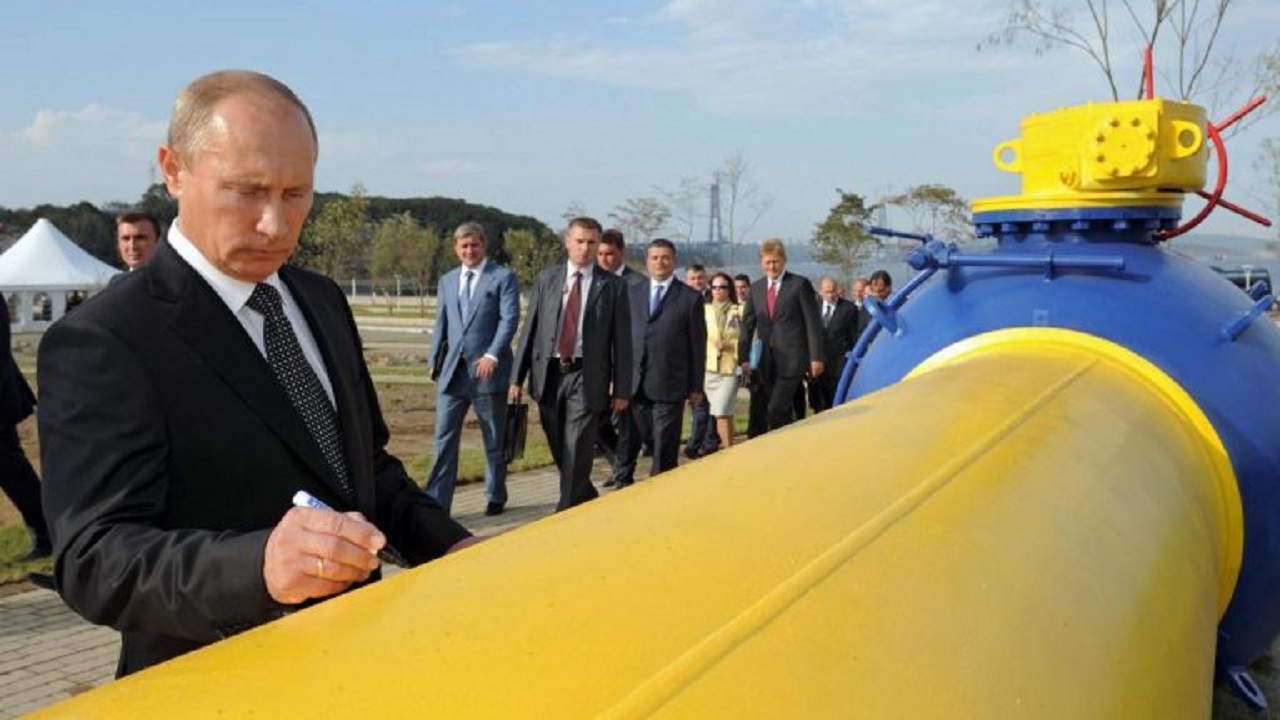
€158 Billion: Russia’s Revenue from Fossil Fuels Surpasses War Costs
Russia’s earnings from oil, gas, and coal exports in the six months since the country invaded Ukraine have exceeded the total cost of the war, according to a new analysis from the Centre for Research on Energy and Clean Air (CREA). Russia’s revenue from fossil fuel exports reached €158 billion from February to August, compared to the estimated cost of €100 billion that the war has incurred so far for the Kremlin.
The largest importer of Russian fossil fuels was the European Union (€85 billion), followed by China (€35 billion), Turkey (€11 billion), India (€7 billion), and South Korea (€2 billion). Fossil fuel export revenues contributed around €43 billion to Russia’s federal budget, helping to finance war crimes in Ukraine.
Within the European Union, the largest importers were Germany (€19 billion), Netherlands (€11.1 billion), Italy (€8.6 billion), Poland (€7.4 billion), France (€5.5 billion), Bulgaria (€5.2 billion), Belgium (€4.5 billion), and Spain (€3.3 billion).
-
Expansion of Federal Institutes: 38 new campuses and R$ 200 million for public education; see the cities included.

-
Lula’s government changes rule in important benefit and thousands of Brazilians will no longer receive it; see what has changed.
-
New Gripen fighter makes Argentines surrender to Brazil, and the heavy reaction exposes envy, frustration, and shock at Brazil’s technological leap.
-
This discovered deposit near the Andes could change the future of Argentina, attract billions, and even shake up the global metals market.

“The rise in global fossil fuel prices means that Russia is still generating record revenues from fossil fuels, despite reductions in export volumes. To combat this, governments need to impose tariffs or price caps on imports from Russia and accelerate energy-saving measures,” said Lauri Myllyvirta, lead analyst at CREA and one of the report’s authors.
“A particular focus should be on reducing oil and gas consumption, accelerating the deployment of clean energy and electrification through heat pumps and electric vehicles”, Myllyvirta added.
In Practice, Relatively Few Countries Sanctioned Russia
Among the key findings of the report is the observation that there was only an 18% drop in fossil fuel export volumes from Russia globally. This occurred while the reduction in exports to its main customer, the European Union, was 35% compared to pre-invasion levels.
The largest increases in imports that compensated for the drop in Europe were observed in India, China, United Arab Emirates, Egypt, and Turkey, all primarily focused on crude oil.
According to the analysis, in the case of coal, the European shutdown had more results, and Russia did not find new buyers to replace this demand, with a slight increase in Russian coal imports by China.
The Real Weight of This War on the European Union
The actual impact of the ban on Russian oil in the European Union is still to be fully understood: imports of Russian oil fell 17% in July-August in the European bloc but are expected to drop by 90% when the ban takes effect at the end of the year, the analysis states.
On the other hand, high fossil fuel prices have made investments in clean energy attractive worldwide, the analysis says. The market outlook for this sector has particularly improved in the European Union, the U.S., and China as a result of tax incentives and new climate policies.
Indirect Routes
The United States and Australia continued to receive shipments of oil from Indian refineries that are major buyers of Russian oil. Ships owned by European companies and/or insured by companies from that continent also continued to transport Russian oil to new buyers.
According to the report, as oil exports are redirected in response to bans, sophisticated monitoring mechanisms will be necessary to prevent the illegal importation of Russian oil through indirect routes.
“189 air raid alerts sounded across Ukraine on August 24, marking both our 31st Independence Day and the six-month anniversary of the invasion. Every bombardment we suffered was funded by fossil fuels,” said environmentalist Kostiantyn Krynytskyi, head of the Energy Department at Ecodiya, a Ukrainian organization that had already been fighting against fossil fuels before the war.
“While there are positive signs that countries are reducing their addiction to Russian fossil fuels by moving towards clean energy, this process urgently needs to be accelerated. Sanctions work, and they should be expanded and strengthened so that Russia cannot easily circumvent them”, Krynytskyi concluded.
Source: Clicma Info | Via Chitia Leone









Seja o primeiro a reagir!