





 Portuguese
  English
  Spanish
  5 min of reading
  0 comments


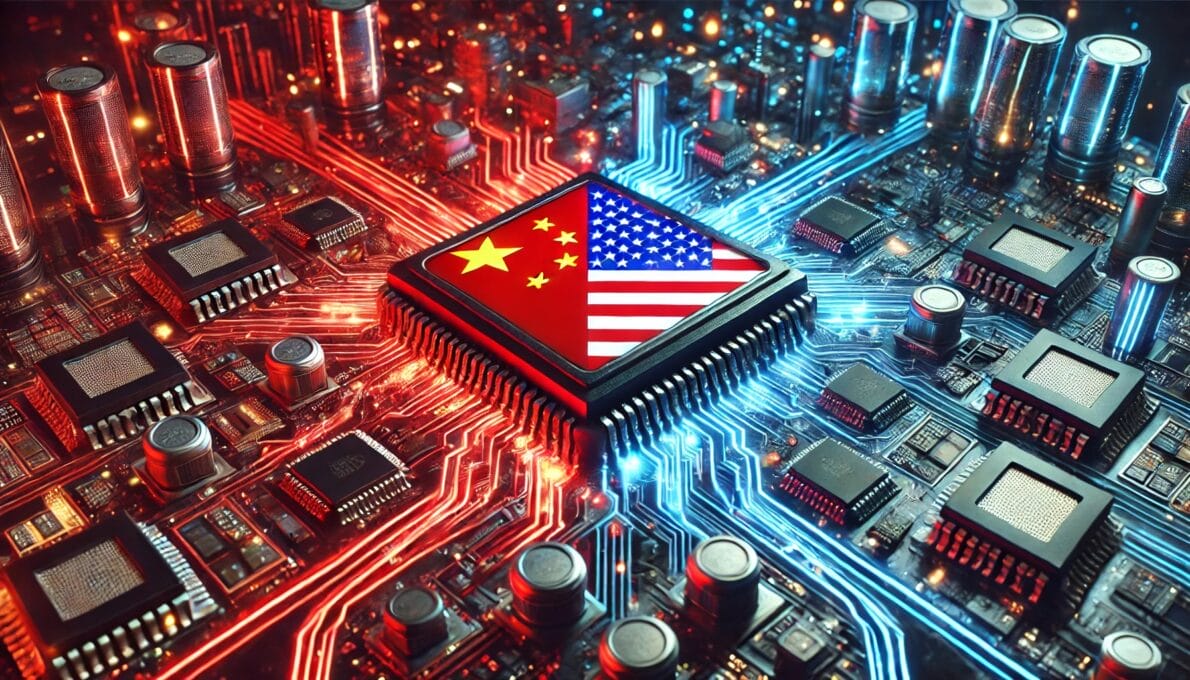
Understand How the Dispute Between China and the US for Control of Semiconductors Is Shaping the Future of Global Technology and Driving the Development of Photonic Chips.
The semiconductor war between China and the US is one of the largest technological conflicts today. At stake is not only the dominance of a crucial industry for the global economy but also technological, military, and economic supremacy. With the development of photonic chips, referred to as the “new oil” for their strategic importance, the competition is heating up. In this article, we will explore how this war unfolds, the relevance of semiconductors, and China’s advancements in this context.
What Are Semiconductors and Why Are They the “New Oil”?
Semiconductors are essential components for the manufacture of virtually all modern electronic devices: smartphones, computers, cars, artificial intelligence systems, and even defense technologies. They function as the “brain” of these machines, ensuring that they process information and perform their functions correctly.
Just as oil was the foundation of the industrial revolution in the 20th century, semiconductors are now driving the technological revolution. Therefore, mastering their production is essential for the growth and security of any country. It is no coincidence that this dispute is called the “semiconductor war,” as whoever controls this technology will have a significant strategic advantage.
-
Historic bankruptcy of Centauro shocks the market, and the century-old company puts more than 500,000 products, machines, and complete infrastructure up for online auction.

-
New shoe factory in Ceará is expected to create 400 jobs and strengthen the local economy.

-
No one imagined it, but a mixture of sawdust with a mineral that fights fires surprises scientists with a result that changes the course of fire-resistant construction.

-
From empty land to a high-end house, wooden construction uses a lightweight system, metal structure for the foundation, ventilated ceramic cladding, and special windows to create an efficient and comfortable living space throughout the year.


The Semiconductor War Between China and the US
The semiconductor war between China and the US has intensified in recent years. The US, leaders in the development of advanced technologies, have imposed a series of sanctions and restrictions on China, aiming to prevent access to essential machines and technologies for the production of cutting-edge semiconductors. A clear example of this was the export ban of cutting-edge chips to Chinese giants like Huawei and SMIC.
China, in turn, is investing heavily in its semiconductor industry to reduce dependence on foreign suppliers. The goal is clear: achieve self-sufficiency and dominate the production of these essential components. To that end, the Chinese government has allocated billions of dollars to boost research and development of semiconductor technology in the country.
The Advancement of Photonic Chips
Within this race for dominance in semiconductor production, a new technology is gaining momentum: photonic chips. These chips are capable of transforming electrical signals into light pulses, which promises to revolutionize how electronic devices function.
Silicon photonics, one of the main research areas in this field, is being developed to optimize the transfer of information between chips and machines, providing a processing speed far superior to what we have today. This innovation is particularly promising in areas like artificial intelligence and large data centers, where the need to transfer large volumes of data rapidly is crucial.
China’s Role in Photonic Chip Production
China is standing out in the development of photonic chips. Recently, the Shanghai Institute of Information Technology and Microsystems, in partnership with the École Polytechnique Fédérale de Lausanne in Switzerland, reached an important milestone by replacing lithium niobate, traditionally used in photonic chip production, with lithium tantalate, a cheaper and more efficient material.
Additionally, the JFS laboratory in Wuhan managed to integrate a laser light source into a silicon chip, something unprecedented in the country. These advances place China at the forefront of photonic chip production, bringing it closer to mass manufacturing of this technology. If this pace continues, the country could become a world leader in the production of these advanced semiconductors.
Impact of Photonic Chips on Artificial Intelligence
Artificial Intelligence (AI) is one of the areas that could benefit the most from silicon photonics. This is because photonic chips have the capacity to process information at speeds far superior to traditional chips, which is essential for training and executing complex AI algorithms.
Companies like TSMC, Intel, and Samsung have been working for years on the development of technologies related to silicon photonics. However, China is progressing rapidly and could become a significant competitor in this market.
Geopolitical and Economic Context
The semiconductor war is not just an economic dispute, but also a matter of national security. Semiconductors are fundamental for the development of advanced military technologies, such as missile systems and drones. Therefore, controlling the production of these components ensures autonomy and security for any country.
Taiwan, which hosts TSMC, one of the largest semiconductor manufacturers in the world, also plays a crucial role in this dispute. The island has a close relationship with the US, but is claimed by China as part of its territory. Any geopolitical instability in the region could affect the global supply of semiconductors, which worries both governments and companies around the world.
The Future of the Semiconductor War
With the advancement of photonic chip technology and the increase in semiconductor investments, the semiconductor war between China and the US is far from over. Each country is seeking ways to ensure its technological and economic leadership, knowing that whoever dominates this market will have a significant competitive advantage.
In the US, the CHIPS Act, approved in 2022, allocated billions of dollars to support domestic semiconductor manufacturing, attempting to reduce dependence on foreign suppliers. Meanwhile, China continues to invest in its own production chains, seeking to diminish its reliance on international suppliers and strengthening its global position.
The dispute for control of semiconductor production, especially photonic chips, will continue for many years. And with each technological advance, this war will become even more fierce.
This is a race that we all must closely follow, as the outcomes of this technological war will impact the economy, security, and innovation in the coming years.










Seja o primeiro a reagir!