





 Portuguese
  English
  Spanish
  4 min of reading
  0 comments


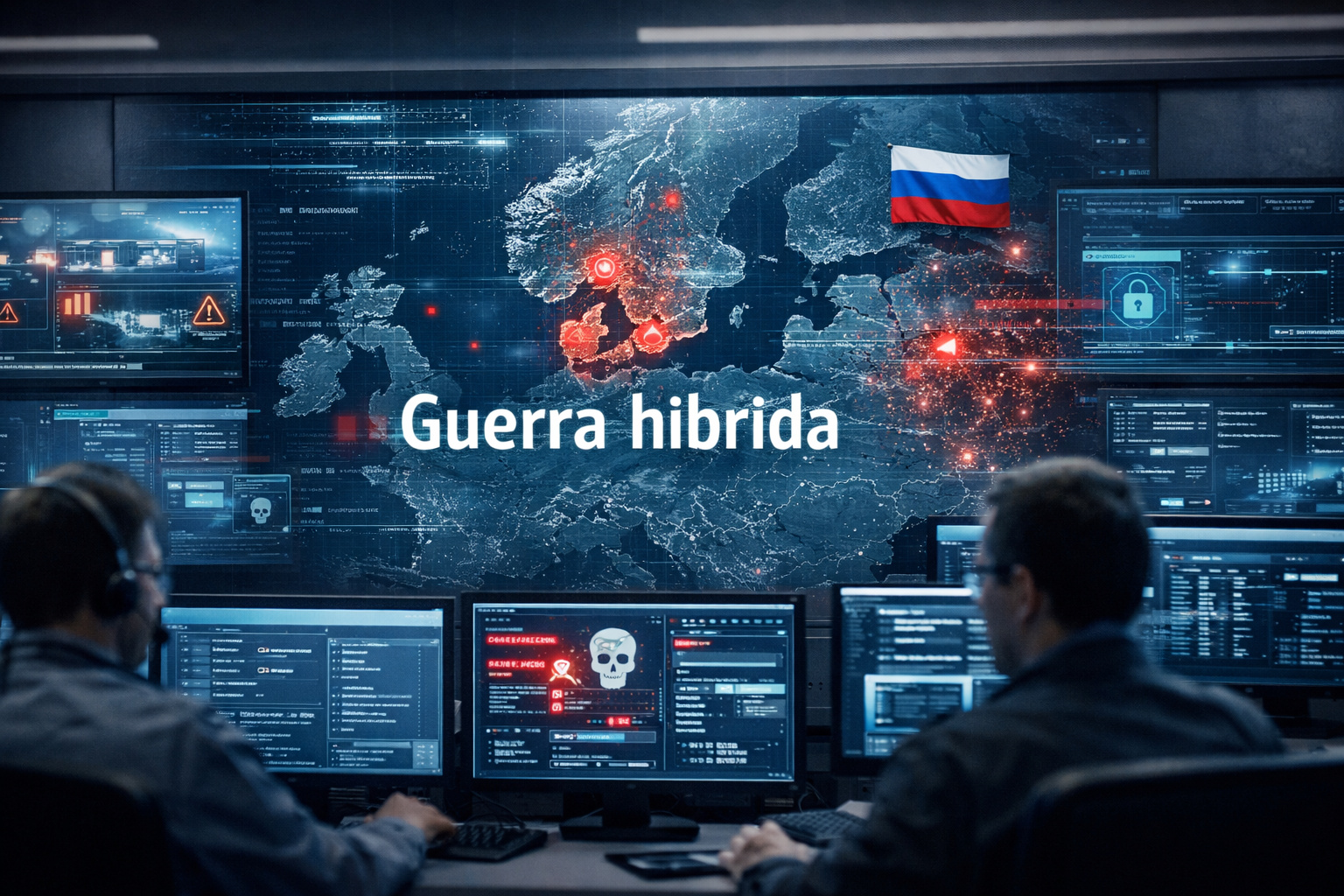
Denmark Accuses Russian-Linked Groups of Cyber Attacks Against Elections and Infrastructure, Elevating Hybrid War Alert in the Country.
Cyber Attacks Put Denmark at the Center of a Hybrid War
The Denmark has officially reported being at the center of a Hybrid War after a series of cyber attacks that targeted public systems, local elections, and even a water treatment plant.
The Danish government stated on Thursday (18) that the actions were carried out by pro-Russian groups linked to the State of Russia, raising concerns about national security, democratic integrity, and critical infrastructure in the country.
The attacks occurred throughout 2024, including during municipal and regional elections, prompting the government to announce new measures for technology and digital defense.
-
Scientists detect a rare and frightening phenomenon in the Pacific Ocean that could trigger a devastating Super El Niño as early as 2026, and American experts say it is one of the strongest ever recorded in history.

-
Researchers from Embrapa have discovered how to transform the saline water found in 140,000 wells in the Brazilian Semi-Arid region into a tool for producing food in an area where agriculture has always relied solely on rainfall.

-
China inaugurates a ghost factory that operates in the dark 24 hours a day without any human workers and produces 10 million smartphones a year using 97% of equipment developed by the company itself.

-
Scientists create a semiconductor that mimics the human brain using hydrogen and boost a new generation of smart chips with learning capabilities and the potential to revolutionize artificial intelligence applications.


According to authorities, the attacks affected political party websites, city halls, public institutions, and a defense sector company, rendering them inaccessible at strategic moments. Given the severity, the government confirmed it would summon the Russian ambassador for clarification.
Cyber Attacks During Elections Raise Maximum Alert
On the eve of the municipal and regional elections held in November, Denmark faced a coordinated cyber attack that took down essential digital platforms for the democratic process. Official websites of political parties, municipal administrations, and public agencies were offline for hours.
The attack was claimed by pro-Russian hackers, which, according to the government, reinforces the strategic nature of the offensive. For authorities, the timing was not random and fits into a broader context of Hybrid War, a concept that combines military, political, informational, and digital actions.
“We consider it very likely. We are very confident that these are pro-Russian groups linked to the Russian state,” stated the head of military intelligence, Thomas Ahrenkiel.
Water Infrastructure Also Targeted by Attacks
In addition to the political environment, Cyber Attacks directly impacted the country’s critical infrastructure. At the end of 2024, a water treatment plant was compromised, resulting in severe failures in the system.
According to Defense Minister Troels Lund Poulsen, the consequences were physical and immediate. “After the cyber attacks at the end of 2024, some water pipes exploded and several homes were affected,” he stated during a press conference.
Therefore, this incident raised the alert level among authorities, as it demonstrates that digital actions can have real impacts on the lives of the population, broadening the scope of the Hybrid War faced by Denmark.
Government Points to Direct Connection with Russia
Danish authorities emphasize, therefore, that the attacks did not originate from isolated sympathizers. For the government, there are clear evidences of direct involvement of groups linked to Russia, which significantly aggravates the diplomatic scenario.
In this context, the Minister of Civil Security, Torsten Schack Pedersen, highlighted the seriousness of the situation in an interview with public television DR. “It is very serious to be able to attribute the attacks to the Russian state. It is not just sympathizers, but a group directly linked to Russia. This emphasizes that the situation is especially grave,” he stated.
Furthermore, the minister stressed that the country is experiencing an intermediate moment in the geopolitical field. “We are neither at war nor at peace. We are in a Hybrid War,” he concluded.
Denmark Responds with Reinforcements in Technology and Digital Defense
In light of the escalation of cyber attacks, the government of Denmark announced, therefore, a package of measures to strengthen its digital security. Among the actions, the country will implement a new national cybersecurity network and create an online operations center aimed at protecting strategic systems.
According to Troels Lund Poulsen, the government’s response will be continuous and proportional to the level of threat. “We have taken numerous initiatives and will take more, because Russia’s way of acting is deeply unacceptable,” he stated.
Hybrid War Exposes a New Scenario of Global Conflicts
The case of Denmark demonstrates, therefore, that Hybrid War has consolidated as a central tool in contemporary geopolitical disputes.
Unlike traditional armed conflicts, this type of offensive combines misinformation, political pressure, and cyber attacks, which complicates immediate and coordinated responses from States.
Moreover, experts assess that this type of action is likely to intensify, especially in democratic countries. In these places, digital systems sustain elections, public services, and essential infrastructures, making them strategic targets.
Finally, by holding Russia accountable, the Danish government signals that it will treat the episode as a direct threat to national sovereignty. Thus, the country reinforces the need to expand international cooperation in cybersecurity and digital defense.









Seja o primeiro a reagir!