





 Portuguese
  English
  Spanish
  5 min of reading
  0 comments


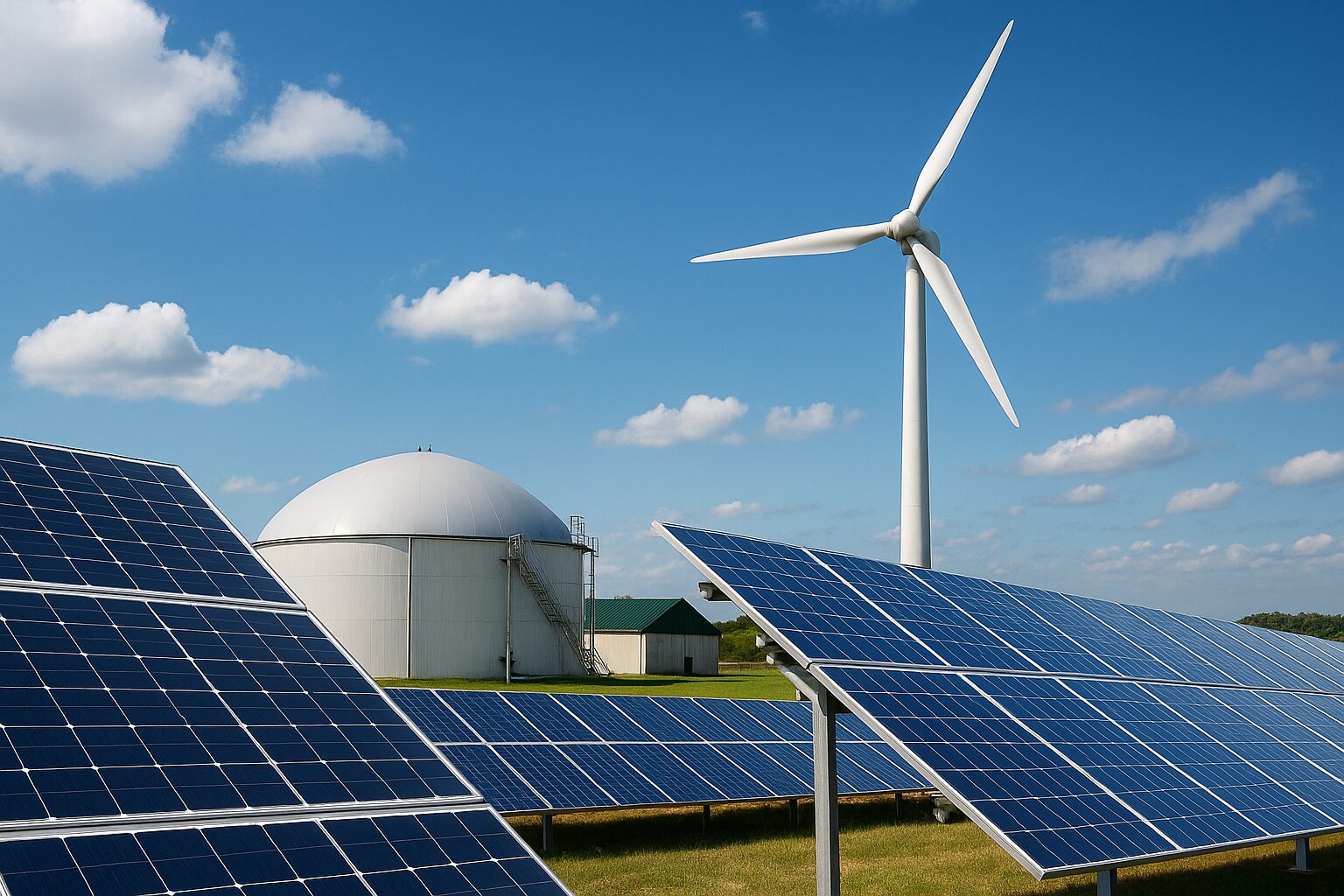
Discover How The Main Renewable Energy Equipment Works And Learn About Its Applications, Advantages, And Impact On The Future Of Clean And Sustainable Energy.
In recent years, the search for cleaner, more accessible, and sustainable energy sources has intensified.
Faced with climate change, the depletion of natural resources, and the growing global demand for electricity, renewable energy equipment has gained prominence in discussions about the planet’s energy future.
Therefore, this guide presents the origin, evolution, and main types of technologies used to capture, convert, and store energy from nature — with simple and objective language, ideal for beginners and professionals.
-
Renewable energy advances over protected areas in Brazil, and a survey by the Energy Transition Observatory reveals silent impacts that challenge environmental conservation and pressure sensitive traditional territories.

-
Rio Grande do Sul accelerates energy transition: State invests in renewable technologies and consolidates decarbonization strategies and pathways to attract billions in new industrial investments.

-
With 160,000 m² of collectors, an area larger than 20 football fields, Silkeborg, in Denmark, hosts a solar thermal plant that heats 19,500 homes and could become the largest solar heating plant in the world.

-
A study reveals the expansion of renewable energy procurement in Brazil and shows how companies are taking advantage of opportunities to reduce expenses, ensure energy efficiency, and strengthen strategic environmental commitments.


Moreover, the advancement of these technologies reflects the global effort to reduce dependence on finite and polluting fossil fuels.
As a result, governments, businesses, and citizens are increasingly investing in renewable alternatives, creating a promising scenario for sustainable development.
According to the International Energy Agency (IEA), in its 2023 report, the global installed capacity of renewable energy increased by over 260 GW in the previous year, demonstrating the exponential growth of these equipment’s participation in the global energy mix.
The Beginning Of The Journey: The Birth Of Renewable Energy
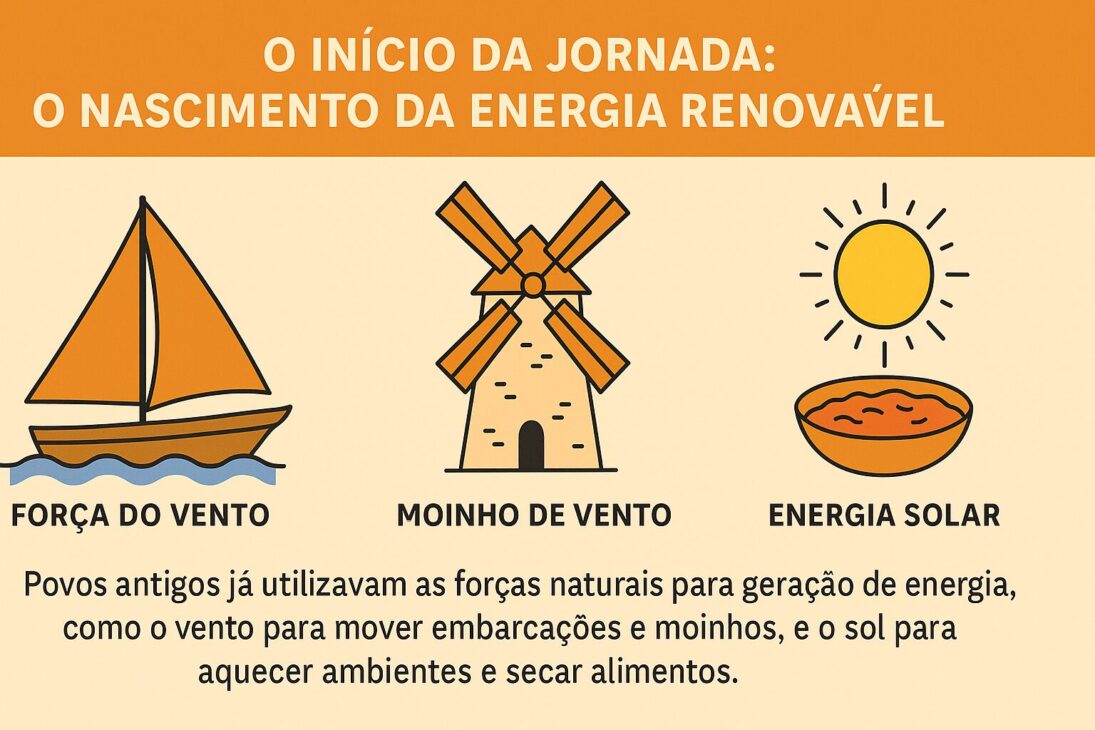
Historically, the use of natural forces for energy generation is ancient. Ancient peoples used the wind to move vessels and grind grains with mills, as in medieval Europe.
They also utilized solar energy to heat spaces and dry food, albeit in a rudimentary way.
However, with the advent of the Industrial Revolution, which began in the second half of the 18th century, there was a significant shift.
The global economy began to heavily depend on coal and then on oil and natural gas to power factories, locomotives, and later, power plants.
This period marked a considerable increase in pollutant gas emissions.
According to the Intergovernmental Panel on Climate Change (IPCC), the concentration of carbon dioxide (CO2) in the atmosphere has risen by about 50% since 1750, due to the intensive burning of fossil fuels.
The oil crisis in 1973, in turn, was a landmark that awakened global interest in alternative energy sources.
Since then, countries began investing in research to develop technologies capable of utilizing inexhaustible natural sources, giving birth to the first modern renewable energy equipment.
In the 1990s, international agreements such as the Kyoto Protocol (1997), drafted by the United Nations Framework Convention on Climate Change, established targets for reducing greenhouse gas emissions, promoting the development of clean energies.
More recently, the Paris Agreement, signed in 2015 under the UN, reinforced this commitment, outlining global efforts to limit global warming to less than 2ºC by the end of the century.
What Are Renewable Energy Equipment?
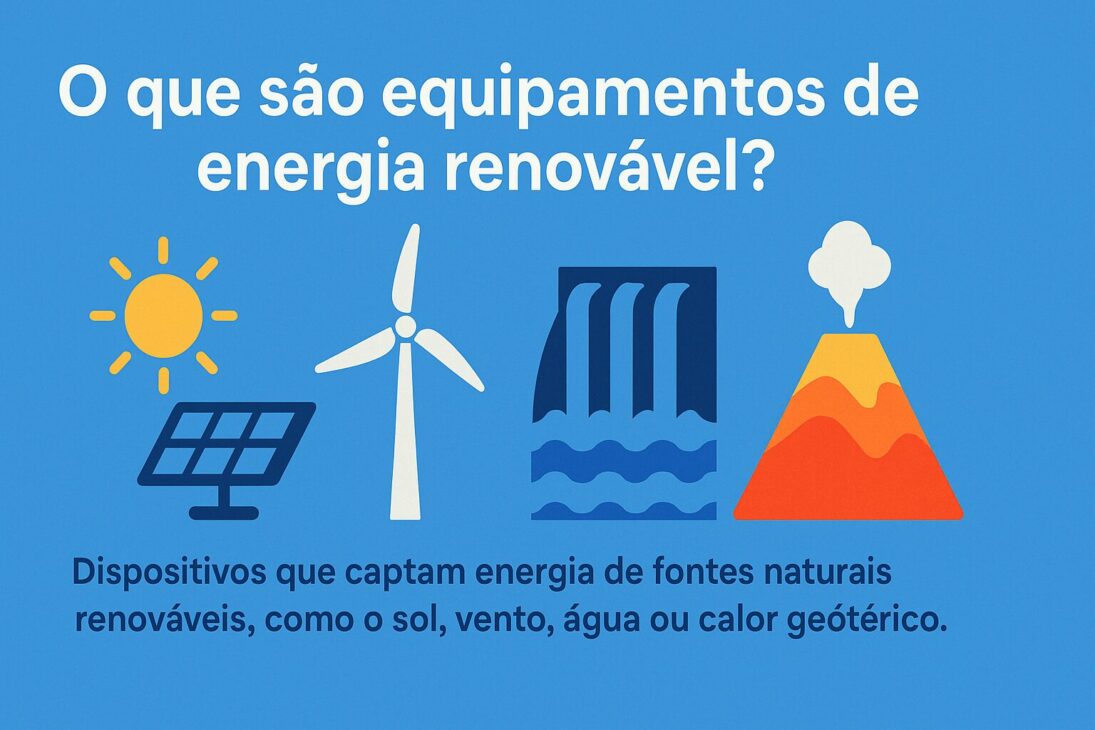
In simple terms, renewable energy equipment are devices, systems, or machines that capture energy from natural sources — such as solar, wind, water, biomass, or geothermal heat — and convert it into usable electricity or heat.
These devices utilize resources that naturally renew, ensuring an inexhaustible and sustainable source.
They also stand out for emitting little or no polluting gases, reducing the environmental impact that affects the climate and human health.
Unlike traditional systems that burn fossil fuels, these devices offer clean, efficient, and environmentally responsible energy production.
According to the United Nations (UN), the adoption of renewable energies is essential to achieve the Sustainable Development Goals (SDGs), especially SDG 7, which aims to ensure universal access to reliable, sustainable, and affordable energy by 2030.
Main Types Of Equipment And Their Applications
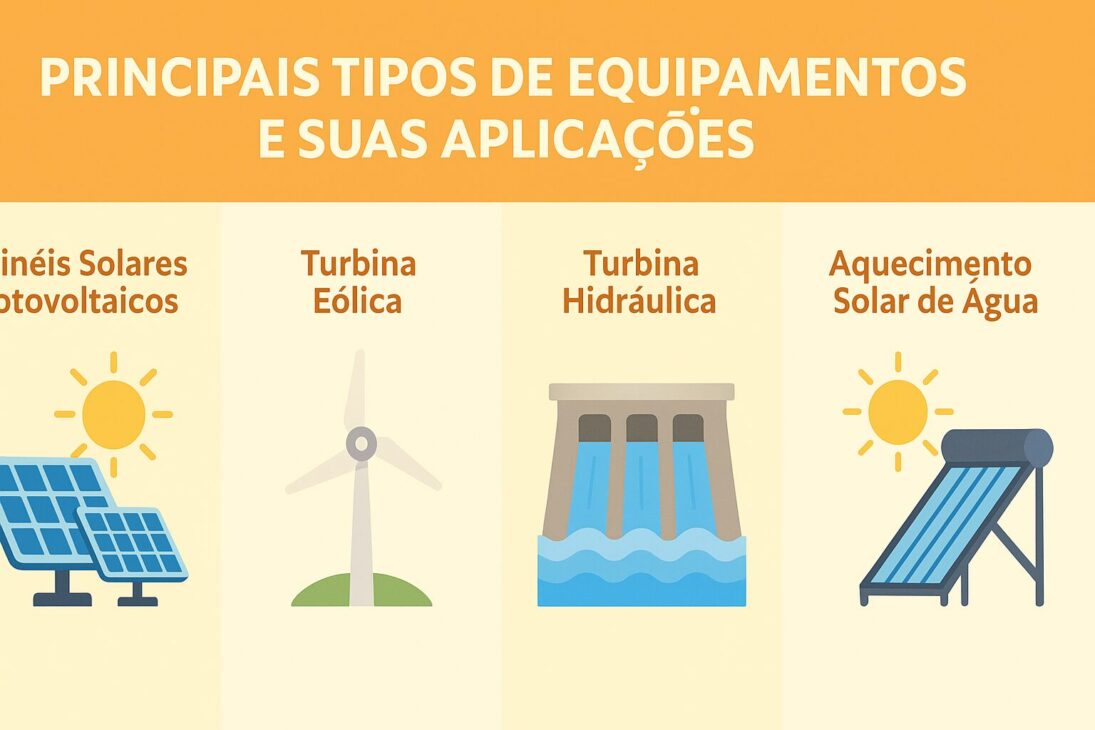
Among the most widely used globally are photovoltaic solar panels. These devices convert solar radiation directly into electricity through modules and inverters.
The technology has evolved significantly, and installation costs have dropped drastically in the last decade, contributing to its popularity in homes, industries, and large-scale solar plants.
Another essential equipment is wind turbines, which capture the force of the winds to generate electricity.
They are common in coastal areas, rural zones, and, recently, in offshore wind farms, where the winds are stronger and more constant.
Brazil, for example, according to the National Electric Energy Agency (ANEEL), reached a installed capacity of 21 GW in wind energy in 2023, showing the rapid growth of this sector in the country.
Additionally, hydraulic turbines, used in large hydroelectric plants or small hydropower plants (PCHs), are also part of the group of renewable equipment.
Brazil is one of the world leaders in hydroelectric generation but has invested in energy diversification to ensure stability and sustainability.
Other important equipment includes solar water heating systems, biodigesters that produce biogas from organic waste, and geothermal technologies that harness the Earth’s internal heat to generate thermal or electrical energy.
Emerging technologies, such as systems for harnessing wave and tidal energy, are in the research and development phase, still with high costs but promising to expand the renewable portfolio.
According to the BloombergNEF report of 2024, global investments in renewable energy technologies, including storage equipment, are expected to exceed US$ 20 billion in the next five years, indicating a growing commitment to these sources.
The Future Of Equipment
With the advancement of technology, renewable energy equipment is becoming increasingly efficient, compact, and integrated.
Today, hybrid solutions combine different sources, such as solar and wind, with lithium battery storage systems.
These innovations ensure energy supply even when the sun doesn’t shine or the wind doesn’t blow.
Moreover, digitization and automation allow for remote monitoring of equipment, facilitating energy production management.
Smart systems, sensors, and cloud platforms are part of this new era.
The development of new storage technologies, such as solid-state batteries and green hydrogen, will be crucial to overcoming the intermittency of renewable sources.
The BloombergNEF report of 2024 highlights that global investments in these areas will continue to grow rapidly, transforming the energy sector.
With the right choice of equipment and proper planning, anyone can contribute to the energy revolution and a more balanced planet.










Seja o primeiro a reagir!