





 English
  Francês
  Alemão
  Italiano
  Japonês
  Norueguês
  Portuguese
  Spanish
  4 min of reading
  0 comments


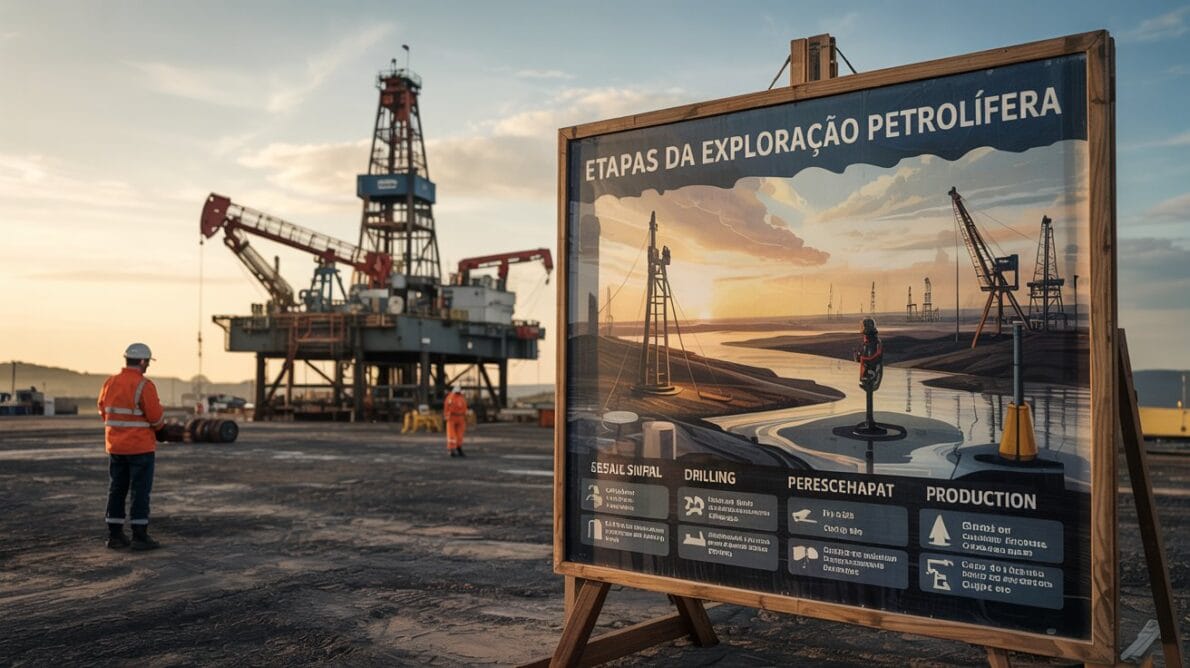
Discover Everything About Oil Exploration: Stages, Technologies, Risks, Career Opportunities, and the Future of the Sector. A Complete Guide for Beginners and Professionals in the Oil and Gas Industry.
The oil exploration is the foundation of the entire oil production chain. It involves a set of activities aimed at the discovery of oil and natural gas deposits, from initial studies to the drilling of the first wells.
This process is essential for countries and energy companies to ensure self-sufficiency, economic growth, and energy security. Moreover, it generates billions of reais per year and employs thousands of professionals in various fields.
Therefore, if you are a beginner or a professional seeking to understand or specialize in this area, this content is made for you.
-
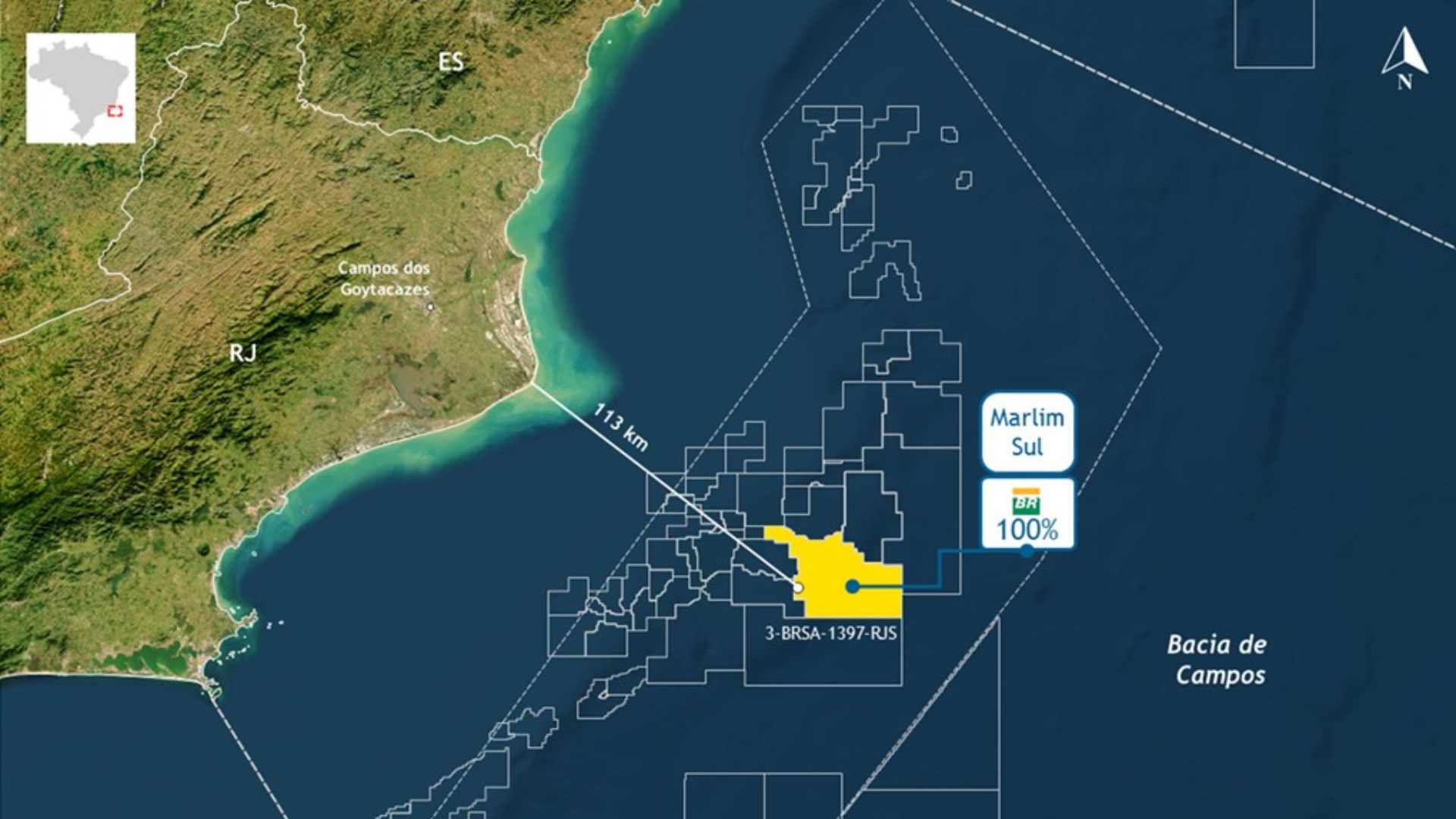
Petrobras finds high-quality oil in the pre-salt at 113 km from RJ and reignites expectations about strategic reserves in the Campos Basin.

-
Ocyan opens registrations for startups focused on innovation in the oil and gas sector and will select projects for Innovation Day with the support of Nexio.

-
Petrobras announces new oil discovery in the pre-salt of the Campos Basin and reinforces Brazil’s prominence with high-quality reserves that can increase production and energy revenues.
-
Alert in the fuel market: Analysts and a former director of ANP warn that oil prices may worsen in the coming months due to global instability.


How Does Oil Exploration Work?

The oil exploration occurs in well-defined stages. Each phase requires advanced technologies, substantial investments, and highly skilled labor. Below are the main stages:
1. Geological and Geophysical Surveys
Before any drilling, it is necessary to understand the geology of the region. This is done through the collection and analysis of seismic data, underground images, and mappings. Techniques such as 2D and 3D seismic assist in identifying potential oil reservoirs.
2. Feasibility Studies
With the data in hand, companies assess whether the investment is worthwhile. This involves technical, economic, and environmental analyses. If the studies indicate good chances of success, the project moves on to the next stage.
3. Drilling of Exploratory Wells
In this phase, the so-called pioneering wells are drilled. They serve to confirm whether there is indeed oil and gas in the location and in what quantities. It is a costly and risky stage but essential.
4. Assessment of the Discovery
If the well finds oil, more detailed analysis begins: oil quality, estimated volume, reservoir type, and production feasibility. Only after this assessment does the company decide whether to develop the field.
What Are the Main Technologies Used in Exploration?
Modern oil exploration features cutting-edge solutions that increase the accuracy of discoveries and reduce risks. Among the most commonly used technologies are:
- Remote Sensing and Satellites
- 3D Reservoir Modeling
- High-Depth Drilling Rigs
- Geoscience Software
- Drones for Environmental Monitoring
Additionally, artificial intelligence is already beginning to be employed to interpret geophysical data and predict the presence of oil in unexplored areas.
Where Are the Largest Explorations in Brazil?

Brazil is a global power in oil thanks to areas such as:
- Santos Basin (Pre-salt) – where the largest volumes of oil in the country are located
- Campos Basin – a pioneer in Brazilian offshore production
- Potiguar Basin and Recôncavo Basin – important for onshore production
- Equatorial Margin – a new frontier for exploration, with high potential
Petrobras, along with other operators like Shell, TotalEnergies, and Equinor, leads exploration in the country.
What Are the Risks Involved in Oil Exploration?
Despite being highly profitable, oil exploration involves significant risks:
- Environmental – such as spills and impacts on marine ecosystems
- Financial – billion-dollar projects may fail
- Operational – accidents with rigs and platforms
- Geopolitical – instabilities in producing countries
Therefore, there are a series of regulations, environmental licenses, and contingency plans that must be strictly followed.
What Are the Career Opportunities in Oil Exploration?
The sector offers opportunities for various fields of study. Here are some professions with high demand:
- Geologists and Geophysicists
- Petroleum Engineers
- Drilling and Boring Technicians
- Environmental Professionals
- Geological Data Analysts
- Field Supervisors
Additionally, the work can be in engineering offices, logistics bases, offshore platforms, or onshore fields.
Salaries are attractive, especially in technical and leadership positions. The range varies between R$ 5,000 to over R$ 25,000 per month, depending on experience and position.
The Importance of Sustainability in Oil Exploration
In recent years, sustainability has gained prominence within the oil industry. Major operators have begun to adopt practices such as:
- Reusing Water in Drilling
- Offsetting Carbon Emissions
- Continuous Monitoring of Flora and Fauna
- Investments in Renewable Energies
This movement seeks to meet the global demand for energy, without neglecting environmental preservation and commitment to future generations.
Future of Oil Exploration: Is It Still Worth It?
Despite the advance of renewable sources, oil exploration remains strategic. It is estimated that the world will still depend on oil for the next three to four decades, especially for:
- Heavy Transport and Aviation
- Production of Plastics and Fertilizers
- Energy Generation in Developing Countries
Moreover, new technologies make exploration safer, more precise, and environmentally correct. Therefore, yes, it is still worth investing in this sector.
Terms You Need to Know
1. Deposit – Location where oil is accumulated.
2. Seismic – Subsurface imaging technique used to locate oil.
3. Pioneering Well – First well drilled in a promising area.
4. Pre-salt – Layer below salt where there are large reserves in Brazil.
5. Exploratory Block – Area licensed for exploration by companies.
6. Drill – Equipment used to drill the ground in search of oil.
The oil exploration is one of the most complex and fascinating sectors of the energy industry. It involves science, engineering, environment, and major economic decisions. Whether you are a beginner wanting to understand the basics or a professional seeking to update your knowledge, this guide offers a complete and practical overview of the subject.






-

Uma pessoa reagiu a isso.