





 Português
  Inglês
  Espanhol
  5 min de leitura
  0 comentários


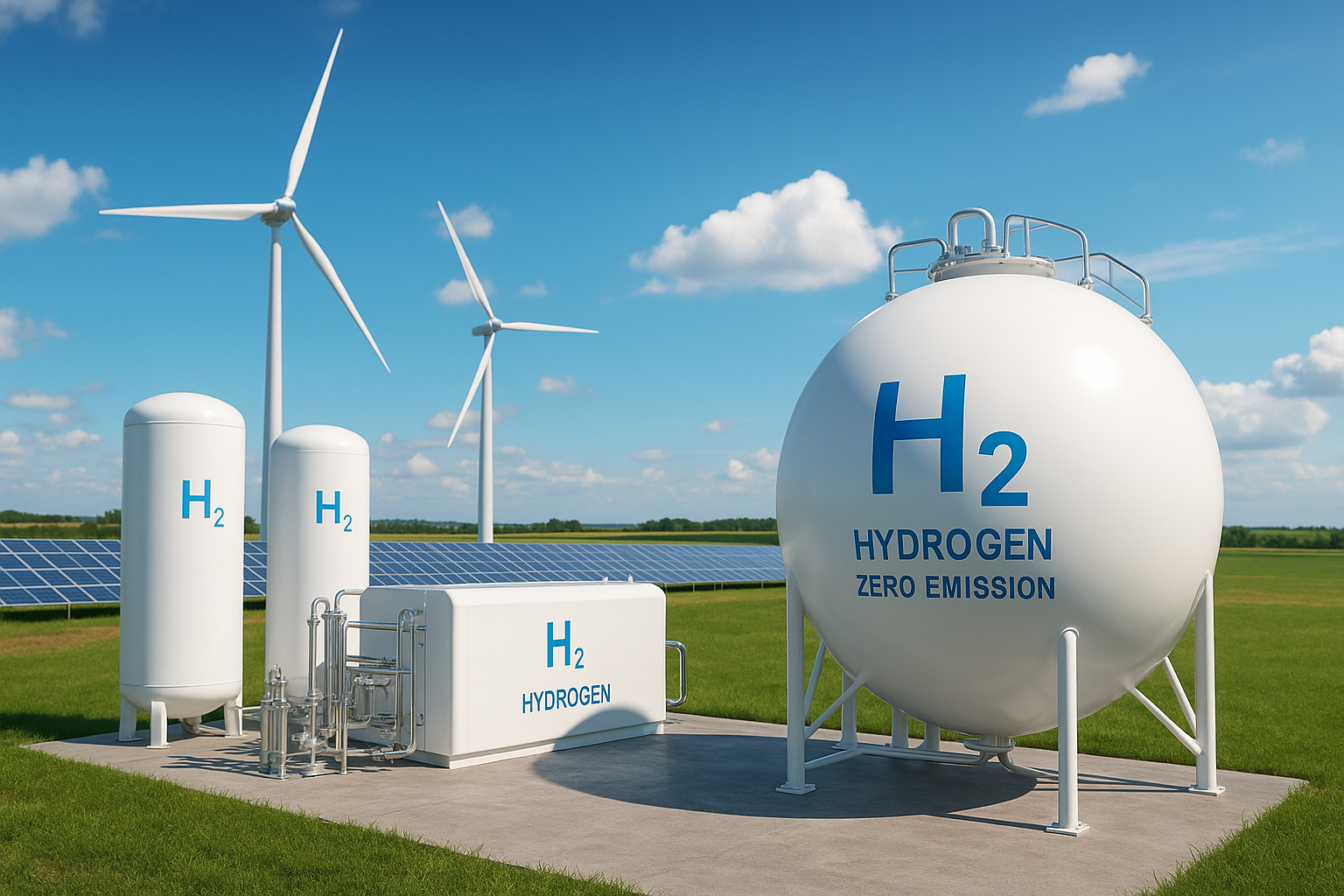
Discover How The Green Hydrogen Market Is Shaping The Future Of Clean Energy And Understand Why It Is Essential For A More Sustainable Economy.
The green hydrogen market has gained prominence in recent years as one of the most promising bets for a low-carbon economy.
To clearly understand what this sector is and why it generates so much interest, it is necessary to look at its history, technological advances, and the changes it can bring to the global energy matrix.
Since the 19th century, hydrogen has been known as the most abundant element in the universe and studied for its energy potential.
-
Renewable energy advances over protected areas in Brazil, and a survey by the Energy Transition Observatory reveals silent impacts that challenge environmental conservation and pressure sensitive traditional territories.

-
Rio Grande do Sul accelerates energy transition: State invests in renewable technologies and consolidates decarbonization strategies and pathways to attract billions in new industrial investments.

-
With 160,000 m² of collectors, an area larger than 20 football fields, Silkeborg, in Denmark, hosts a solar thermal plant that heats 19,500 homes and could become the largest solar heating plant in the world.

-
A study reveals the expansion of renewable energy procurement in Brazil and shows how companies are taking advantage of opportunities to reduce expenses, ensure energy efficiency, and strengthen strategic environmental commitments.


According to the International Energy Agency (IEA), during the Industrial Revolution, hydrogen began to be used as fuel.
However, its production process mainly depended on natural gas, a fossil fuel that generated high carbon emissions. This limited its use and sustainability.
With the growing environmental concern in recent decades, especially since the 1990s, governments have sought cleaner energy sources.
In this context, the concept of green hydrogen emerged, which eliminates emissions by using water electrolysis powered by renewable sources, such as solar and wind energy, according to the International Renewable Energy Agency (IRENA).
The Evolution Of The Green Hydrogen Market
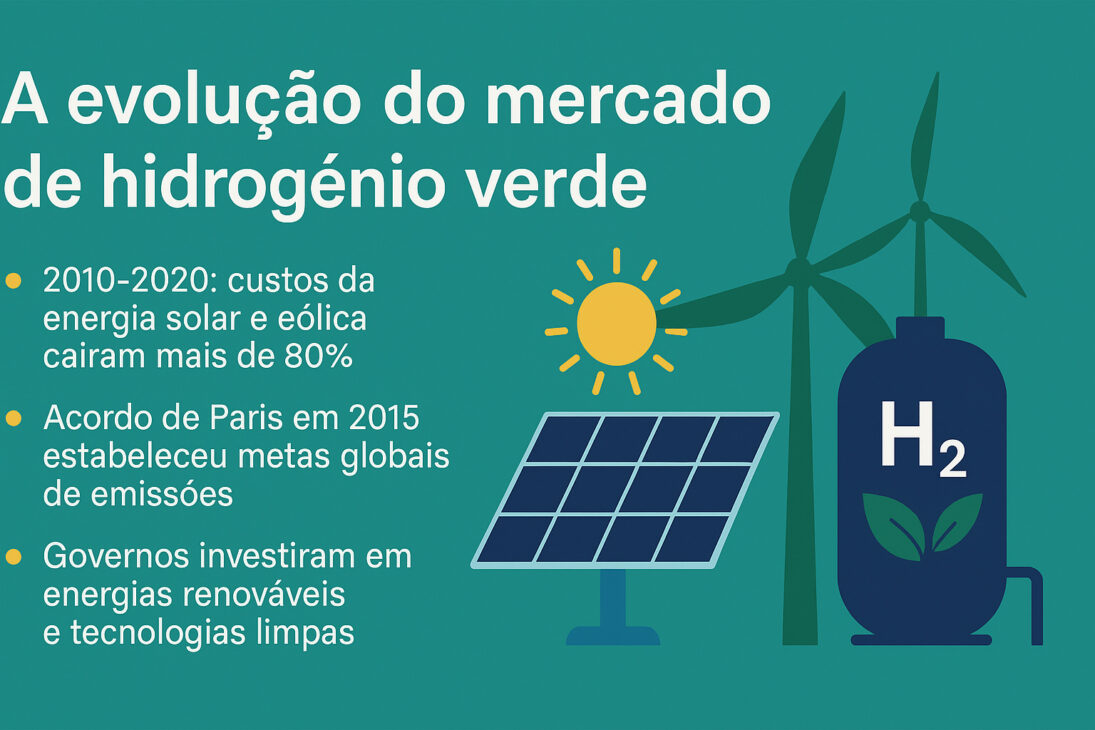
The green hydrogen market began to consolidate more strongly in the last decade.
According to IRENA, between 2010 and 2020, solar and wind energy costs fell by more than 80%, making electrolysis economically viable.
Moreover, in 2015, the UN Paris Agreement established global targets for reducing greenhouse gas emissions, encouraging governments to invest in renewable energies and clean technologies.
Therefore, green hydrogen began to be seen as essential for decarbonizing hard-to-electrify sectors, such as steelmaking, heavy transport, and the chemical industry. Countries such as Germany, Japan, and Australia have already outlined national strategies to increase the production and use of clean hydrogen.
Chile, for example, in its 2021 National Energy Plan, highlighted green hydrogen as a strategic vector for the country’s energy future.
In Brazil, the renewable electric matrix, with over 80% hydropower generation according to the Ministry of Mines and Energy, provides a natural foundation for the development of green hydrogen.
Ongoing projects indicate that Brazil could become one of the largest global exporters of this clean fuel by the 2030s.
Applications And Pillars Of The Market
In addition to production, technological development has advanced to apply green hydrogen in various industries.
Companies are testing its substitution in industrial furnaces and boilers, while the aviation sector is researching fuel cells for airplanes, as reported by the IEA in its 2023 report.
To understand the green hydrogen market, it is important to consider three pillars: production, storage/transport, and demand.
Production depends on the efficiency of electrolyzers and the supply of renewable energy. Storage and transport require specific technologies, as hydrogen is highly volatile.
Meanwhile, demand comes from the growing interest of industries looking for alternatives to reduce their carbon footprint.
Innovation And International Public Policies
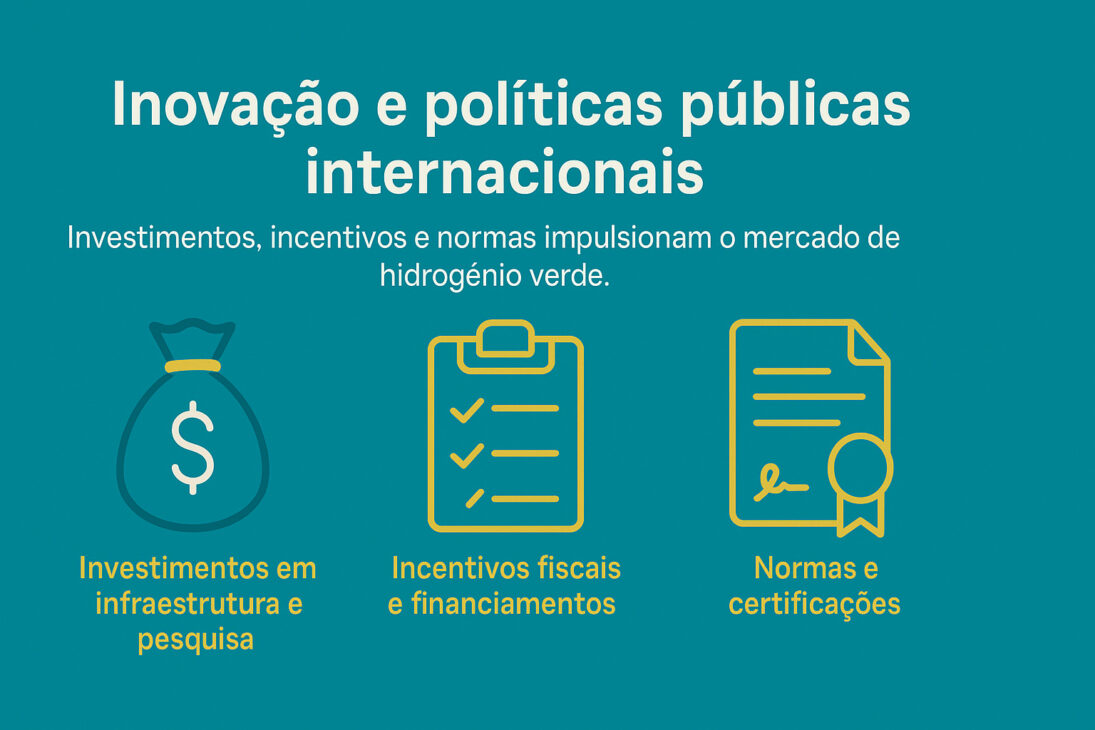
The growth of the market heavily depends on investments in infrastructure, research, and effective public policies.
Tax incentives, financing, and clear regulations are necessary to accelerate the development of the sector.
The creation of certifications to ensure the clean origin of hydrogen helps establish trust, facilitating international trade agreements.
Global institutions and companies invest in improving electrolyzers and developing fuel cells for vehicles and equipment.
Technological innovation remains at the center of the sector’s advancement, according to reports from IEA and IRENA.
Governments adopt varied public policies, such as research grants and public-private partnerships, to foster the growth of green hydrogen.
Meanwhile, international initiatives facilitate cooperation between countries that have abundant renewable energy and those that demand hydrogen for their industries.
The Green Hydrogen Economy And Competitiveness
The production of green hydrogen has become more economically competitive.
The International Energy Agency indicated in 2023 that costs continue to decrease with the expansion of production scale and technological advances.
In regions with high solar and wind availability, projects are already demonstrating financial viability.
Additionally, taxes on carbon emissions and strict environmental policies increase the cost of fossil fuels, favoring the adoption of clean hydrogen.
This makes green hydrogen a strategic option for companies concerned about sustainability and the regulatory future.
Opportunities And Challenges In Brazil
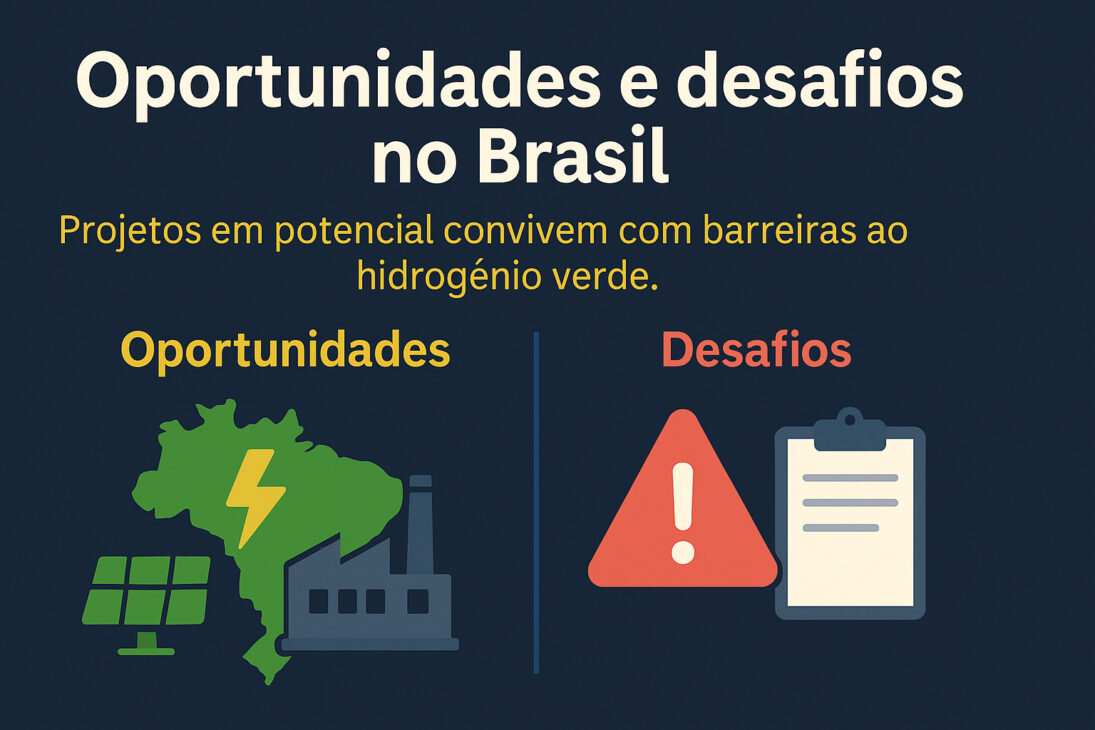
In Brazil, states like Ceará, Pernambuco, and Rio Grande do Norte have attracted investments for pilot projects on green hydrogen.
According to the Ministry of Mines and Energy, these regions present high indices of renewable energy, mainly solar and wind, essential for green hydrogen production.
The Port of Pecém, in Ceará, is already being pointed out as a potential hub for hydrogen export to Europe, a market that demonstrates strong demand, according to information from the Brazil-Germany Chamber of Commerce.
Universities, startups, and national research centers are also engaging in the development of technologies related to hydrogen, promoting innovation and the generation of qualified jobs.
However, challenges persist, such as the high cost of electrolyzers and the need for specific regulations for the storage, transport, and marketing of the gas, as highlighted by the National Petroleum Agency (ANP).
Moreover, ensuring that the entire production chain is genuinely sustainable is a critical point for the success of the sector.
Perspectives For The Future
Despite the challenges, the prospects for the green hydrogen market are positive.
Green hydrogen emerges as a crucial tool for reducing dependence on fossil fuels and for meeting the carbon neutrality targets assumed by various countries.
For professionals, investors, and researchers, understanding the fundamentals of the market today is preparing for a sector that is expected to grow in the coming decades, as indicated by studies from IEA and IRENA.
This guide clearly and accessibly presented the main aspects of the green hydrogen market, from its history to its current and future perspectives.
It is an ongoing energy transformation that promises to contribute to a cleaner and more sustainable future, aligned with the planet’s needs.










Seja o primeiro a reagir!