





 Portuguese
  English
  Spanish
  3 min of reading
  0 comments


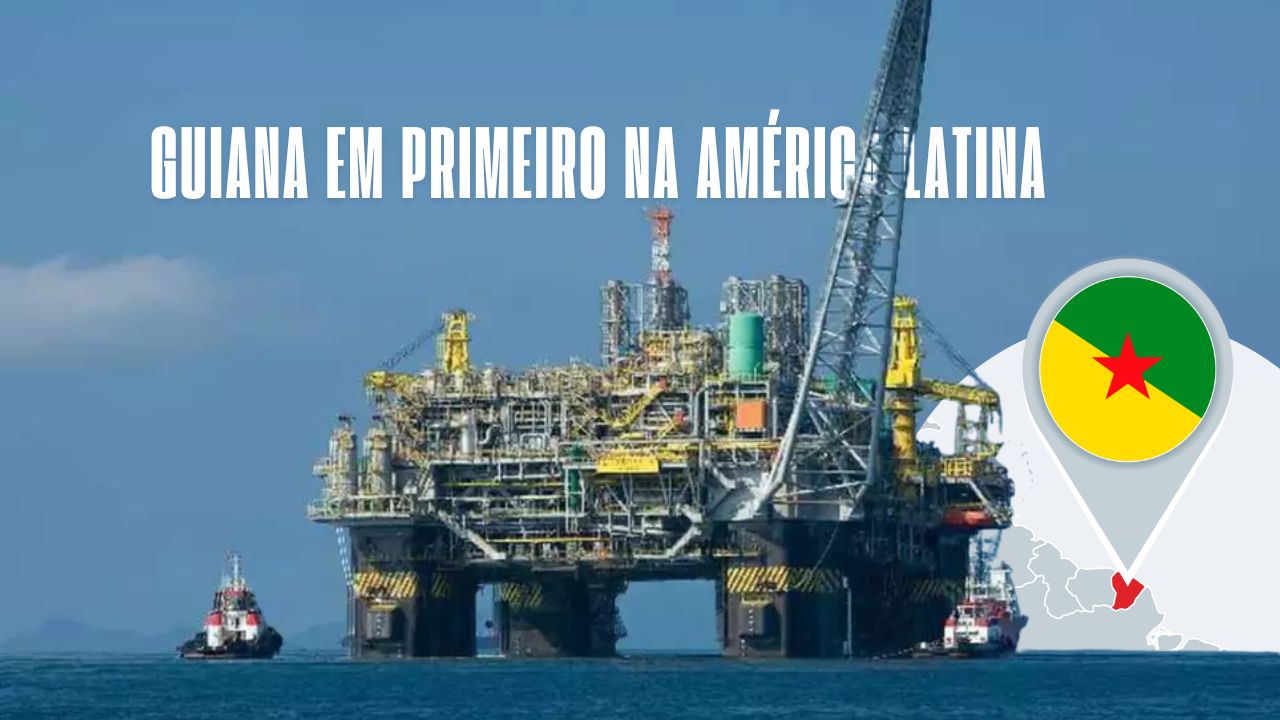
Despite Being the Largest Economy in the Southern Hemisphere, Brazil Has Only the 9th Per Capita GDP in Latin America. According to a Survey by Voronoi/Visual Capitalist, the Country Registers an Average of US$ 10.3 Thousand Per Year Per Inhabitant, Lagging Behind Several Neighboring Nations.
Meanwhile, Guyana has skyrocketed in the rankings, reaching a per capita GDP of US$ 28.9 thousand, nearly three times higher than Brazil’s. The growth of the Guyanese economy is directly linked to the exploitation of oil on the equatorial margin, a resource that Brazil has yet to tap into.
The per capita GDP is an indicator that measures a country’s wealth by dividing the Gross Domestic Product (GDP) by the number of inhabitants. It reflects the level of prosperity of the population and allows for comparisons between different countries.
Although Brazil has a high total GDP, its large population reduces the per capita value, leaving the country behind smaller economies that are more efficient in generating wealth per inhabitant.
-
50 viaducts, 4 tunnels, 28 bridges, and 40 kilometers of bike paths: BR-262 in Espírito Santo will receive 8.6 billion reais for the largest engineering project in the state’s history, inspired by the Immigrant Highway in São Paulo.

-
Brazil produces too much clean energy and doesn’t know what to do with it: over 20% of solar and wind capacity was wasted in 2025 while investors flee and 509 renewable generation projects were abandoned in the last year.

-
Piauí will produce a new fuel that replaces diesel without needing to change anything in the truck’s engine and reduces pollutant gas emissions by half: truck drivers from all over the Northeast are already celebrating the news that will arrive later this decade.

-
A new Brazilian shopping center worth R$ 400 million will be built in an area equivalent to more than 4 football fields, featuring 90 stores, 5 cinemas, a supermarket, a college, and parking for 1,700 cars, potentially generating 3,000 jobs.


Guyana Soars in the Ranking Due to Oil Wealth
Guyana has become the leader in per capita GDP in Latin America thanks to the exploitation of oil reserves on the equatorial margin. The country has seen rapid economic growth after ExxonMobil, the American giant in the sector, began operations in the territory.
Since 2015, when the reserves were discovered, Guyana has multiplied its oil production, boosting revenue and the country’s development. This economic growth has allowed the country to surpass traditional economies in the region, establishing itself as one of the richest in proportional terms.
Brazil Falls Behind in the Latin America Ranking
Even being one of the richest countries in Latin America in absolute terms, Brazil ranks only 9th in per capita GDP. The country registers US$ 10.3 thousand per year per inhabitant, well below economies like Chile, Uruguay, and Panama.
This difference occurs because, despite its natural wealth and the size of the Brazilian economy, income distribution and structural challenges limit the proportional growth of the population. The lack of investments in strategic sectors, such as the exploration of oil on the equatorial margin, directly impacts economic performance.
Oil Exploration in Brazil and Environmental Barriers
Unlike Guyana, Brazil faces environmental barriers to exploring the equatorial margin, which extends from Amapá to Rio Grande do Norte, passing through Pará, Maranhão, Piauí, and Ceará.
Ibama, under the command of Minister Marina Silva, has made it difficult even to conduct studies by Petrobras to assess the feasibility of exploration. The restriction prevents Brazil from taking advantage of the same reserves that transformed Guyana, limiting the growth of the national per capita GDP.
With Guyana reaping the benefits of its oil strategy, it remains to be seen whether Brazil will follow a similar path in the future or continue leaving this wealth untapped.









-

2 pessoas reagiram a isso.