





 Portuguese
  English
  Spanish
  4 min of reading
  0 comments


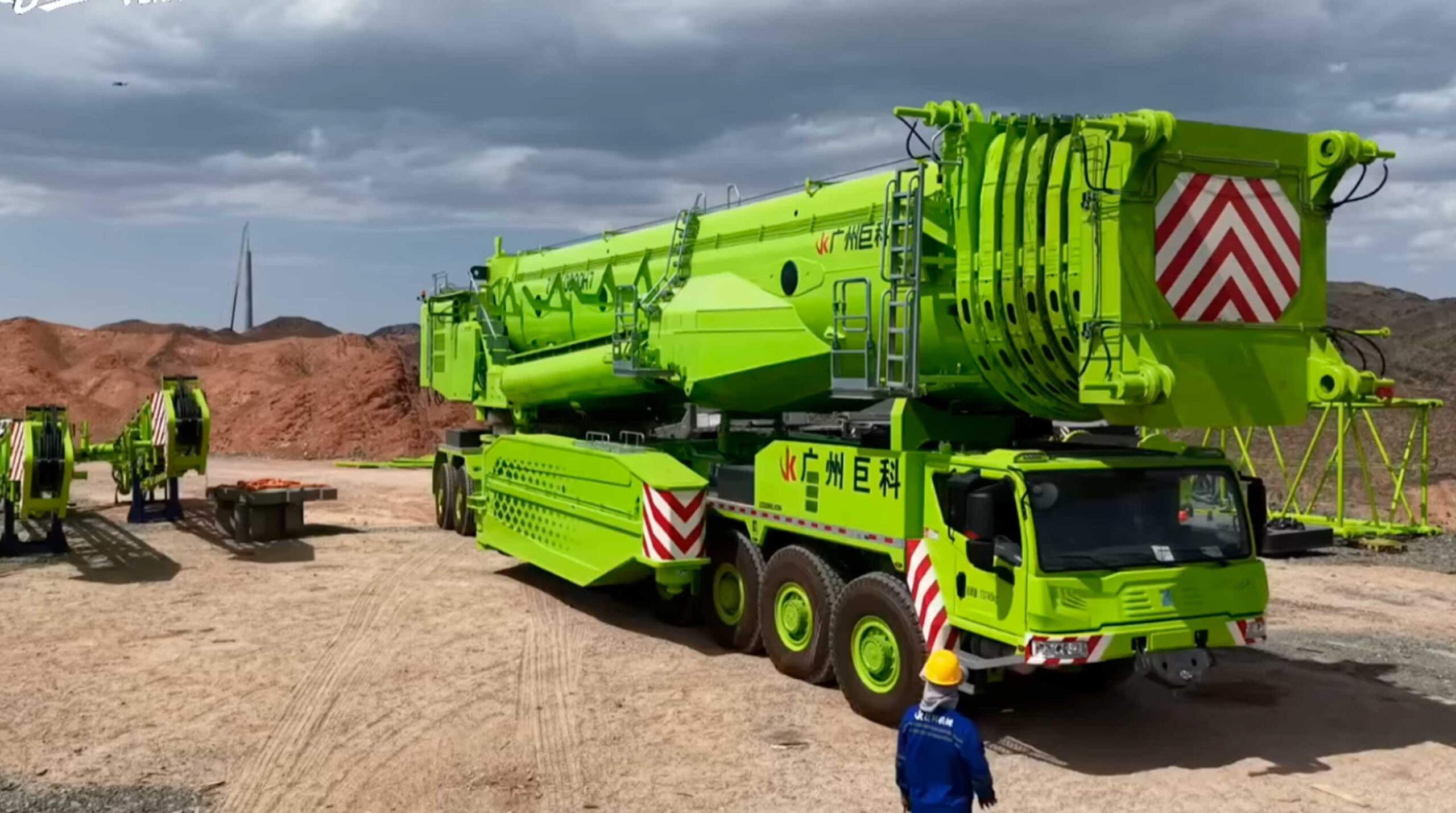
4,000-Ton Machines Reach Remote Construction Sites to Assemble Large Turbines with a Jib Close to 200 Meters and Millimetric Operation
The expansion of wind turbines in remote areas of northwestern China is pushing engineering to a new level, where the bottleneck is not just manufacturing larger blades and towers, but safely lifting each piece at extreme heights.
In this context, all-terrain cranes in the 4,000-ton class have become strategic assets. One example is the SAC40000T, presented by Sany as a nine-axle all-terrain crane designed for wind turbine installation with a maximum lifting height of around 200 meters.
Another move comes from Zoomlion, which announced the launch of a 4,000-ton all-terrain crane aimed at turbines between 6 MW and 10 MW, claiming to be able to install sets at 185 meters high.
-
Friends have been building a small “town” for 30 years to grow old together, with compact houses, a common area, nature surrounding it, and a collective life project designed for friendship, coexistence, and simplicity.

-
This small town in Germany created its own currency 24 years ago, today it circulates millions per year, is accepted in over 300 stores, and the German government allowed all of this to happen under one condition.

-
Curitiba is shrinking and is expected to lose 97,000 residents by 2050, while inland cities in Paraná such as Sarandi, Araucária, and Toledo are experiencing accelerated growth that is changing the entire state’s map.

-
Tourists were poisoned on Everest in a million-dollar fraud scheme involving helicopters that diverted over $19 million and shocked international authorities.


The technological competition is accompanied by the advancement of increasingly larger turbine models, which require heavy logistics, fast assembly on site, and tight safety margins in areas with challenging winds, terrain, and access.
The Rise of Larger Turbines Has Pushed Cranes to the Center of Projects and Made Lifting a Challenge as Great as Generation
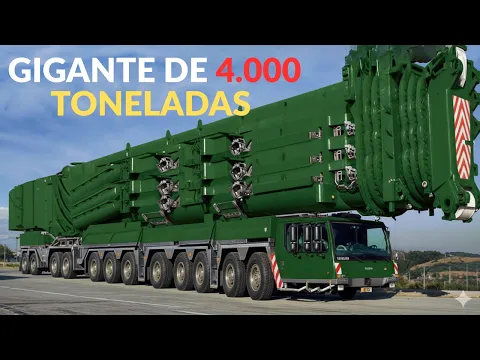

In practice, the installation of modern turbines has become a process where every minute of crane downtime is costly, and each maneuver must balance weight, height, and working radius within a narrow window of favorable weather.
Sany reports that the SAC40000T was designed for this type of mission, featuring a telescopic boom and long jib, as well as counterweights and solutions for faster assembly, aiming to deliver height capacity for next-generation turbines.
In an operational example cited by the company itself, a 6.25 MW turbine with a hub height of 120 meters required lifts in the range of 150 tons just for the nacelle, reaching 180 tons with rigging, in mountainous terrain with limited swing area.
What Changes When the Crane Also Needs to Travel Well and Assemble Quickly on Site Without Turning Into a Complete Disassembly and Reassembly Site
One of the most sensitive points in this category is balancing brute strength with mobility. In the technical material released, Sany highlights a shorter chassis for the class, reduced steering radius, and ability to travel on difficult terrain, trying to avoid the crane itself becoming a larger logistical problem than the turbine.
Zoomlion, on the other hand, describes a design with a ten-axle all-terrain chassis and a standard width of three meters, in addition to control solutions to handle long and flexible booms, which is critical when the wind shifts and the load oscillates.
Before the First Lift, the Site Becomes an Assembly Line with Counterweights, Stabilizers, and Safety Sensors Working Against the Clock
The promise of productivity begins with assembly. Sany claims that the superlift system of the SAC40000T can be assembled in about one hour, aiming to reduce the step that usually stalls schedules in isolated locations.
According to the company, in a real operation, the installation of a tower section was completed in 14 minutes and the installation of the nacelle in 19 minutes, numbers used as efficiency benchmarks in complex sites.
In the competition of the same class, XCMG also points to productivity gains and states that its XCA4000 wheeled crane could reduce turbine installation time by 20 to 30 percent, supported by control and safety technologies.
In an operational report released by XCMG itself, the XCA4000 lifted components like a 130-ton nacelle, a 40-ton hub, and 95-meter blades weighing 28 tons each, achieving 162 meters in lifting during assembly at a 200 MW wind farm.
This type of data helps explain why sensors and real-time monitoring appear as a central argument in this category, as the risk increases with height, weight, and boom flexibility.
The Practical Effect Shows Up in Timelines and Project Costs, as Well as in the Industrial Battle for Who Dominates Wind Infrastructure
When a crane can maintain high capacity at height and reduce disassemblies, the result tends to show up in shorter timelines and less exposure to periods of strong winds, which can be decisive in remote regions.
In the manufacturers’ discourse, this class of equipment was created to unlock larger turbines. Zoomlion directly associates the design with the advancement of turbines between 6 MW and 10 MW and maintains the installation target at 185 meters.
Sany uses similar logic when treating the SAC40000T as a response to larger turbines and to sites with difficult access, and already connects the argument to operations involving 6.25 MW turbines and lifts in the range of hundreds of tons counting the rigging.
In the end, the crane stops being a supporting actor and starts to set the pace of the wind farm, with a direct impact on the chain that goes from factory to road, and from final assembly to energy delivered.
The race for giant cranes is an inevitable advance or a sign that the industry is betting too heavily on size, speed, and records? It is worth discussing where the acceptable limit lies between efficiency, operational risk, and working conditions on isolated sites, as this discussion tends to grow alongside the turbines.










-

-

-

-

-

24 pessoas reagiram a isso.