





 Portuguese
  English
  Spanish
  3 min of reading


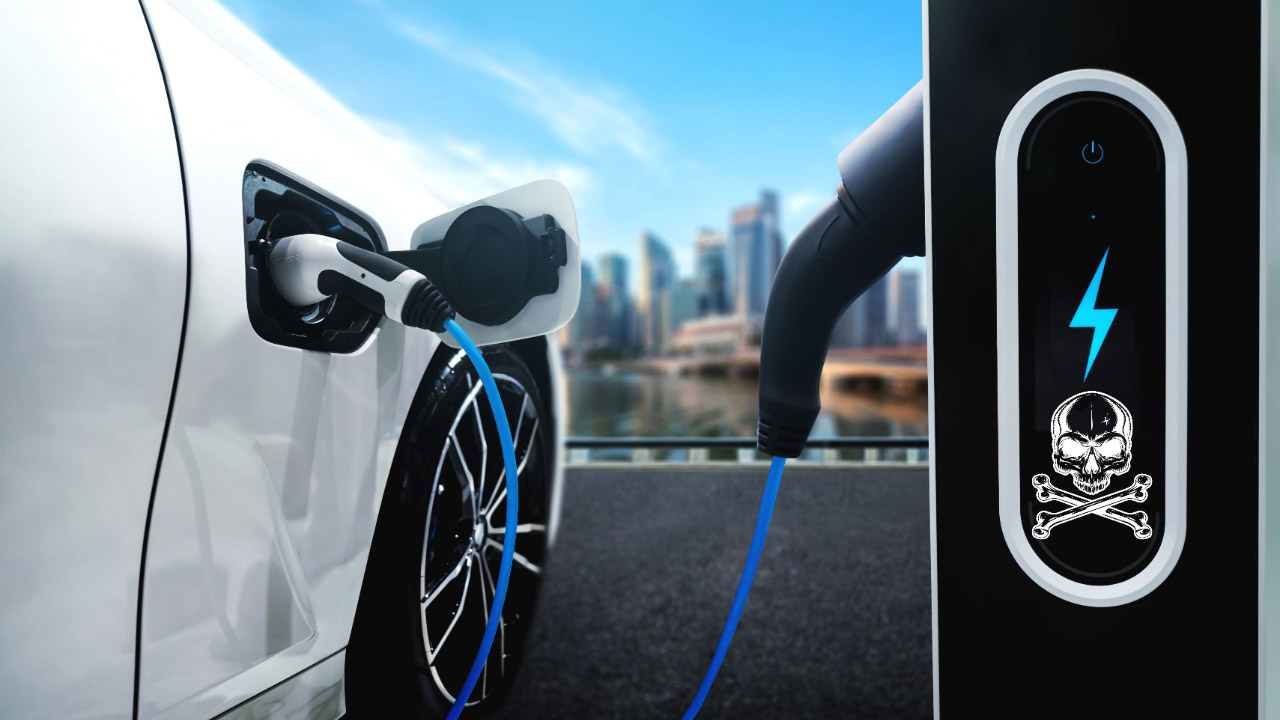
Hacker Attacks on Electric Vehicle Charging Stations Are Becoming Increasingly Common and Now the Automotive Industry Must Invest Even More in Cybersecurity.
The downgrade of Brazil in the production sector and even in the consumer market has generated advantages, as we are far from issues with electric vehicles, such as recent hacker attacks on charging stations. These recent events have raised alarms for distributors and suppliers from other countries. According to Yoav Levy, CEO of Upstream Security, an Israeli company that provides security management and data for connected vehicles, in 2021, over 80% of hacker attacks recorded worldwide were done remotely, prompting the automotive industry to begin applying new investments in cybersecurity.
Hacker Attacks on Electric Vehicle Stations Increase
Strategic management specialists for corporations, NGOs, and governments, McKinsey & Company, released a survey in 2021 predicting that revenue for security against hacker attacks in the automotive industry would reach US$ 9.5 billion, equivalent to R$ 48.1 billion, by 2030. According to Levy, hacker attacks on charging stations for electric vehicles are growing and may become more common as the sales of electric cars expand, making charging points very vulnerable targets.
According to Robert Nawy, CEO of IPKeys Cyber Partners, a provider of OT/IT intelligence platforms and infrastructure protection, the number of electric vehicle stations is expected to increase from 1.6 million last year to 2.1 million points by the end of this year, but there is some negligence regarding security.
-
Costing R$ 16,000, the new Yamaha features a 125 cc hybrid engine with electric assistance, delivers 8.3 hp, includes ABS, optimized fuel consumption, Y-Connect connectivity, 25 liters of storage space, and a surprising 4-year warranty in the urban segment.
-
Goodbye expensive popular car: electric vehicle for less than R$ 70,000 starts being sold in Brazil with a range of 200 km and targets those looking to escape gasoline.
-
OMODA & JAECOO grows in Europe in 2026 with an integrated strategy of sales, innovation, local production, and technological advancement in the United Kingdom, Italy, and Spain.
-
OMODA & JAECOO expands after-sales service in Brazil with competitive maintenance, a 7-year warranty, and high availability of parts for technological SUVs.

The executive emphasizes that the leakage of just one password cost Colonial Pipeline US$ 4.4 billion, charged as ransom after hacker attacks that had disrupted its supply to the entire eastern region of the country.
Now, just imagine what a hacker attack could do, leaving all charging stations in California inactive. As we can see, security in the automotive industry is a new topic and regulation has not yet covered all threats.
Young Hacker Breaches Tesla Electric Cars
Earlier this year, young David Colombo, a 19-year-old cybersecurity specialist, managed to breach 25 Tesla models through the TeslaMate app.
On the Isle of Wight, on the southern coast of England, the local council had to apologize when charging stations began displaying pornographic content. According to Professor Chadi Assi, a researcher at Concordia Institute for Information Systems Engineering, in practice, in hacker attacks, wrongdoers can obtain data from electric car owners who connect to a charging network and even interrupt the service provision.
In the case of the Tesla Hacker, for example, it was discovered that a generic program could be used to access Tesla models and control some of their features, such as opening doors and windows, and also disabling Sentry Mode.
Experts Find Vulnerabilities in 16 Electric Vehicle Charging Station Suppliers
According to Chadi Assi, 16 different suppliers were evaluated and vulnerabilities were found in the firmware of the chargers themselves, as well as in the mobile and web applications used to access them.
The most concerning issue is that it was verified that none of the tested models were immune to hacker attacks. All can be breached and infected by malware that can activate or deactivate them remotely.
Worse than personal losses is the risk of multiple electric vehicle stations being hacked simultaneously, overloading the local network and leading to blackouts.








Seja o primeiro a reagir!