





 Portuguese
  English
  Spanish
  5 min of reading
  0 comments


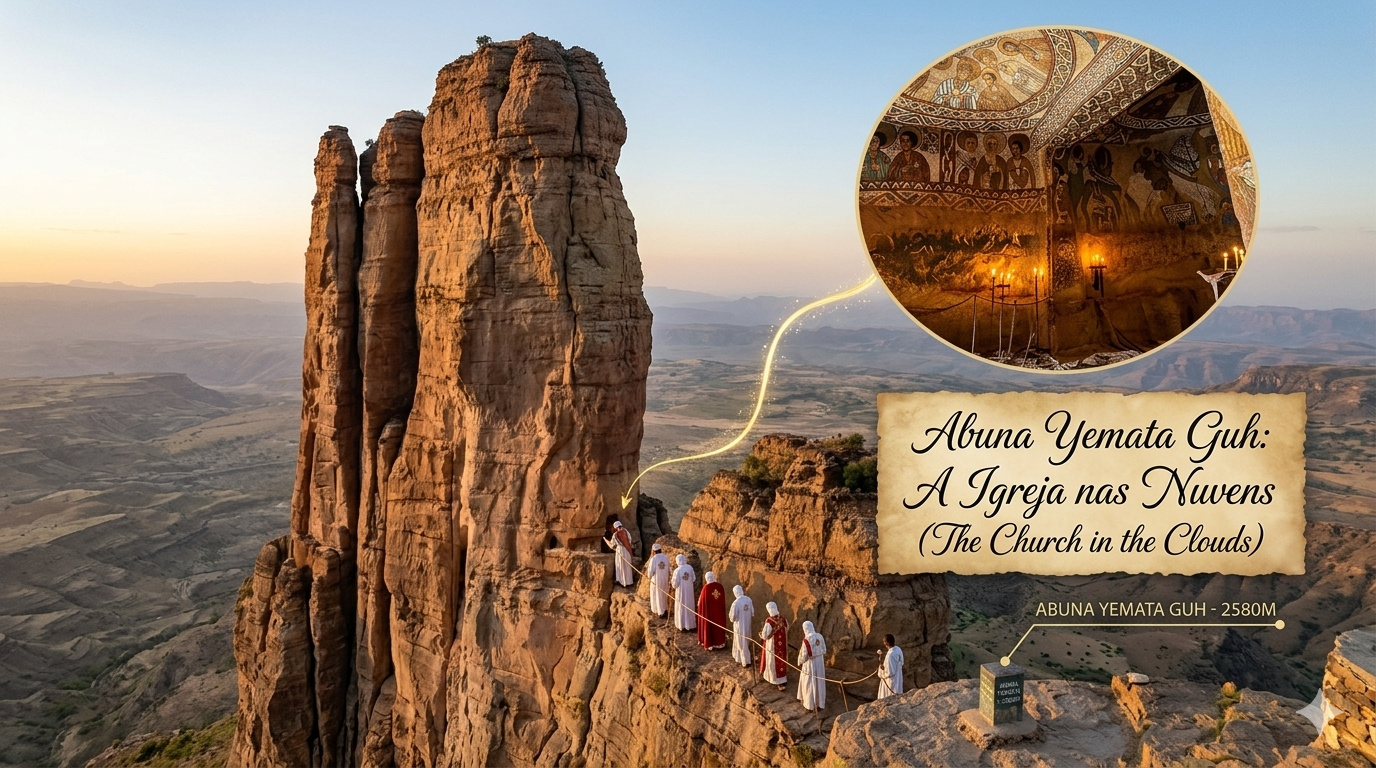
Abuna Yemata Guh, church in Ethiopia at 2,580 meters above sea level, can only be accessed by climbing cliffs and holds paintings preserved for centuries.
In northern Ethiopia, in the mountainous region of Tigray, there is one of the most extreme religious sites on the planet. The Abuna Yemata Guh church, carved directly into the rock at about 2,580 meters above sea level, challenges not only geography but also the physical limits of those who wish to reach it. Built around the 6th century, according to historical records associated with the Ethiopian Orthodox Christian tradition and documented by surveys from the online encyclopedia Wikipedia Abuna_Yemata_Guh, the church gained worldwide notoriety not only for its antiquity but mainly for its access. To reach it, one must face a climb up rocky walls, cross narrow sections without protection, and deal with heights that can exceed 200 meters of free fall.
The story has been widely documented by international media and travel and culture portals, consolidating the site as one of the most inaccessible temples in the world.
Where is Abuna Yemata Guh and why is its location unique
The church is situated in an isolated area of the Tigray mountains, one of the oldest regions of Christianity in the world. Unlike traditional constructions, it was carved directly into a vertical rock formation, taking advantage of the mountain’s natural structure.
-
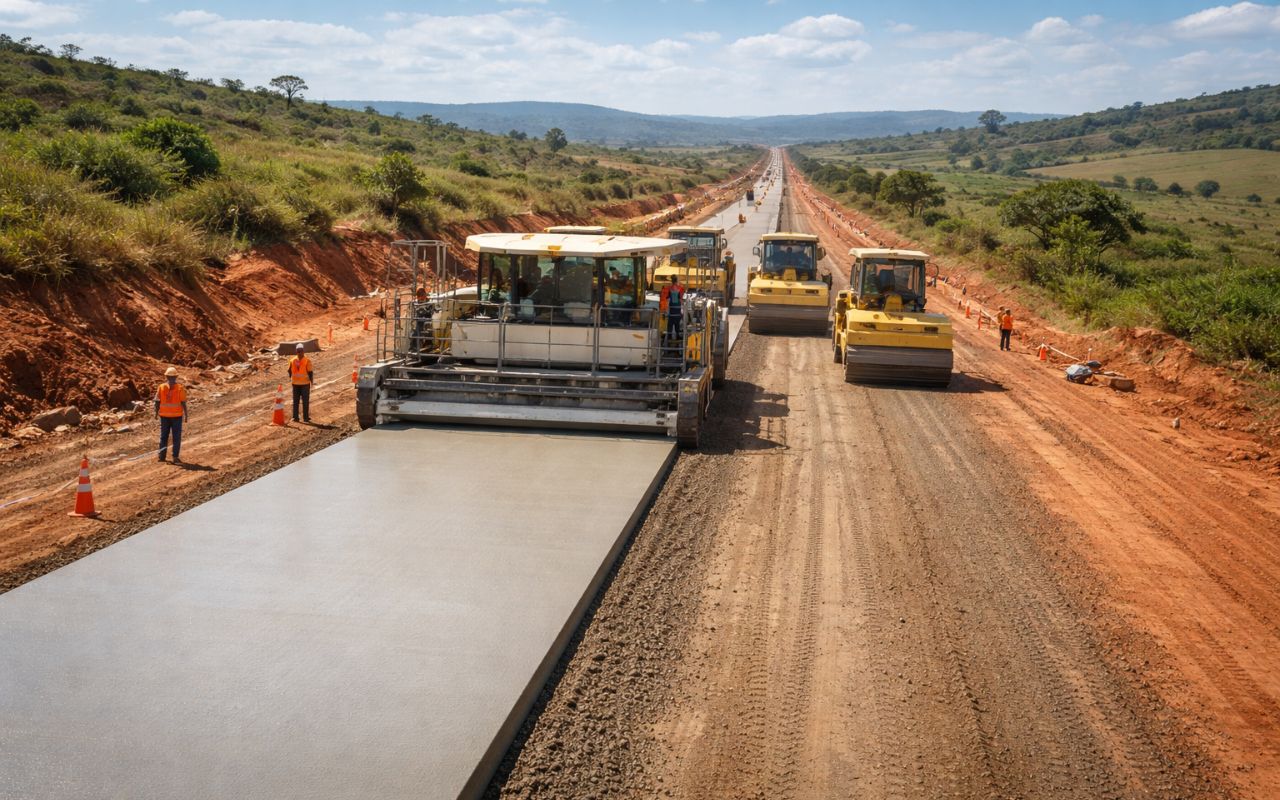
New CCR concrete paving technology promises roads up to 3x more durable, less maintenance, and cost reduction in Brazil.
-
Made from recycled plastic, plastic wood is gaining space in the construction industry because it does not rot, resists moisture, and reduces maintenance costs over the years.

-
Florianópolis will receive a million-dollar BRT that will begin construction in 2026 with nearly 400 million in funding from the federal government and the Inter-American Development Bank, and the map already shows the routes for the exclusive bus corridors.

-
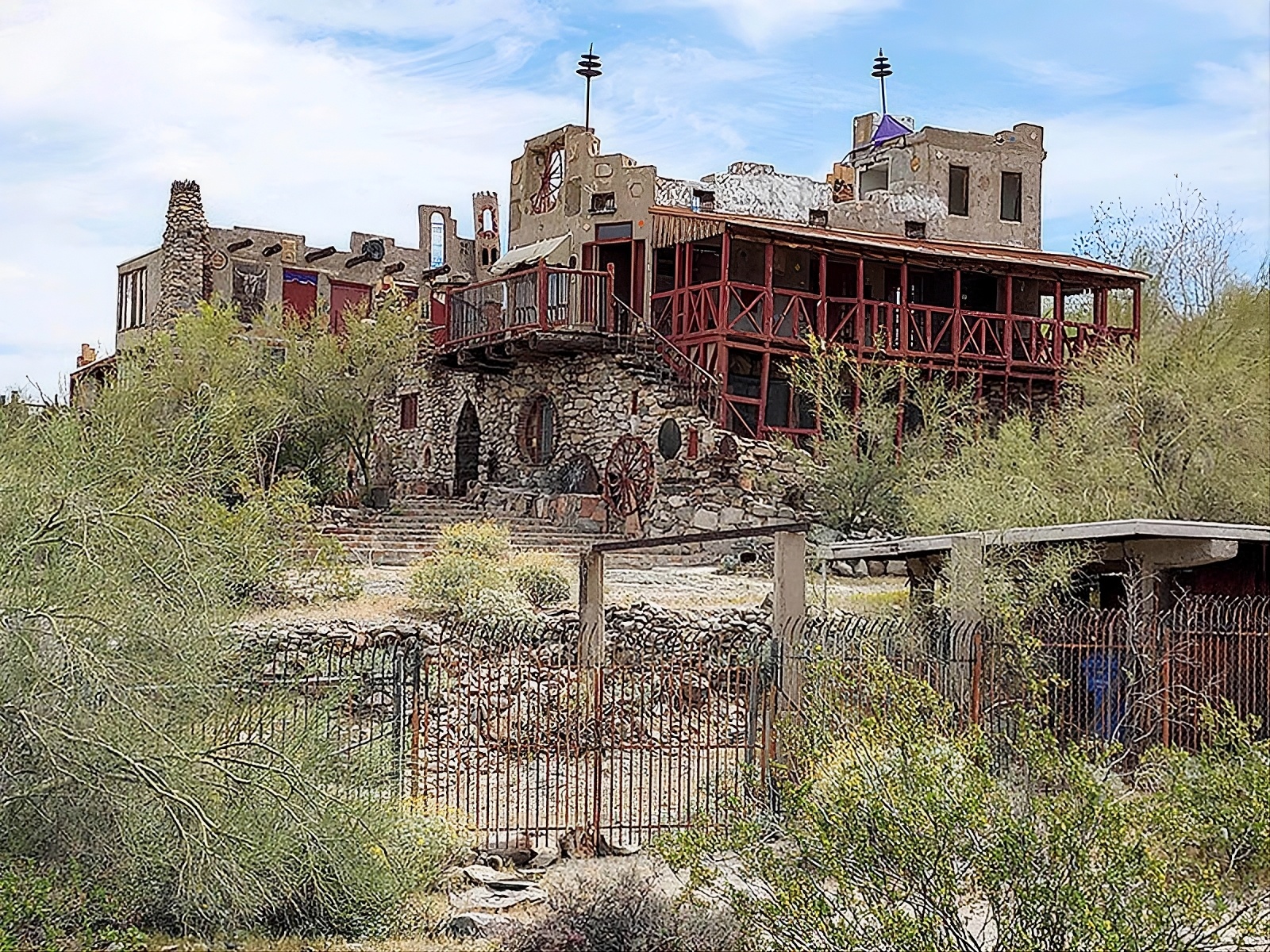
Without a blueprint, without an engineer, and using scrap from the dump, a father spends 15 years building an 18-room castle for his daughter, featuring tram tracks, 13 fireplaces, and over 700 m², which may now be demolished.


This choice was not aesthetic. At the time of its construction, elevated locations offered protection against invasions and symbolized spiritual closeness to the divine.
The result is a church literally suspended in the landscape, with no conventional access by road or staircase.
The climb to the church: one of the most dangerous accesses in the world
The access to Abuna Yemata Guh is the element that transforms the church into a global phenomenon.
To reach the site, the visitor needs to:
- climb steep rock sections
- cross narrow passages with abysses on the side
- climb about 200 meters on natural walls
- in many cases, remove shoes to improve grip


There are no handrails, fixed stairs, or modern safety systems. Progress depends exclusively on balance, strength, and familiarity with the terrain.
This route is considered by many experts and travelers as one of the most challenging among all religious sites on the planet.
Why 2,580 meters is not the height of the climb
A common mistake in viral content is to claim that the climb is 2,580 meters.
In practice:
- 2,580 meters is the altitude of the church above sea level
- the actual climb is around 200 vertical meters
Despite being smaller in absolute numbers, the degree of difficulty remains extremely high due to exposure and lack of protection.
Interior of the church: frescoes preserved for over a thousand years
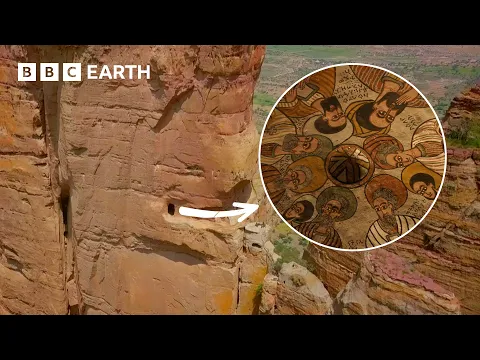
Upon overcoming the ascent, the visitor finds a surprising interior. The church houses:
- religious frescoes over a thousand years old
- paintings of saints and biblical figures
- vibrant colors preserved by the dry climate
The conservation of these works is considered exceptional. The absence of moisture and the isolated location helped keep the paintings virtually intact over the centuries.
The historical origin of Abuna Yemata Guh in the 6th century
The construction of the church is attributed to Abuna Yemata, one of the so-called “Nine Saints” who helped spread Christianity in Ethiopia during the early centuries of the Christian era.
These missionaries played a central role in consolidating the Ethiopian Orthodox Church, one of the oldest Christian traditions in the world.
The choice of remote and difficult-to-access locations was part of this religious strategy, reinforcing spiritual isolation and physical protection.
Why churches were built on cliffs in Ethiopia
Ethiopia has several churches carved into rocks, especially in the Tigray region and in places like Lalibela.
These constructions follow a specific logic:
- protection against invaders
- spiritual isolation
- use of the rock itself as structure
- durability over the centuries
Abuna Yemata Guh is one of the most extreme examples of this tradition.
The real risk of the ascent and the absence of accident records
Despite the level of difficulty, reports indicate that there are no frequent official records of fatal accidents in accessing the church. This is due to several factors:
- experienced local guides accompany visitors
- the pace of the ascent is controlled
- most people attempting it are already aware of the risk
Still, the route requires physical preparation and is not recommended for people with a fear of heights.
The spiritual experience that goes beyond the ascent
For the faithful, the difficulty of access is not an obstacle, but part of the experience. The ascent serves as a symbolic process:
- physical effort
- overcoming
- spiritual closeness
Upon reaching the top, the religious experience is amplified by the sense of isolation and the view of the surrounding mountains.
Extreme tourism and cultural preservation
In recent years, Abuna Yemata Guh has begun to attract international tourists interested in out-of-the-ordinary experiences. However, the flow is still limited due to the difficulty of access, which helps preserve the site. This balance between tourism and conservation is essential to maintain the historical integrity of the church.
The combination of factors makes Abuna Yemata Guh unique:
- extreme location
- dangerous access
- historical value
- exceptional preservation
Few places in the world gather these elements so intensely. The Abuna Yemata Guh church represents a rare point where nature, ancient engineering, and spirituality converge.
Hidden in the mountains of Ethiopia, it has remained virtually intact for over a thousand years, protected by its very difficulty of access.
More than a temple, it is a concrete example of how ancient civilizations used their surroundings to build durable, symbolic structures that, above all, withstand the test of time.










Seja o primeiro a reagir!