





 Portuguese
  English
  Spanish
  4 min of reading
  0 comments


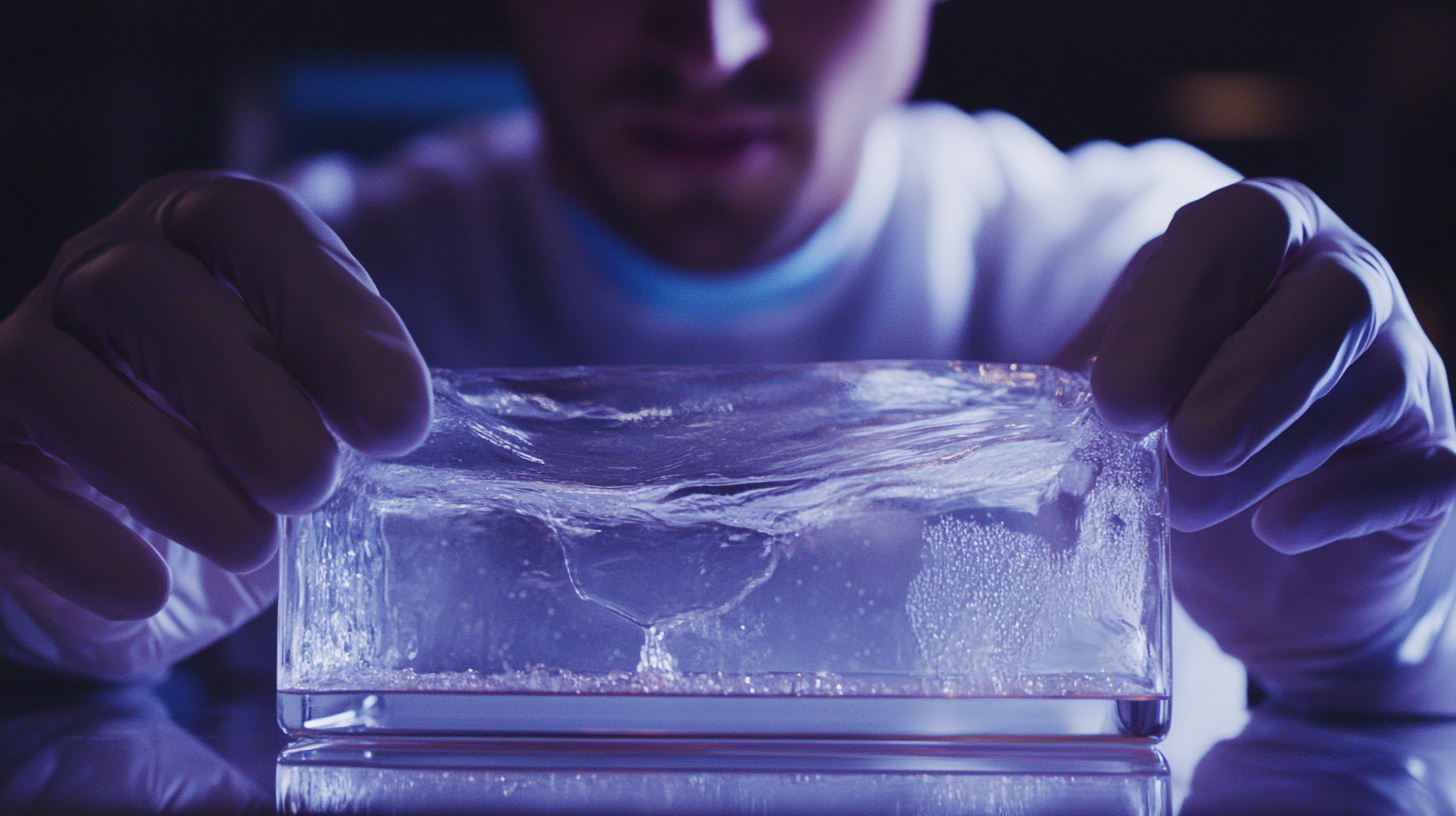
An Innovative Hydrogel Combines Rigidity and Flexibility, Featuring Self-Healing Capabilities That Approach the Characteristics of Human Skin
A new technology for hydrogel promises to revolutionize the way we interact with materials that mimic the functionalities and characteristics of human skin. Researchers from the universities of Aalto (Finland) and Bayreuth (Germany) have developed an innovative hydrogel that combines rigidity and flexibility, as well as possessing remarkable self-healing capabilities. This innovation opens new possibilities in areas such as medicine, robotics, and aesthetics.
Challenges of Skin Replication
Human skin is a complex tissue, known for its unique qualities, which include the ability to heal within 24 hours after an injury.
This ability results from a combination of factors, such as the presence of stem cells, collagen fibers, and elastin, along with an efficient vascular system that provides essential nutrients.
-
Scientists from an international project drill 1,800 meters of ice in Antarctica using hot water and discover details about one of the most intriguing places on planet Earth.

-
Seen from space, a colossal volcano nearly 5,000 meters high in Russia has released 1,600 km of smoke over the Pacific, forming “devil’s horns” of lava and revealing the brutal force of the Ring of Fire.

-
Expedition 501: Scientists drill into the ocean floor and discover a giant reserve of fresh water hidden beneath the sea, extracting nearly 50,000 liters and revealing an invisible system that could reshape the map of water scarcity.

-
Archaeologists find an intact tomb over 2,500 years old, with more than 100 preserved objects, weapons, jewelry, and human remains never touched.


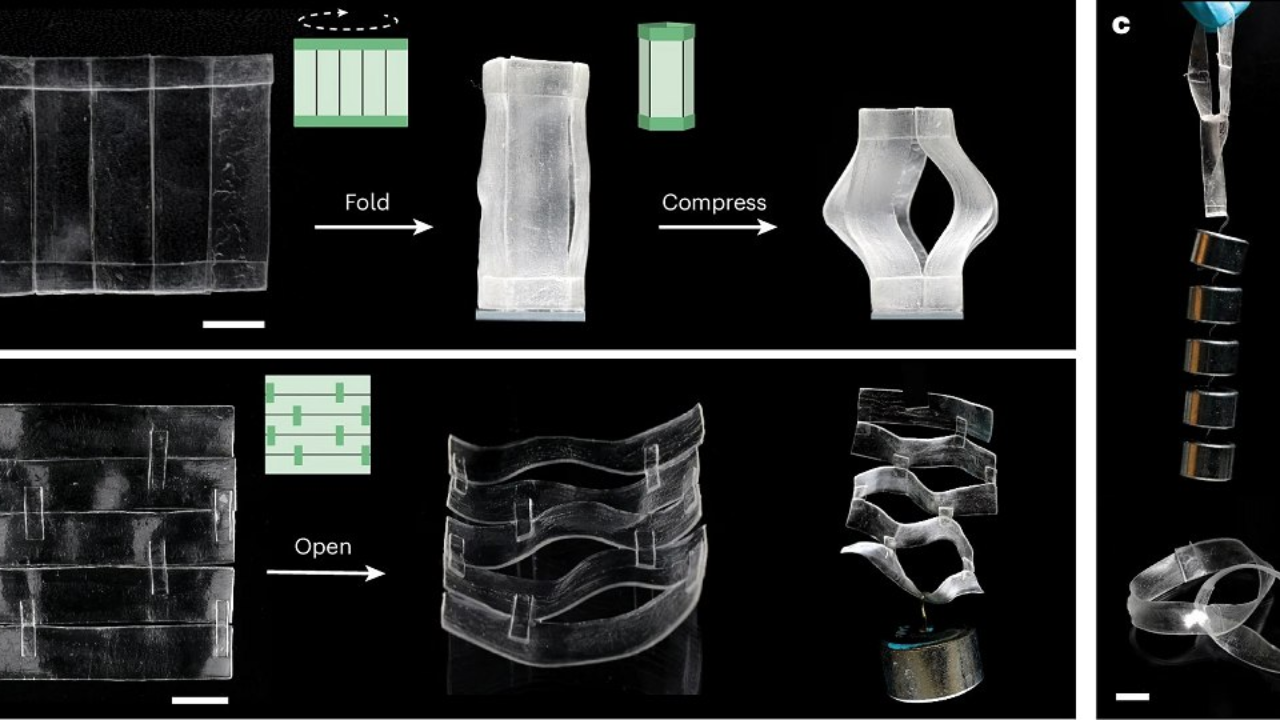
Although artificial gels exhibit similarities to skin, so far, they have managed to replicate only one or another property, but not both effectively.
Researchers led by Professor Hang Zhang faced the challenge of creating a hydrogel that overcomes these limitations.
Traditionally, hydrogels were considered soft and spongy, limiting their applications and effectiveness in various contexts.
The Innovation Behind the Hydrogel
The solution found by the team involved adding exceptional clay nanosheets that are large and ultra-thin to traditionally soft hydrogels.
Using a UV lamp, the molecules are linked, forming an elastic solid known as gel.
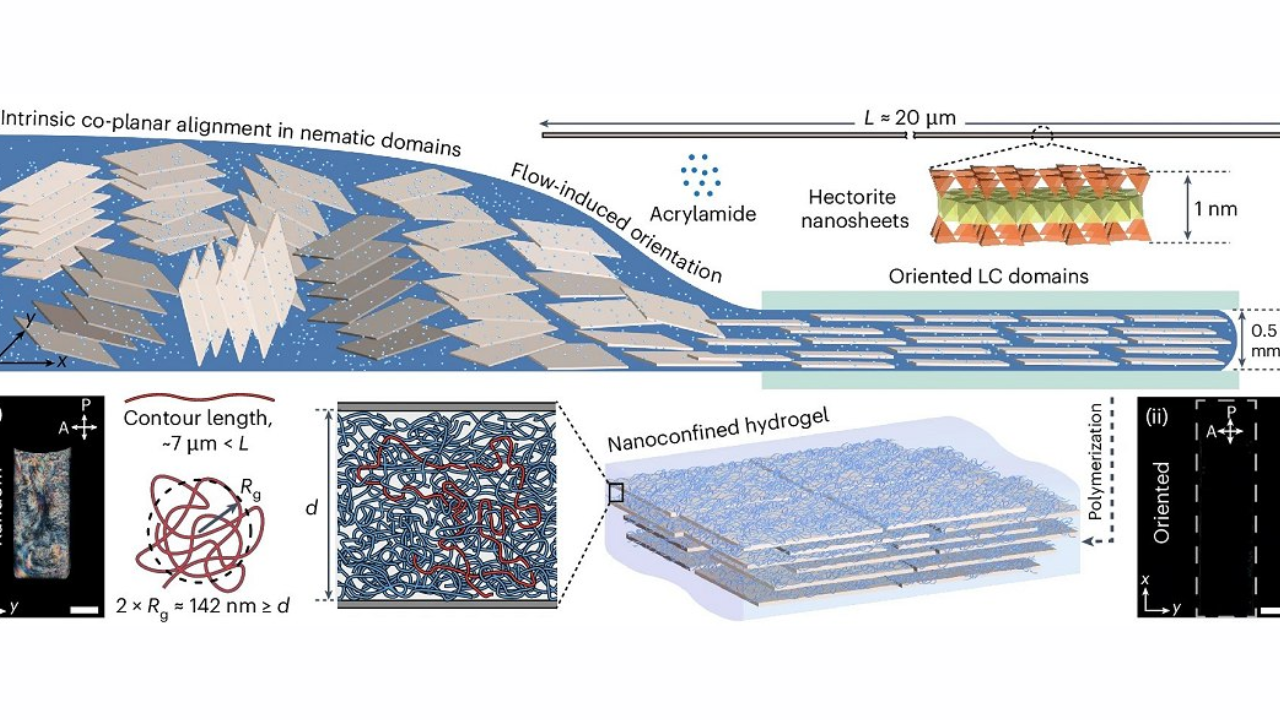
“UV radiation causes the individual molecules to bond, resulting in a highly ordered structure,” explained Chen Liang, one of the team members.
This new approach results in a hydrogel with densely entangled polymers between the nanosheets of ceramic. This entanglement not only enhances the mechanical properties of the hydrogel but also enables the material to self-repair after damage.
Professor Zhang detailed that “the entanglement causes the polymer layers to intertwine with each other, creating a dynamic system that easily repairs itself.”
Efficiency Testing
Tests showed that, four hours after being cut, the hydrogel already exhibits a self-healing rate of 80 to 90%. In just 24 hours, it fully recovers, demonstrating impressive efficiency.
Additionally, a hydrogel with only one millimeter of thickness contains up to 10,000 layers of nanosheets, giving it rigidity comparable to that of human skin and a remarkable degree of elasticity.
This combination of properties makes the new hydrogel a promising solution for various challenges.
Potentially Revolutionary Applications
The potential applications of this self-healing hydrogel are vast and impactful.
In the field of medicine, it can be utilized in advanced dressings that adapt to wounds and assist in healing, reducing the risk of infections.
Moreover, its ability to quickly repair itself can be crucial in burn treatment and skin lesions.

In the field of robotics, the technology could lead to the development of robots with robust and self-healing skins, allowing these devices to adapt to dynamic environments and recover from damage autonomously. This would be particularly useful in industrial and exploration applications, where durability and adaptability are essential.
In aesthetics, the hydrogel could be used in skincare products, providing additional benefits such as promoting healing and enhancing skin elasticity.
This approach could lead to a new generation of cosmetics that not only beautify but also treat and regenerate the skin.
Path to Practical Applications
However, the research team recognizes that there are still challenges to be overcome before this technology can be widely applied in the real world.
Further studies on biocompatibility and durability of the material are needed to ensure that it meets the required standards for use in clinical and industrial environments.
It is also essential to investigate how the material interacts with human skin in the long term, ensuring its safety and effectiveness.
The researchers are optimistic about the future of the self-healing hydrogel.
The combination of nature-inspired properties and technological innovation may open new avenues for creating materials that not only mimic human skin but also offer practical and effective solutions to everyday problems.
The journey of developing this hydrogel is a clear example of how science and technology can come together to create solutions that improve people’s lives, reflecting human capacity to draw inspiration from nature to innovate and solve complex challenges.
SOURCE: INOVAÇÃOTECNOLÓGICA








Seja o primeiro a reagir!