





 English
  Francês
  Alemão
  Italiano
  Japonês
  Norueguês
  Portuguese
  Spanish
  4 min of reading


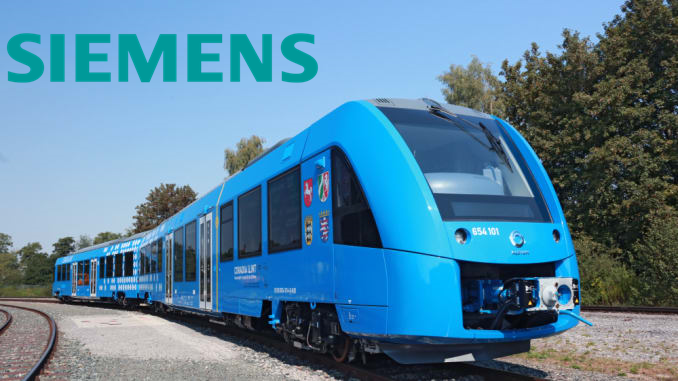
Memorandum of Understanding (MoU) Signed Between Siemens Energy and Siemens Mobility for the Development of a Hydrogen System for Trains, Significantly Reducing Greenhouse Gases in Europe
In a press release this Tuesday (13), Siemens Energy and Siemens Mobility signed a Memorandum of Understanding (MoU) to jointly develop and offer hydrogen systems for trains. The agreement was signed by Albrecht Neumann, CEO of the Rolling Stock area at Siemens Mobility, and Armin Schnettler, Executive Vice President (EVP) of New Energy Business at Siemens Energy. The project aims to jointly develop holistic hydrogen solutions for rail transport, offering customers the chance to promote hydrogen in the economies of Germany and Europe, supporting decarbonization in the mobility sector.
Since its spin-off and IPO on September 28, 2020, Siemens Energy is no longer part of the Siemens Group. Siemens AG is the largest shareholder of Siemens Energy AG. Siemens Mobility GmbH, which belongs to Siemens AG, and Siemens Energy AG signed this research cooperation agreement to continue expanding their efforts in promoting mobility through hydrogen.
“Decarbonization of energy systems is a core goal of Siemens Energy. Sector coupling plays a key role here – interconnecting relevant energy sectors, previously separated, such as electricity and heat generation or mobility. This can be achieved – completely CO2-free – through the electrolysis of water, using electricity produced from renewable energy sources,” says Armin Schnettler, EVP of New Energy Business at Siemens Energy. “By working together with Siemens Mobility, we want to drive sector coupling by developing, among other things, an electrolysis and refueling solution for the quick refueling of hydrogen-powered trains.”
“Our cooperation with Siemens Energy paves the way for sustainable and environmentally friendly mobility. In this way, we can support our customers in replacing their diesel-powered trains operating on non-electrified rail lines with hydrogen-powered trains, free from long-term carbon emissions. Together with Siemens Energy, we can even offer ‘hydrogen as a service model’ throughout a train’s lifecycle,” said Albrecht Neumann, CEO of Rolling Stock at Siemens Mobility.
-
With 160,000 m² of collectors, an area larger than 20 football fields, Silkeborg, in Denmark, hosts a solar thermal plant that heats 19,500 homes and could become the largest solar heating plant in the world.

-
A study reveals the expansion of renewable energy procurement in Brazil and shows how companies are taking advantage of opportunities to reduce expenses, ensure energy efficiency, and strengthen strategic environmental commitments.

-
Mato Grosso do Sul excels in the sugar-energy sector: the state reaches a milestone of 22 operating mills and accelerates the production of clean energy in MS with a focus on sustainability.

-
National energy dilemma: Brazilians support clean energy but reject increases in tariff costs to finance the sustainable transition.
In the next 20 years, thousands of diesel-electric multiple unit trains will be successively replaced by more environmentally friendly alternatives in Europe. There are still diesel-powered trains currently in service on non-electrified rail routes. In Germany, for example, these routes represent about 50% of the entire railway network in the country. Eco-friendly batteries and hydrogen drives are expected to be used as substitutes for diesel units.
Siemens Energy and Siemens Mobility plan to jointly develop a standardized hydrogen infrastructure solution to fuel hydrogen-powered trains from Siemens Mobility, and subsequently expand this solution into pilot projects and specific customer applications.
Siemens Energy markets the systems and solutions necessary for the generation and supply of green hydrogen, while Siemens Mobility focuses on rail transport solutions, including the necessary maintenance of trains and station equipment. By working together, Siemens Energy and Siemens Mobility can offer rail customers a comprehensive solution. This will not only support the acceptance of hydrogen energy by customers in the transport market but also promote the establishment of a sustainable hydrogen economy in Germany.
About The Companies
Siemens Mobility is a company managed separately from Siemens AG. As a leader in transport solutions for over 160 years, Siemens Mobility consistently innovates its portfolio in its core areas of rolling stock, automation and rail electrification, turnkey systems, intelligent traffic systems, as well as related services. With the advent of digitalization, Siemens Mobility is enabling mobility operators worldwide to make infrastructure smart, sustainably increase value across the entire product lifecycle, enhance passenger experience, and ensure availability. In fiscal year 2019, which ended on September 30, 2019, the former Siemens Mobility division recorded revenue of €8.9 billion and had about 36,800 employees worldwide. More information available at: www.siemens.com/mobility
Siemens Energy is one of the world’s leading energy technology companies. The company works with its customers and partners on energy systems for the future, thus supporting the transition to a more sustainable world. With its portfolio of products, solutions, and services, Siemens Energy covers almost the entire energy value chain – from generation and transmission to storage. The portfolio includes conventional and renewable energy technology, such as gas and steam turbines, hybrid plants powered by hydrogen, generators, and transformers. More than 50 percent of the portfolio has already been decarbonized. A majority stake in the publicly listed Siemens Gamesa Renewable Energy (SGRE) makes Siemens Energy a global leader in the renewable energy market. It is estimated that one-sixth of the electricity generated worldwide is based on Siemens Energy technologies. Siemens Energy employs 91,000 people worldwide in over 90 countries and generated revenue of around €29 billion in fiscal year 2019. www.siemens-energy.com.






Seja o primeiro a reagir!