





 Portuguese
  English
  Spanish
  3 min of reading
  0 comments


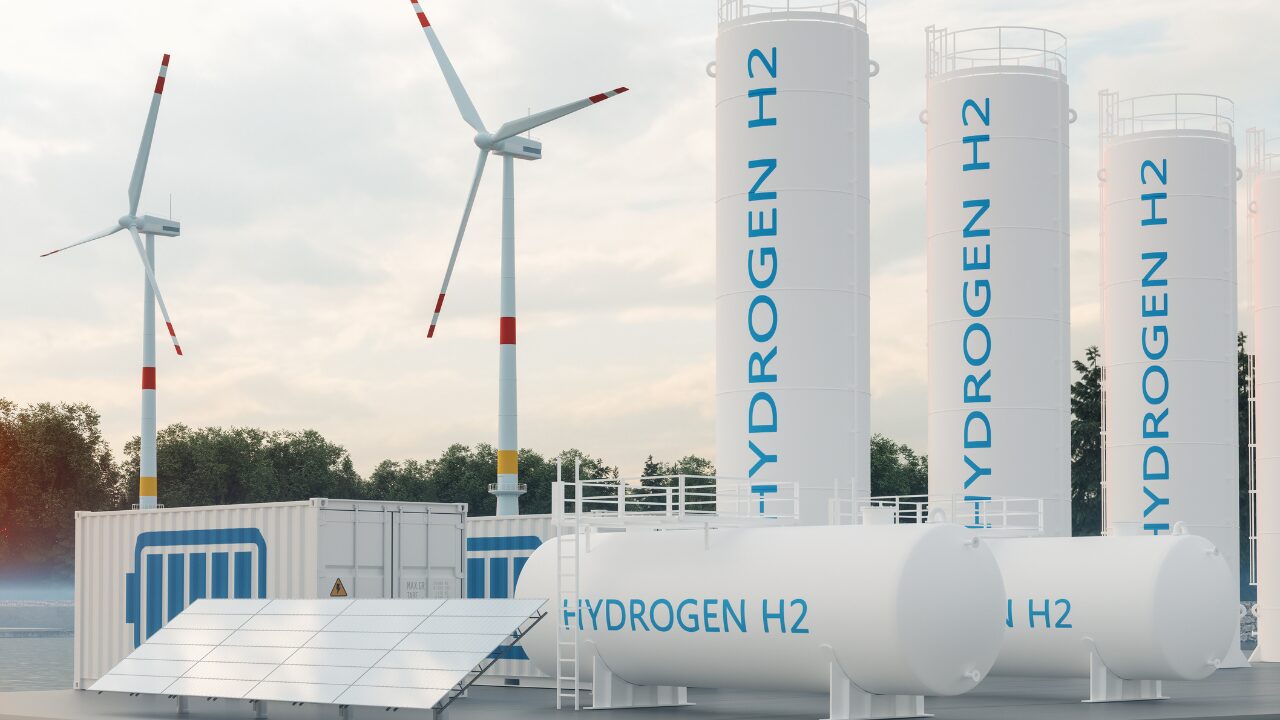
Considered One of the Pillars of the Sustainable Future, Green Hydrogen Gains Protagonism in Countries with High Renewable Energy Generation Capacity.
Green hydrogen has been consolidating itself as one of the most promising bets in the race for global decarbonization. Produced from water electrolysis — a process powered by electricity generated from renewable sources such as solar and wind — this gas is highly energetic and, unlike traditional options, does not produce carbon dioxide (CO₂) emissions.
This characteristic makes it a key player in the so-called energy transition, which seeks to replace fossil fuels with sustainable solutions that have a low environmental impact.
Clean Energy for Hard-to-Electrify Sectors
Although electrification is a trend in sectors like urban transport and light industry, segments such as steelmaking, aviation, maritime transport, and fertilizer production still face significant technical barriers to abandoning fossil fuels.
-
Renewable energy advances over protected areas in Brazil, and a survey by the Energy Transition Observatory reveals silent impacts that challenge environmental conservation and pressure sensitive traditional territories.

-
Rio Grande do Sul accelerates energy transition: State invests in renewable technologies and consolidates decarbonization strategies and pathways to attract billions in new industrial investments.

-
With 160,000 m² of collectors, an area larger than 20 football fields, Silkeborg, in Denmark, hosts a solar thermal plant that heats 19,500 homes and could become the largest solar heating plant in the world.

-
A study reveals the expansion of renewable energy procurement in Brazil and shows how companies are taking advantage of opportunities to reduce expenses, ensure energy efficiency, and strengthen strategic environmental commitments.


In these cases, green hydrogen emerges as a viable solution, directly replacing the use of carbon in high-consumption industrial and logistical processes energy.
Additionally, green hydrogen also plays a strategic role in large-scale energy storage — a crucial factor for stabilizing power grids supplied by intermittent sources like the sun and wind.
Economic Opportunity for Countries with Abundant Renewable Energy
Nations with high renewable potential, such as Brazil, Australia, and countries in North Africa, are seeing in green hydrogen a new frontier for energy exports.
In Brazil, the highlight is the Northeast, where large-scale projects are being planned in port areas with infrastructure aimed at export.
This new production chain not only attracts investments but also boosts technological development and the generation of green jobs.
Challenges to the Expansion of Green Hydrogen
Despite the optimism, green hydrogen production still faces significant obstacles.
The main one is cost: currently, the electrolysis process costs two to three times more than conventional methods that use fossil fuels.
High prices of electrolyzers and the need for a constant and affordable supply of renewable energy are the main reasons for this difference.
Another bottleneck is the lack of infrastructure. Few countries have pipelines, fueling stations, and proper logistical systems for the transportation and storage of hydrogen.
The gas is highly flammable, requiring strict safety standards and operational protocols.
There is also a lack of global regulatory standardization: to ensure traceability and environmental certification, it will be necessary to establish international norms for origin and sustainability.
Paths to Make the Fuel of the Future Viable
According to the International Energy Agency (IEA), more than 40 countries have already implemented national strategies to develop low-carbon hydrogen production chains.
Private companies and industrial consortia have also been heavily investing in the technology, partly due to growing pressure for climate neutrality targets and the demand for cleaner energy solutions.
To make green hydrogen a reality in everyday society, it will be crucial to integrate robust public policies, tax incentives, investment in research and development, and the creation of efficient regulatory frameworks.









Seja o primeiro a reagir!