





 Portuguese
  English
  Spanish
  5 min of reading
  0 comments


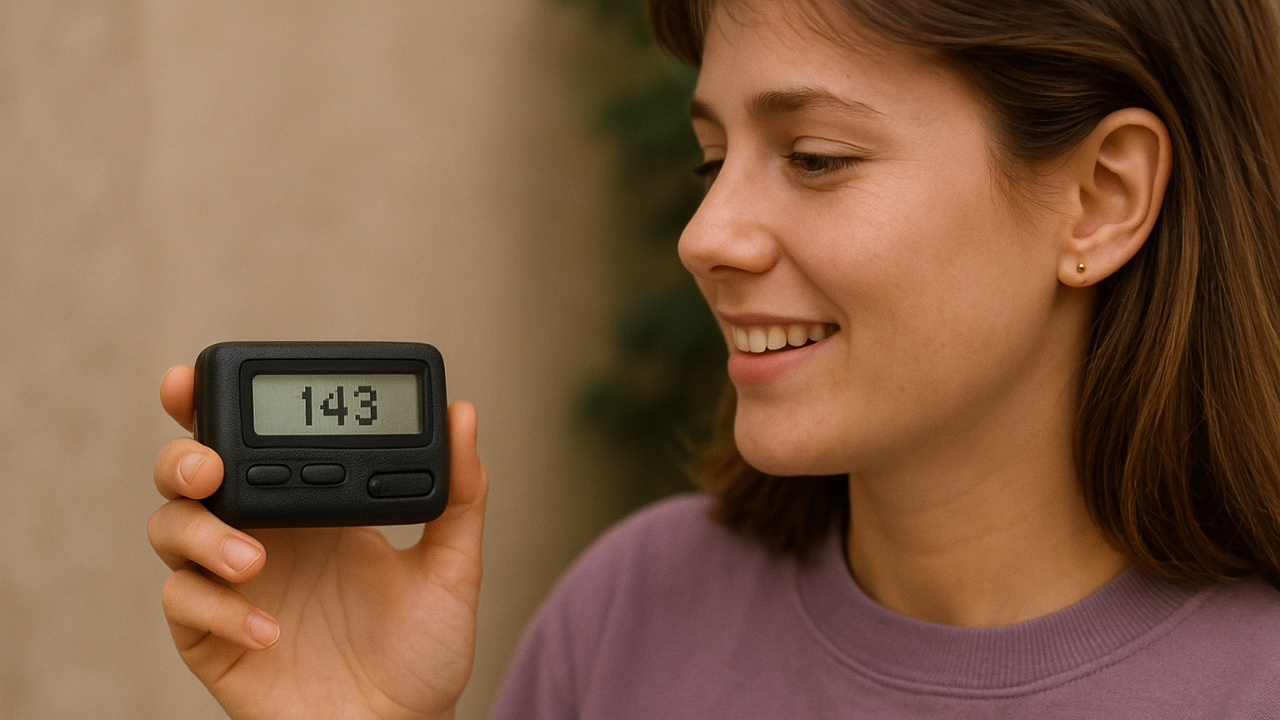
What Did the Codes on the Bip Mean? Device, Also Known as Pager, Dominated the 80s and 90s and Changed Communication Before SMS and WhatsApp
In the 80s and 90s, a short and repetitive sound became part of the daily life of executives, doctors, and even young people wanting to stay connected. It was the beep, also called a pager, a small and portable device that became a symbol of modernity.
Carrying the device on one’s belt was not just a matter of practicality: it represented status and differentiated those who could be “available” all the time.
Today, in the age of WhatsApp, Telegram, and social media, it may seem strange to imagine that such a limited technology was so important.
-
Motorola launched the Signature with a gold seal from DxOMark, tying with the iPhone 17 Pro in camera performance, Snapdragon 8 Gen 5 that surpassed 3 million in benchmarks, and a zoom that impresses even at night.

-
Satellites reveal beneath the Sahara a giant river buried for thousands of kilometers: study shows that the largest hot desert on the planet was once traversed by a river system comparable to the largest on Earth.

-
Scientists have captured something never seen in space: newly born stars are creating gigantic rings of light a thousand times larger than the distance between the Earth and the Sun, and this changes everything we knew about stellar birth.

-
Geologists find traces of a continent that disappeared 155 million years ago after separating from Australia and reveal that it did not sink, but broke into fragments scattered across Southeast Asia.

But, to understand the impact of the beep, one must go back to that time when digital mobility was still in its infancy.
What Was the Beep and How Did It Work?
The beep was a message receiver sent through radio waves. For communication to happen, the process started with a phone call to a central.
The operator received the message, associated it with the user’s number, and transmitted the signal to the network of antennas.
Although it seems rudimentary today, the technology was efficient.
All devices received the signal, but only the one configured with the corresponding code displayed the message.
This gave the beep the reliability that the first cell phones could not offer.
Initially, the models were exclusively numerical. They displayed only sequences of numbers, which encouraged the creation of a true alternative alphabet.
Later, alphanumeric models appeared, which were more expensive and capable of showing short messages in full text.
The Secret Language of Numbers
The limitation of the first models gave rise to creative communication, almost like a “digital slang”.
Users invented combinations of numbers that conveyed whole messages. This language spread rapidly, becoming a cultural hallmark of the beep.
Some famous examples:
- 911 meant urgency or emergency.
- 143 equaled “I love you”.
- 411 was used to ask for information.
- 07734, when viewed upside down, formed the word “HELLO”.
- Sequences like 200TRAB or 100CASA showed where the person was.
- Numeric times, such as 1430, served to schedule meetings.
This numeric code not only facilitated quick communication but also created a bond among users. Those who mastered the “tricks” of the beep felt part of a connected community.
The Beep in Brazil: From Luxury to Mass Item
In Brazil, the beep arrived in the 80s. Initially, the device was restricted to specific groups, such as on-call doctors and businesspeople who needed to be constantly available.
The price was a barrier: the service monthly fee was expensive for the time, and the devices reached prices equivalent to hundreds of current reais.
With the advancement of the 90s, the scenario changed. Companies like Tele-Bip and Multicanal expanded coverage, and competition helped lower prices.
The result was the popularization among the middle class, which began to adopt the device for both work and personal use.
There were two main models:
- Numerical, cheaper and more popular.
- Alphanumeric, considered sophisticated and more expensive.
Having an alphanumeric pager was seen as a status symbol. The numerical models were the ones that truly democratized communication, although they required creativity to convey messages.
Coverage Network and Reliability
One of the strengths of the beep was its transmission network.
Antennas strategically spread throughout cities ensured impressive coverage. This allowed communication to function even in places where cell phones still had no coverage.
Hospitals, transportation companies, and healthcare professionals benefited greatly from this reliability. While mobile phones still suffered from signal failures, the beep was considered a robust and almost infallible system.
The Cultural Impact of the Beep
More than a tool, the beep became a trend.
It appeared in soap operas, in international films, and was constantly associated with characters who needed to be available all the time.
Young people also adopted the device, especially those who saw it as a form of modernity and social status.
The beep ended up becoming a kind of precursor to the instant notifications that today dominate smartphones.
The simple “beep” upon receiving a message provoked the same feeling of anticipation that we currently feel when seeing a new notification on our phone.
With the arrival of cell phones and later SMS, the beep lost space rapidly.
The mobile phone began to consolidate calling and messaging functions into a single device, eliminating the need to carry two devices.
By the early 2000s, the beep was already seen as obsolete. Still, its legacy remained.
The logic of short and quick messages, initiated through numeric codes, directly influenced the format of SMS texts and even the concise style of interactions on social media.
Does the Beep Still Have Utility Today?
Although it has disappeared from popular use, the beep has not been completely abandoned. Hospitals, emergency centers, and some specific sectors still utilize the system.
The reason is simple: pagers are extremely reliable in places where cell coverage can fail.
Despite this, there is no expectation of the beep returning as a commercial product.
The evolution of smartphones has rendered the device obsolete for the general public, but its historical importance remains alive.
The beep should be remembered as a milestone in the evolution of mobile communication. It represented the beginning of the era when people began to depend on quick messages, outside the home or office.
It can be said that without the beep, the acceptance of SMS may not have been so natural.
And, without SMS, applications like WhatsApp would hardly have gained as much strength in such a short time. The pager was, therefore, an essential piece of this technology timeline.








Seja o primeiro a reagir!