





 Portuguese
  English
  Spanish
  4 min of reading
  0 comments


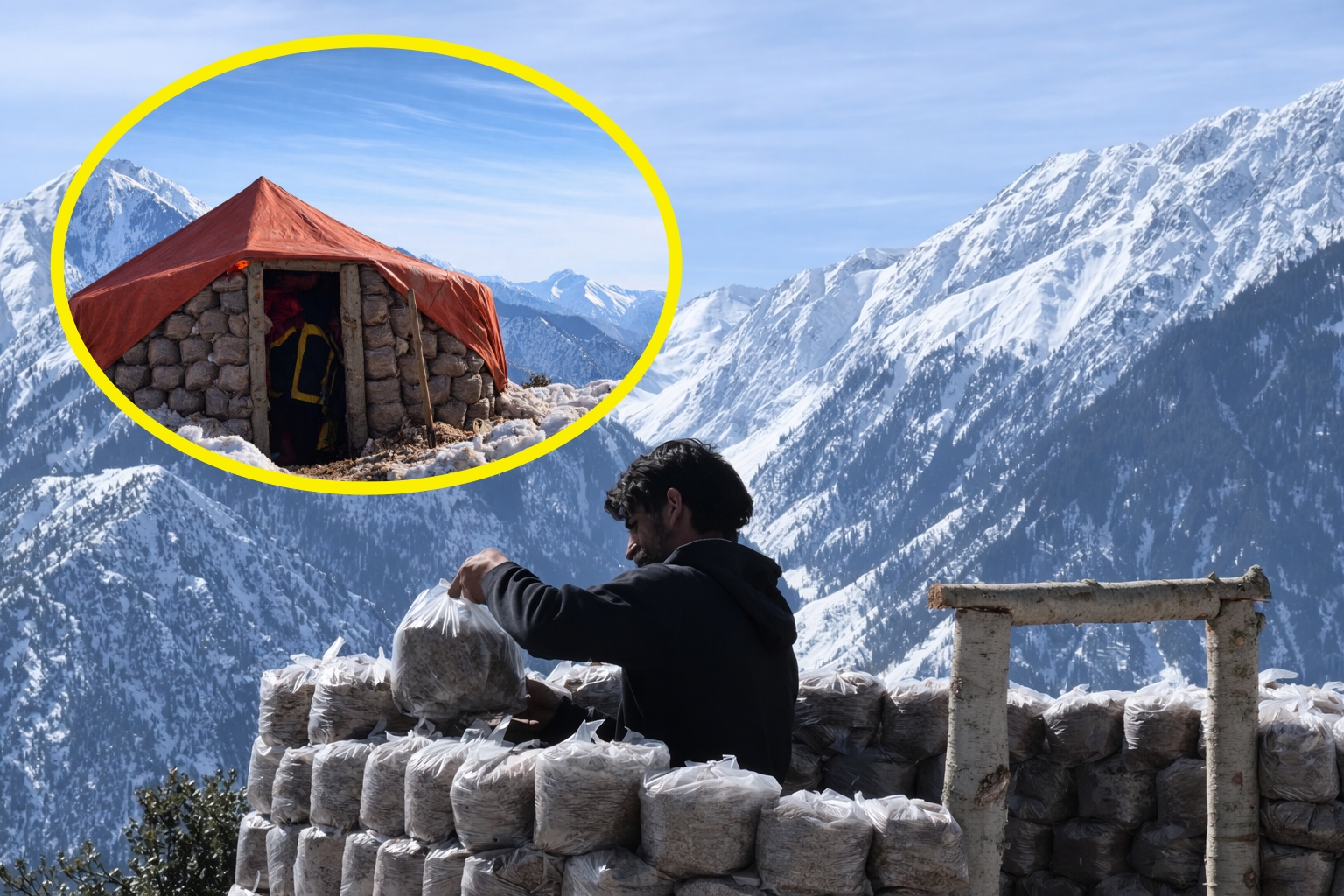
No Concrete, No Heavy Machines and Surrounded by Snow, He Raises a Compacted Earth Structure with Plastic Bags and Creates a Physical Barrier Against the Intense Cold
He was surrounded by snow, constant wind, and partially frozen soil. Without access to concrete, bricks, or equipment, he decided to use what he had on hand. Common plastic bags became the central element of a construction that, at first glance, seems improvised but reveals clear structural logic.
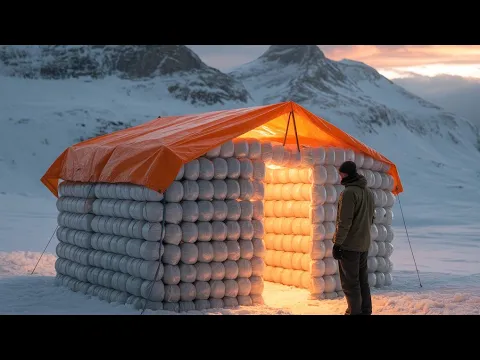

What began as a marked circle in the ground quickly transformed into a thick wall. Bag by bag, filled with soil taken from the very land, they were stacked to form a closed structure. The open landscape began to have a defined outline.
The choice of a circular shape was not random. The geometry distributes lateral pressure more evenly. In cold environments, every detail makes a difference. And here, the detail became a strategy.
-
Friends have been building a small “town” for 30 years to grow old together, with compact houses, a common area, nature surrounding it, and a collective life project designed for friendship, coexistence, and simplicity.

-
This small town in Germany created its own currency 24 years ago, today it circulates millions per year, is accepted in over 300 stores, and the German government allowed all of this to happen under one condition.

-
Curitiba is shrinking and is expected to lose 97,000 residents by 2050, while inland cities in Paraná such as Sarandi, Araucária, and Toledo are experiencing accelerated growth that is changing the entire state’s map.

-
Tourists were poisoned on Everest in a million-dollar fraud scheme involving helicopters that diverted over $19 million and shocked international authorities.


The Brutal Challenge of Erecting a Physical Barrier Against Snow and Wind Using Only Earth and Plastic
The selected area featured exposed soil in the center and snow accumulated at the edges. He started by marking a wide circle, creating a base for the first row of bags filled with compacted wet soil.
Each unit was positioned manually, pressed against the previous one to reduce gaps. The weight of the soil inside the bags created immediate stability. The first layer formed a continuous ring, visibly compact.
With new layers stacked on top, the wall began to gain height. The thickness gradually increased. The accumulated mass started to act as a physical barrier against the wind. What was vulnerable began to become protected.
This type of construction resembles ancient containment techniques through compaction. The difference here is the use of plastic as a structural wrapping.

The Secret Behind the Resistance Lies in Compaction and Circular Geometry
The central point of the strategy is not just stacking bags. It’s the combination of weight, fitting, and shape. The wall does not grow in a straight vertical manner. It follows the curvature of the circle, distributing lateral load.
The soil taken from the ground itself was used to fill each bag. Manual compaction reduced internal voids. The denser it is, the greater the stability. The repetition of the process created a continuous block around the perimeter.
As the structure advanced, the interior began to show a clear difference in level compared to the outside. The height difference serves as an additional barrier against snow infiltration.
The engineering is simple but effective. Mass and shape work together.
Internal Excavation Expands Usable Space and Enhances Heat Retention
Once the walls reached sufficient height, he turned his attention to the interior. With a manual tool, he began excavating the central soil. The removed soil helped level and deepen the floor.
By lowering the center, the shelter gained more internal height without increasing the external wall. The excavation also created an area more sheltered from the wind entering through the side opening.
The contrast became evident. Outside, wind and snow. Inside, lower soil and thick walls surrounding. The visual sensation already indicated greater heat retention.
In cold environments, thermal mass makes a difference. Even without official measurements released, experts often point out that structures with a large volume of bags of soil tend to stabilize internal temperature.
Controlled Fire in the Center Transforms Improvised Shelter into Functional Environment
With the structure completed, he placed small branches in the center of the excavated floor. The flame emerged low and controlled. The interior immediately changed in tone, shifting from the cold external light to an orange glow.
The fire was kept distant from the plastic walls. The internal organization revealed care. Tools and materials were leaned against the side, keeping the central area clear.
The combination of earth mass around and heat in the center created a visibly more protected environment. The improvised structure ceased to be merely a physical shelter and became a usable space.
There are no official numbers on thermal retention. Still, the visual difference between outside and inside shows a concrete change in environmental conditions.
What This Improvised Construction Reveals About Survival Engineering in Extreme Environments
What stands out is not just the creativity. It is the practical application of basic concepts of structural and thermal engineering with limited resources.

Plastic bags acted as containment. Soil served as structural mass. The circular geometry distributed loads. The internal excavation enhanced efficiency. The whole illustrates how simple principles can overcome the absence of industrial materials.
In a scenario where traditional constructions require concrete, steel, and equipment, this handcrafted solution puts conventional engineering into perspective. It does not replace industrial methods but proves that understanding form and mass can make an immediate difference.
This case attracted attention because it exposes something direct: when the environment pressures, basic construction knowledge can transform into real protection.
Do you believe that improvised solutions like this should be studied more closely in engineering and architecture courses? Share your opinion in the comments.










-

-

2 pessoas reagiram a isso.